

Wintersports
Snowboarding
What is a stomp pad?
Read ahead to learn what a stomp pad is, how it can benefit your snowboarding practice, and how to easily install one.
There’s something so exciting about those last few moments on the chair lift before you jump off and snowboard down the slope. It’s that indescribable feeling that grows inside you when you’re only seconds away from the glee of flying down the mountain. Before you can enjoy the freedom of floating over powder, though, you’ll need to find your footing.
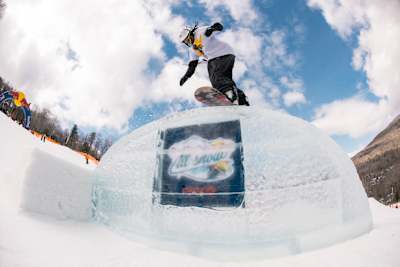
Zeb Powell at Red Bull All Snow at Loon Mountain in Lincoln, New Hampshire
© Ashley Rosemeyer / Red Bull Content Pool
A snowboard stomp pad can help you control your board until you’re ready for takeoff. Whether you’re enjoying time on the slopes or competing at events such as Red Bull All Snow, a stomp pad helps start your day right.
01
The purpose of a stomp pad
A snowboard stomp pad is a helpful tool for increasing the grip on your board’s deck when you’re stepping off the chair lift. Since you can only ride up with one foot secured, a stomp or traction pad helps you move safely from lift to snow.
One side of a stomp pad is made of textured grippy material. This gives your back foot some extra traction before you step into your bindings. The other side is covered with adhesive so that you can easily stick the stomp pad to your snowboard’s top sheet.
02
The benefits of using a stomp pad
Adding a stomp pad to your setup has some great advantages in all kinds of snowboard settings.

Aimee Fuller at the Absolut Park in Flachauwinkl, Austria
© David Robinson / Red Bull Content Pool
- Extra help for beginners. Some expert riders may have the balance and control to step off the chair lift without a stomp pad. For those just starting out, though, a stomp pad makes it both much easier and safer to get off the chair lift. If you use a stomp pad, you’ve got a better chance of developing a relationship with snowboarding that starts on the right foot.
- Increased control on and off the chair lift. Sometimes, you have to unlatch one of your bindings and navigate with one foot free on flat terrain. A stomp pad gives you a grippy landing spot for your free foot, resulting in optimum board control.
- Keeping your boots dry. Even if you’re not headed up the mountain, stomp pads can benefit terrain park freestyle riders, such as the stars of Red Bull’s Heavy Metal. Stomp pads are perfect for quickly wiping off excess snow that builds on the bottom of your boots throughout the day.
03
Different types of stomp pads
From Burton to Volcom, you’ve got tons of stomp pad options from major snowboarding brands. If you’re looking for traction pads for your snowboard, these are the four kinds you can choose from.
- Rubber pads. These flexible stomp pads move easily with your snowboard, making them perfect if you love to show off on big jumps.
- Foam pads. You can custom-fit foam pads to your snowboard since they’re super easy to cut and trim as needed.
- Metal studs. Instead of one single stomp pad, you can fix individual metal studs to your snowboard for the same increased traction.
- Skate rails. Similar to metal studs, you’ll affix two thin rails of textured material next to your bindings.
04
How to install a stomp pad
Pick the right spot on your snowboard
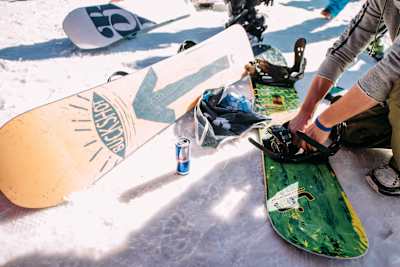
Snowboard details
© Tyrone Bradley / Red Bull Content Pool
When placing your foot on your stomp pad, don’t go too far beyond your typical stance. At the same time, don’t set up your stomp pad right against that back binding.
To find that sweet spot, put on your snowboard boots and stand next to the inside of your back binding. You should be close enough that the side of your boot makes contact with the side of your binding. (As you advance, you might prefer the opposite side of your back binding, but this is where beginners and most riders place their stomp pads.) Use tape to mark where each side of your boot sits so that you can easily put the stomp pad in the right place.
Clean and warm up your snowboard
Only apply stomp pads to a dust-free, dry surface. If you forget to clean your board, it’ll be much harder for your stomp pad to fully adhere to the top sheet. Before you know it, the corners of your stomp pad will start peeling.
Additionally, stomp pads stick better to heated snowboards. If your workspace is too cool, you can heat up your snowboard with a hair dryer.
Apply your stomp pad
Once your snowboard is prepped, take off the back sheet and align the stomp pad with the tape markings on your snowboard. Before doing this, run your hair dryer over the adhesive to make it extra sticky. As you affix your stomp pad to your deck, press down evenly to avoid air bubbles.
Let your stomp pad rest
The longer you let the adhesive dry, the better chance it has of sticking to your board for the long haul. Some snowboarders will say to just leave it overnight, but others will say to give it a full 24 hours before your next ride.
05
Choosing the right stomp pad for your snowboard
There are a few factors to consider when choosing the best snowboard stomp pad for your needs. First, your stomp pad should fit your snowboard’s shape. If your board is narrower or shorter, skate rails or metal studs might be a better choice than a large foam pad.
Your personal preference and riding style also play a role. If you’re a freestyle rider who lives for tricks, you might need the flexibility and durability of a rubber stomp pad. Sometimes, it just comes down to the material on which you feel more stable.
Alternatively, you might wind up preferring a foam stomp pad because it conforms so perfectly to your snow boots. Plus, foam stomp pads can be made in practically any design if you want to add some personality and flair to your setup. If you’re unsure about the best pick for your needs, you can always ask your local snowboard and ski shop for advice.
06
Replacing your stomp pad
As long as you’ve installed your stomp pads properly, you can extend their life with regular snowboard maintenance and care. Cleaning off your snowboard every ride and ensuring it’s totally dry before you store it are key to making your stomp pads last.
Sometimes, though, there’s no denying that your stomp pads have hit the end of the road. Removing and applying a new traction pad is just as easy as installing the first one. If your stomp pad has started to peel up, you can usually remove most of it manually. You can use a razor blade to carefully scrape off any sections that are still stuck. Wax remover is also great for dissolving stubborn glue.
Once the traction pad and any excess glue are completely gone, clean off your snowboard with a paper towel and more wax remover. Now, you’re ready to repeat the steps from above and install a brand new stomp pad.
Stability, control, and stomp
When you can only ride with one foot clipped in, stomp pads give you a leg up. Whether you’re navigating flat terrain or those blissful moments stepping off the chair lift, stomp pads give you extra security and confidence. With a stomp pad, your mind is free to focus on the most important thing: your next big move down the mountain.
