


Gaming
esports
Casuals: Honzo Gonzo, the Wildcard
Carter Gray may seem like another silly Twitter voice, but his work in the FGC is irreplaceable.
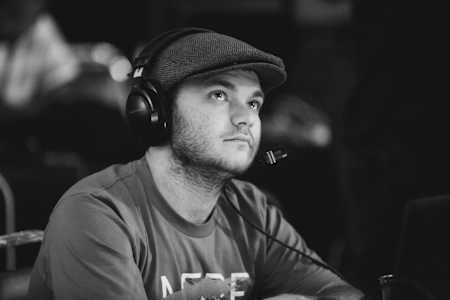
Honzo is an integral part of many event streams
© Robert Paul/@tempusrob/rmpaul.com
Being part of an online community is always an exercise in performance art. In a scene as passionate as the fighting game community, it lets a person like Carter Gray, better known as Honzo Gonzo, to cultivate a sort of notoriety for the things they say and do in the digital realm. From making outlandish promises concerning Pokkén Tournament’s inclusion at Evo 2016 to challenging rapper Lupe Fiasco to a Street Fighter exhibition, Honzo often pushes the boundaries of logic and, sometimes, good taste expressing himself online.
But while everyone in the fighting game community knows Honzo Gonzo to some extent, few can say the same about Carter Gray. We recently spoke with him to learn about the man behind the infamous Twitter account.
Falling into place
Honzo’s introduction to fighting games came from a fortuitous Google search. After his cable TV went out, a few keystrokes brought him face-to-face with an early Street Fighter IV broadcast on Justin.tv. As one of the few online fighting game streams at the time, this was a notable discovery, and Honzo began to participate in their weekly lobby gatherings.
"I didn’t actually go out and play anyone until Marvel vs. Capcom 3 came out," Honzo told us. "I went to Starbase Arcade to play since it was the closest thing to me, and made everyone mad playing keepaway with Taskmaster and Doctor Doom’s Hidden Missiles. From there, it just sort of snowballed, I guess."
This would prove to be an important first step for Honzo. Apart from making a name for himself as a decently strong Northern California competitor at Starbase Arcade, those stomping grounds were also where he first met Harrison Young, a promising member of the community who was working to expand and promote their region. By helping Young get a live broadcast off the ground for their regular tournaments, Honzo gained experience in stream production that carried over into bigger and better events.
"Sometimes, I just make sure the tournament is running fine, fulfill advertising requirements, and support the director," Honzo said of his responsibilities. “But at tournaments like Evo, the largest open fighting game tournament ever, I help organize competition and deal with sponsor requirements on no sleep. It’s pretty fun."
As a player, Honzo gained a modicum of success in his local Marvel scene, the title’s cyclone of on-screen action providing the perfect backdrop for the craziness of his online persona. And though he would never attain a major tournament victory, Honzo was an integral part of the community, regularly releasing combo and strategy videos as well as representing NorCal in regional battles like IPLAYWINNER’s AfterShock.
That said, he believes his shift from playing fighting games to working behind the scenes was the right choice. "As a player, I don’t think you’re ever fulfilled," Honzo explained. "You are constantly competing; it’s just part of your nature. If I won Evo, I would just be thinking about winning the next Evo. I sometimes miss it, but a part of me knows it’s okay to not be the best."
Wearing a mask
Honzo lives something of a double life. His work is vital to ensuring spectators have a chance to watch tournaments they can’t visit themselves, but that’s not what people see. Most people know Honzo as that silly guy on Twitter who sometimes has important things to say about the scene, and he’s fine with that.
"I know I say weird stuff, but I’m not some maniac. I just think it’s funny," he said. "I usually get a couple of tweets a month asking me things like, 'What’s the point of this account?' and I usually tell them that I’m just talking to a wall. There’s really no insight to be gleaned."
Even so, it’s not a stretch to say the community wouldn’t be the same without him. After working on stream production for years, Honzo was one of the key members of the crew responsible for broadcasting Evo 2016’s Street Fighter V finals, working closely with ESPN and, coincidentally, Harrison Young (now at Capcom) to bring fighting games to a major television network.
"I’ve worked live sport broadcasts before, but it was always in some minimized role, so going in was a bit nerve-wracking.” Honzo said of this monumental task. "I didn’t want to be the dude that screwed everything up for the community. Fortunately, the crew was awesome, and it was really cool to see them get excited over the matches."
Being part of such a big step in the evolution of the fighting game community gives Honzo an important perspective on where the scene is heading. In his mind, the most important part of producing a tournament broadcast is making sure viewers can watch whatever game they want, much like fans actually in attendance. Eventually, he hopes things expand to a degree that every match of every event can be streamed.
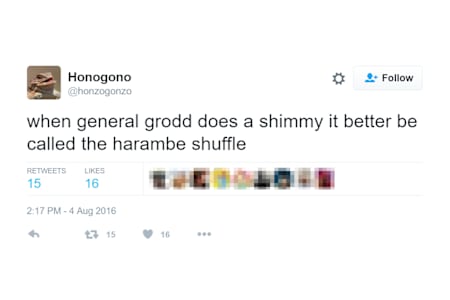
This is a typical Honzo Gonzo tweet
© [unknown]
"I don’t care if people notice the work I do or not," Honzo concluded, speaking to the prevalence of his online presence in comparison to the job he does behind the scenes. "I don’t get why people think we’re the sum total of our Twitter or Facebook posts. I’m a real-ass normal person; I go to the bank, I buy mangos, I read books."
It’s been said that Honzo is the "true neutral" of the fighting game community, and there’s still a great amount of truth in that. While his chaotic Twitter account can come off as the ramblings of a mad man, flirting with a topic before dancing off to the next inane joke, Honzo the person is a thoughtful and integral member of the scene.
Honzo is a cog in a much larger machine, doing his job to guarantee this crazy community keeps on ticking. And though he’s just a singular part of what makes the scene great, there’s no doubt things would be that much duller without the work he does to promote fighting games and, of course, his endless stream of online non-sequiturs.
For more eSports features, follow @redbullesports on Twitter and Like us on Facebook.
