

Gaming
Gaming
6 easy ways to up your game in Super Smash Bros. Ultimate
Is it a fun party game? Or is it a legit esport? Is it a simple button-masher? Or is it far more strategy-focused? Whichever fence you sit on, we've compiled six handy hints to get you smashing Smash.
It’s been over a month since Super Smash Bros. Ultimate launched on Switch, and it’s been a heck of a month for players of all skill levels jumping in. From grinding out new characters to working through the sprawling World of Light adventure mode, Ultimate has, so far, proved to be the Smash game a lot of us have wanted for so long — blending great portability options with a beefy Smash Bros. experience.
Of course, for new players and jaded players coming back into the fray after a long time away, the mechanics of Smash can prove to be a bit of a hurdle to work your head around initially. The sheer amount of variety with characters and stages has also been something we’ve personally found particularly foreboding, too. That said, after a lot of time with the game we’ve come up with some tips to help you get better at Ultimate, and hopefully lay claim to the title next time your mates come and visit (or if you want to test your might online).
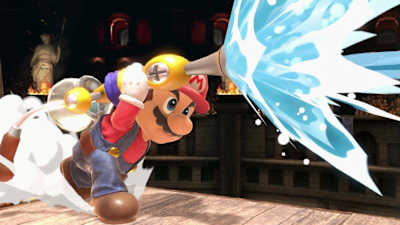
Don't let me F.L.U.D.D. you with my skills!
© Nintendo
Make use of assist trophies
The Smash veteran/pro may suggest to turn items off before battle, but for the casual game items on always makes things interesting — especially when there’s over four players duking it out. With that said, during a match you’ll see a little blue item pop up every now and again that looks like a silhouette of a person — this’ll be your best friend.
You won’t be hurt by their attacks, of course, but your frenemies certainly will — and they’ll hate you for it...
Assist trophies, as they’re known, bring in a character to help you out in your efforts to claim top spot in the match. There are an absolute tonne of characters to join the fray, ranging from Zero from the Mega Man series to Chain Chomp from Super Mario Bros., and each have their own set of attacks to punish other players. You won’t be hurt by their attacks, of course, but your frenemies certainly will — and they’ll hate you for it. Of all items to pick up, assist trophies (and Pokéballs) are the ones you want to prioritise grabbing aside from the Smash Ball.
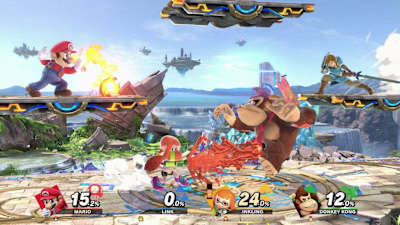
And seemingly organised chaos ensued...
© Nintendo
Understand the map
With over 100 stages on offer in Ultimate from the get-go, it might be overwhelming for a newcomer to think they’ll ever stand a chance against someone with any kind of knowledge of the stages you battle on in Ultimate. Yet that’s not always the case, as each stage has its own little quirk to look out for, and we believe that learning that in the opening couple of minutes will save you a lot of hassle in the latter stages of a match (and in future matches), when it’s a lot more nervy.
What we mean by that is that you shouldn’t place all of your key focus on your enemies during the opening minute or two of a match — it’s good to also keep a close eye on how the stage develops overtime so you can make use of that against enemies later in the match. Maps like Norfair from the Metroid series will consistently throw up environmental-based hazards, like one side of the map being hammered by lava and vice versa. Knowing this, you’ll be able to a) push enemies towards those hazardous sides and b) anticipate and avoid them. It might sound simple, but having a sense of stage knowledge will really help you in Ultimate, especially in matches with more than a few players.
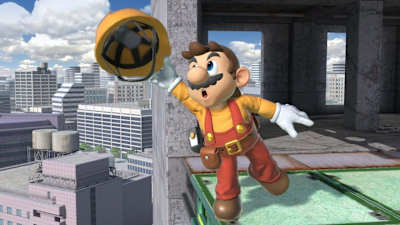
Yeah it's yellow, but it's not really Hi-Vis, now is it?
© Nintendo
Have a grasp on character weight and movement
Again, another simple one but something we’ve seen overlooked too often. There are a handful of character archetypes in Ultimate, and having an understanding of weight and movement limitations (depending on your character of choice, of course) will almost immediately make you a better player.
Characters like King K. Rool and Donkey Kong are heavy characters, for example, and their movement is fairly limited. They can’t zip around like Inkling or Pichu, and therefore have to work out a way of being able to deal with that zippy movement. Obviously there’s balancing here — it’s unusual for K. Rool, for example, to be eliminated under 100% damage — whereas that’s something you’d well and truly see with a character like Pichu. Mid-range characters like Marth and Link tend to be my personal go-tos, especially when I was initially starting out with the game in December. This was mostly because they offer up the best combination between movement speed and weighty attacks. So it’s certainly something worth taking into consideration.
A light character will have the ability to do a lot of light damage attacks in a short amount of time, a mid-sized character is balanced in damage output and movement, whereas a heavy will do lots of damage but lacks the movement speed you’d see in the former two archetypes. Having an idea of how your character moves and attacks is super useful, but knowing how opponents’ characters work will be key in giving you a better chance in battle.
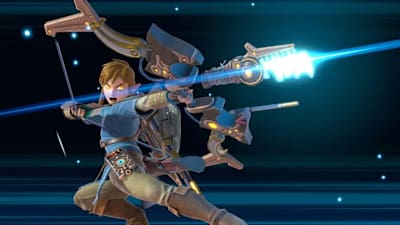
Haduke... oh, wait. Wrong character and game
© Nintendo
Learn your opponent
For the most part, a lot of your mates aren’t likely to be pro players at Smash. And that likely means they’ll have a few go-to combos that work. If you really want to improve as a player, learning those move-sets and learning counters will not only surprise your mates, but it’ll help your development in countering against characters and move combos if you ever do want to take the step up and take on some local tournaments.
Obviously when it comes to pro play this likely won’t be so simple, but it’s a good thing to look out for and in casual play it’s a fun way of getting a one-up on friends. As previously said, it does improve you as a player, as well, and will likely aid your progress in becoming a better, more reactive player in a range of different matchups.
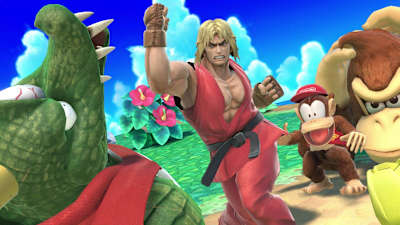
Crocodile Uppercut!
© Nintendo
Know that it’s not always going to work
Yes, there’ll be times when you’ll get destroyed by a mate who’s clearly played more Ultimate than you have (or has mastered a move set that you aren’t able to counter). And yes, you might get wrecked by a sibling or a spouse and will have to cop the banter for a while, but don’t fret — it’s all part of developing as a player.
Don’t let your friends get to you and don’t be disappointed, continuing to play Ultimate and practice match ups will only make you a better player...
No one has ever been perfect at anything, especially early on. Losing is all part of the game and accepting it is the best way to dust yourself off and move on. That’s where practice comes in, really! Don’t let your friends get to you and don’t be disappointed, continuing to play Ultimate and practice match ups will only make you a better player, and you never know — maybe the next time you play you’ll be the one dishing out the banter.
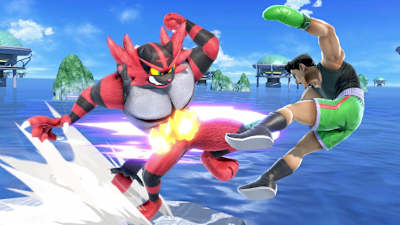
Join the Nintendo Fan Club today, Mac
© Nintendo
Get a GameCube Controller
As someone who played an average amount of Smash 4 and a tiny bit of Melee, I very rarely found myself using the GameCube Controller. I almost exclusively used the pro controller while playing Smash on Wii U, and just never found the need the fully invest in tracking down a GameCube adaptor and controller to play. That all changed with Ultimate, and gee whiz am I grateful.
I absolutely love the GameCube controller and if you are at all keen to up your game in Smash, I can’t recommend it enough. Not only does the ‘Cube controller feel great to use, it’s also the most accurate and responsive way to deal out combos and move around in Ultimate. There’s a reason why all the high-level pros use GameCube controllers, and this should be an essential purchase for anyone wanting to deep dive into Ultimate’s mechanics and get into the crux of movement options.
Super Smash Bros. Ultimate is a wild beast of a game packed with so much content. It can be overwhelming for the newcomer to jump into, but after an hour or two you’ll find that it’s one of the easiest fighters to get a basic understanding of. We hope these tips have helped to refine that knowledge even further, and make you a better player in the process.
For more gaming and gaming culture coverage, follow @RedBullGames on Twitter and Instagram and like us on Facebook.
