
Music
Look Back at the Top 10 Lupe Fiasco Lyrics From 'Food and Liquor'
Lupe Fiasco was a visionary ahead of his time who forged his own path and spewed truth we can now only fully appreciate. Here's a breakdown of his most powerful lyrics from "Food and Liquor."
Lupe Fiasco’s "Food & Liquor" dropped in September 2006. It’s an album all about identity, released just as hip-hop was redefining its own. A year after Kanye dropped "Late Registration," and a year before Soulja Boy would change music and the internet forever with “Crank That,” Lupe would emerge as one of, if not the most, preeminent alt-rappers of age. And there would be a trillion. Lupe was ahead of the curve. Kanye was still wearing polos when Lupe was talking about Goyard and Banksy. 50 had banished Game from G-Unit and gangsta rap was entering its death throes. Guys like Lupe were about to take over.
And his cultural awareness wasn’t just tied to pop art and luxury goods — he was also a conscious rapper who managed to sound like something other than a scold. He talks openly about his own struggles with the genre not just as an artist but a fan. He’ll rap in first-person narratives through characters and voices that are subtle instead of corny. He’s conceiving Chicago as a giant robot and the song ends up being a standout on the album. Lupe was a rare talent, and "Food and Liquor" more or less established him as a legend. Few rappers manage to rap as well as Lupe and say something at the same time — the effort usually falls flat on its face. On "Food & Liquor," Lupe pulled it off over and over again.
10. All with no high, I do it so fly/ Banksy's attack helicopter with the bow tie/ I love my city really hope that God bless it/ Have my mind moving faster than that hog in the hedges (“I Gotcha”)
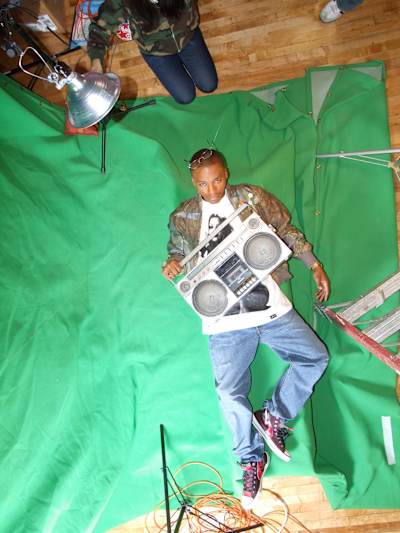
Lupe Fiasco
© Red Bull Content Pool
Not the most meaningful line on the list, but totally definitive of Lupe in other ways. Using the reference to describe himself as dashing and militant, Lupe invokes Banksy long (five years? 10 years?) before he’d be a household name. His ahead-of-the-curve taste and link up with Kanye bore similarities to Kanye’s relationship with Kid Cudi a few years down the line. It was references like this that lead to “Dumb It Down” on The Cool. He caps it of with a far less niche but still one brand Sonic reference just to be inclusive.

9. He said I would marry but I'm engaged to the aerials and varials/ And I don't think this board is strong enough to carry two/ She said bow I weigh a hundred and twenty pounds/ Now let me make one thing clear/ I don't need to ride yours I got mine right here (“Kick, Push")
As a single, “Kick, Push” is a bit of a misdirect — kind of like Kendrick Lamar’s “i.” It’s not really explicit and it’s basically a feel-good song. Or at least kind of a melancholic fairy tale. It’s the softest moment of the whole album, but rightfully achieve success as a single. Everyone remembers the ending — it almost feels like one of the good Pixar shorts. The song also gets points for being increasingly relative as skateboarding comes back into popularity (that’s true for a lot of moments on this album — sans skating).
8. Cause he gotta go and face the drama/ With a different face from the one that he use/ To face his momma, if you look close you'll see/ It consist of a smile that hurts, an ice grill, and a trace of trauma (“Just Might Be Okay”)
Lupe’s describing a character who exists in some aspect, be it as a narrator or ancillary character, in almost every song on F&L: a guy who can’t just can’t seem to get ahead of his problems because of the difference facades he has to put up. You’re stuck in a cycle of eliminating trauma in some aspects of your life and perpetuating it in others. It’s not unique to rap but rap point of view on it is uniquely American, at least in the young black narrator through whom Lupe is rapping.
7. They figured that he wasn't from there so they pulled out/ And robbed him with the same gun they shot him with/ Put it to his head and said, "You're scared, ain't ya?"/ He said, "Hustler for death, no heaven for a gangsta" (“The Cool”)
Lupe would follow up on the concept of “The Cool” with an entire album. Even after returning from the grave, the protagonist chooses death over changing his lifestyle. He sees it from the other side but is too empty — literally as a zombie and figuratively as a guy who’s been numbed — to do anything other than embrace death over and over.
6. Yeah, a traveling band of misfits and outcasts/ Nod they heads from Misfits to Outkast/ A lot of scars, they did this without pads/ A lot of hearts who did this without dads (“Kick, Push II”)
A far cry from the SBs and Spitfire tees of “Kick, Push,” these kids are a little older. Hurt is more cemented in their lives. Not for the first time, Lupe uses skating as a larger metaphor for living without privilege — no pads is literal and figurative. Skating’s no longer just an escapist hobby: it’s a family and a way of life. The spin makes the PG nature of Part I all the more tragic.
5. The books that take you to heaven and let you meet the Lord there/ Have become misinterpreted reasons for warfare/ Reread them with blind eyes, I guarantee you there's more there/ Rich must be blind cause they ain't see the poor there
"Food and Liquor" feels increasingly politically relevant. Lupe was spitting stuff like this just a few years after the Dixie Chicks were publically crucified for speaking out against George W. Bush. Rap at the time leaned more liberal than country (as did most music) the line is more prescient now that major religious movements are increasingly tied to America’s military industrial complex instead of more traditional humanitarian causes.
4. To be a man, I try to make him understand/ That I'm his number one fan/ But it's like you booing from the stands/ You know the world is out to get him, so why don't you give him a chance? (“He Say, She Say”)
Like the aforementioned struggle with identify, fatherhood and absentee fathers aren’t unique subject matter to hip-hop (or music generally), but hip-hop’s viewpoint on the subject isn’t just unique — it’s uniquely American. Lupe raps from the POV of a single mother and her son, and his inflection on “I’m you’re little boy,” is tear-jerking. But it’s the above line that’s really encapsulating of a larger idea: the son already has American society working against him — why can’t his father root for him. And for that matter, why can’t America?
3. So he chained himself to the box, took a lock and then he locked it/ Swallowed the combination and then forgot, it/ As the doctors jot it all down, with they pens and pencils/ The same ones that took away his voice and just left this instrumental, like that (“The Instrumental")
This is another moment that’s a bit more eye-popping in 2019 than it was in 2006. Not that it wasn’t meaningful then, but just a decade and a half ago it would have been hard to predict just how omnipresent and toxic “the box” would become. Lupe is talking about being chained to a screen and America’s media addiction years before the iPhone was invented and social media would take over every aspect of American life, in some cases dominating it altogether. We’re not just chained to the box — we carry it on us willingly at all times.
2. Now I ain't trying to be the greatest/ I used to hate hip-hop, yup, because the women degraded/ But Too $hort made me laugh, like a hypocrite I played it/ A hypocrite, I stated, though I only recited half (“Hurt Me Soul”)
Throughout the album, Lupe grapples with his relationship with rap as both a performer and a consumer. He speaks candidly about the genre’s misogyny and glorification vices, but without scolding. Even as a “conscious” rapper he has some of the same bad habits. Lupe recognizes and admits his own culpability, and at the same time acknowledges the thin, blurry line between life and art/entertainment. The appropriate intersect is hard to find. Some guys spend their entire careers trying to find it.
1. Now come on everybody, let's make cocaine cool/ We need a few more half-naked women up in the pool/ And hold this MAC-10 that's all covered in jewels/ And can you please put your titties closer to the 22s?/ And where's the champagne? We need champagne/ Now look as hard as you can with this blunt in your hand/ And now hold up your chain, slow-motion through the flames/ Now cue the smoke machines and the simulated rain (“Daydreamin’”)
No moment encapsulates that struggle with glorification like the second verse on “Daydreamin’.” It starts off like it’s going to be a holier-than-thou scold, but it’s a half-tongue-in-cheek climax over one of the album’s most electrifying moments of production. By the time Lupe’s talking about ridiculous visual effects, it’s clear he’s not scolding but satirizing in a way that could only be done with a real love and appreciation. That love and appreciation is evident all throughout "Food & Liquor."


