









Red Bull Motorsports
WRC
The most common WRC questions answered
What happens at a WRC rally? How are points scored? How fast do they drive? How long does it go on? And what exactly is a rally? Get up to speed with the world of rallying as we answer WRC FAQs.
Part of this story
Established in 1973, the World Rally Championship (WRC) has come a long way since the very first race at the Rallye Monte-Carlo. The cars have changed significantly, as have the rules. So let’s answer some of your burning questions about the sport.
01
What is a rally? What happens at a WRC race?
A WRC rally is a race against the clock, pitting crews (driver and co-driver) against a section of road (stage), which can be anything from 10 to 50km. The fastest through the stage is the winner and the fastest through all the stages wins the rally. There's usually several stages in each session across the three days of the rally. The classic format starts with a ceremonial start on Thursday night with rallying on Friday to Sunday. But WRC is always evolving and developing new tests to challenge the teams and entertain the fans.
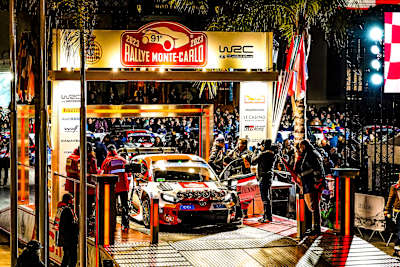
The ceremonial start at Rally Monte Carlo
© Jaanus Ree/Red Bull Content Pool
02
Where do the rallies take place?
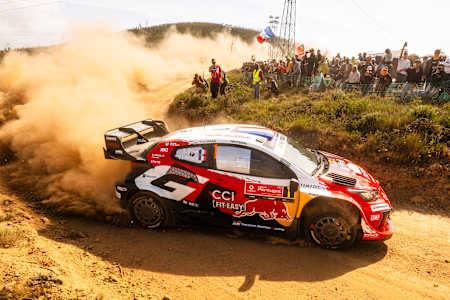
WRC is an all-round test of driving skills held on a variety of surfaces: dirt, gravel, asphalt and even snow. The championship tours the globe pitting the crews’ skills against the most challenging (and spectacular) roads in the world: gravel in Finland, mountainous asphalt roads in Japan and dirt in Kenya.
03
What is a WRC stage?
To test the crew’s skills, competition takes in different types of stages. Super special stages tend to be short and create a spectacle as they change the character of the rally – such as a change of surface, a sprint or a head-to-head battle is used – while power stage is usually the final stage of a rally and carries extra points.
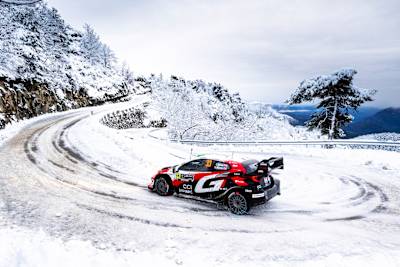
Stages take place on a variety of surfaces
© Jaanus Ree/Red Bull Content Pool
04
How do you win a rally and how do you become a WRC champion?
Crews score points at every round based on their overall rally result. The top 10 finishers receive points on a 25–17–15–12–10–8–6–4–2–1 scale. Additional bonus points are available on Sunday, with the five fastest crews across the day's stages earning 5–4–3–2–1 points in the Super Sunday classification. The rally-closing Power Stage also awards 5–4–3–2–1 bonus points to the five fastest crews. As a result, a driver can score a maximum of 35 points from a single event.
In the Manufacturers' Championship, teams score points based on the performances of their nominated crews at each rally. Meanwhile, drivers and co-drivers are racing against the clock, with the winner being the crew that records the lowest cumulative time across all stages.
05
Who has won the most titles in WRC?
French drivers have dominated WRC in the 21st century. Sébastien Loeb scored nine world titles consecutively from 2001 to 2012, while his compatriot and frequent rival Sébastien Ogier equalled that haul in 2025 and is still competing. Notably, while Loeb’s titles all came at the wheel of Citroëns, Ogier has moved manufacturers, firstly with VW from 2013-2016, then a Ford with M-Sport and a Toyota. But Finns deserve a special mention, from 1978 champion Markku Alén via Ari Vatanen, Juha Kankkunen, Tommi Mäkinen and Marcus Grönholm to the 2022 and 2023 world champion Kalle Rovanperä.
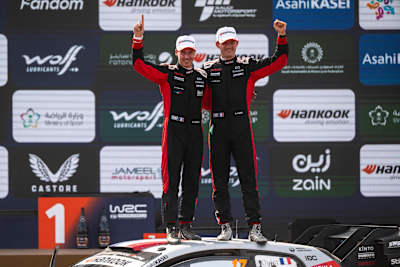
Ogier celebrates after winning his ninth world title in 2026
© Jaanus Ree/Red Bull Content Pool
06
What does a WRC co-driver do?
Unlike F1 or WRX, where the cars race around a circuit, WRC involves driving as fast as possible through a sequence of sharp turns and undulations, frequently along narrow roads. These change from year to year and are unfamiliar. The crews (driver and co-driver) map the route in a recce at the start of the rally week. They get a maximum of two passages on each stage, compiling pacenotes describing the angles and direction of turns plus any potential hazards.
During the stage, the co-driver has to tell the driver what is coming on the road ahead in time for him to react and manoeuvre. It’s a constant stream of live directions to the driver, including how far ahead the next turn is and how fast they can go through it.

Takamoto Katsuta and co-driver Aaron Johnston
© Jaanus Ree/Red Bull Content Pool
07
What does it take to be a WRC co-driver?
It’s a crucial role, highly stressful and demands patience, meticulous attention and an excellent relationship with the driver. Julien Ingrassia, an eight-time World Champion who was Sébastien Ogier’s co-driver, explained the process: “I transcribe while trying to take as many visual cues as possible. When you are going 180kph and then you have to take a sharp left, what I am saying is crucial. A note said five-10ths of a second too late can ruin everything.”
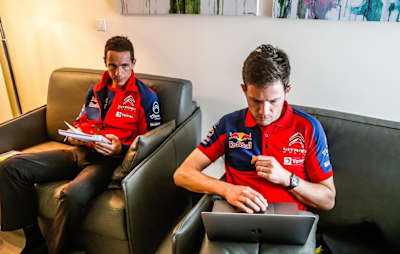
Learning every inch of the course is vital
© Citroën Racing
Another key trait is nerve; the co-driver has to trust the skills of the driver entirely, because they’re reading pacenotes and not watching the road. The other key aspect is mechanical skills: in addition to assisting in the garage, crews often have to make running repairs to the car during the rally.

2 min
POV: Running flat out with Ogier at Rally Finland
Watch four-time world champion Sébastien Ogier as he tests his M-Sport Fiesta ahead of Rally Finland.
08
How fast is a WRC car?
Rally cars are among the fastest machines in motorsport, but outright top speed is only part of the story. The fastest rally in WRC history was Rally Finland 2025, where Kalle Rovanperä averaged an astonishing 129.95kph across four days of competition. Current Rally1 cars can reach speeds of around 201kph depending on their gearing, but success in WRC is determined just as much by acceleration, braking and the ability to carry speed through narrow roads, blind crests and constantly changing surfaces as it is by maximum velocity.
09
Who are the major manufacturers in the WRC?
There are three manufacturers competing at the top level of WRC in 2026: Toyota, Hyundai and M-Sport Ford. The current Rally1 cars are powered by 1.6-litre turbocharged engines, with the hybrid systems used during the early years of the Rally1 era having been removed ahead of the 2025 season.

Toyota's Takamoto Katsuta
© Jaanus Ree/Red Bull Content Pool

Hayden Paddon in his Hyundai
© Jaanus Ree/Red Bull Content Pool

Joshua McErlean races for M-SPORT FORD
© Jaanus Ree/Red Bull Content Pool
Looking ahead, the championship is preparing for a major technical reset in 2027. The new regulations are designed to reduce costs, simplify car construction and attract new manufacturers and constructors to the sport. As a result, 2026 represents the final season for the current generation of Rally1 machinery before WRC enters a new era.
10
What happens if, or rather when, the cars crash?
Rally crews are expected to be more than just drivers and co-drivers. During a stage, they have to deal with many problems themselves, carrying tools and spare parts on board to perform emergency repairs. From changing punctures and replacing damaged wheels to securing loose bodywork and fixing minor mechanical issues, crews regularly find themselves working against the clock to keep their rally alive.
Ingenuity is often just as important as speed. Throughout every season, crews are forced to improvise repairs using whatever materials they can find, particularly on demanding events such as Safari Rally Kenya, where rough roads can inflict significant damage on the cars. If a problem can't be fixed at the roadside, the crew's only option is to limp back to the service park for repairs – or retire from the rally altogether.
11
If they can’t fix the cars at the roadside, how do they repair the cars?
The service park is a mobile paddock where the mechanics can service and repair cars. It’s also where the media and hospitality are based. All the cars return to the service park between sessions for tuning, tweaking set-up and repairs. Once the rally has started, servicing is limited to just 15 minutes in the morning prior to the race, 30 minutes during the day, and 45 minutes at night and if they overrun, they will pick up a penalty.
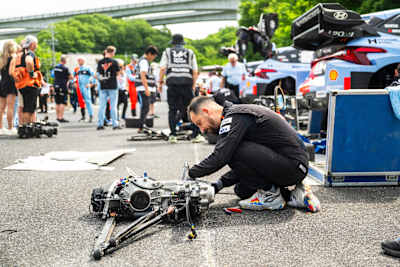
Mechanical work on the cars is strictly regulated
© Jaanus Ree/Red Bull Content Pool
The mechanics are the best in the business, but if they can’t get the car back up and running in the set time, the team will have to choose whether to retire from the rally or take a penalty in the hope of still scoring points.
12
Can road cars end up next to rally cars during a race?
Yes and no. The timed stages take place on closed sections of road. However, each driver is responsible for getting themselves from the end of each stage to the start of the next one. This often means driving on public sections of road where the WRC cars must obey traffic regulations just like any other car. This gives fans the chance to see the cars up close and watch racing drivers fumbling for change at toll booths.

World Rally cars in traffic
© Jaanus Ree/Red Bull Content Pool
More stories from the world of motorsports
13
Are there drivers who are specialists on certain surfaces?
Rally Sweden is WRC's ultimate winter challenge. Run on frozen roads covered in snow and ice, it's the only full snow event on the calendar and one of the most spectacular rallies of the season. Armed with studded tyres and using snowbanks as extra grip through corners, drivers can reach astonishing speeds despite the treacherous conditions. Historically, Nordic drivers have excelled here, but Rally Sweden remains one of the toughest tests in the championship for every crew on the start list.
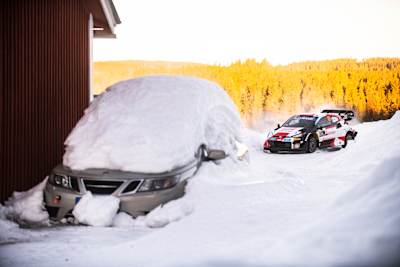
Kalle Rovanperä tackles the snows of Rally Sweden
© Jaanus Ree/Red Bull Content Pool
14
Where can I watch WRC?
The World Rally Championship is back for 2026 with 14 rounds, from the icy roads of Monte-Carlo to the dust of Kenya, the asphalt of Japan and the Canary Islands, and the gravel stages of Paraguay and Chile. Check the full WRC calendar and catch up with highlights from every rally as the season unfolds.
Part of this story
