

Gaming
esports
The Death of the Dota 2 Super-Team
Dota 2 is famous for its thoughtful pace, but pro teams can come and go at the drop of a hat.
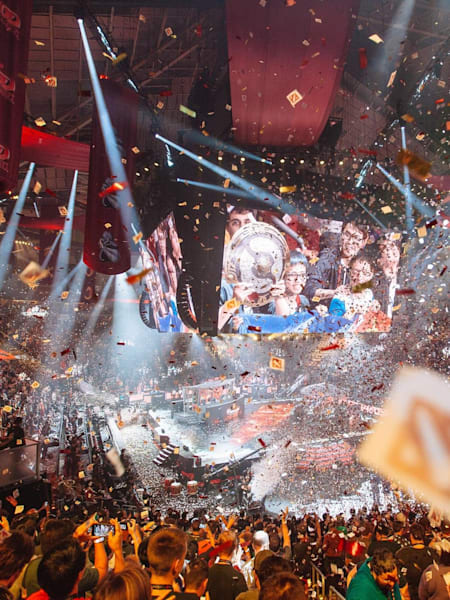
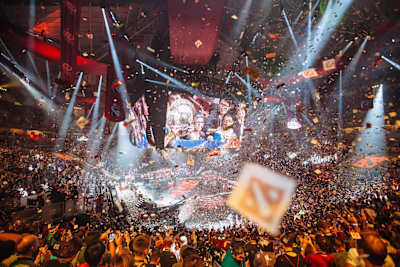
Wings took first at its first-ever International
© Valve
While Dota 2 might be famous for its more thoughtful pace and slow strategic evolution, professional teams can come and go at the drop of a hat. At the end of each annual Dota 2 championship — The International — those roster changes explode in frequency, laying the very foundation of the pro game wide open. More than ever before, however, this year’s shakeups present a short window of opportunity to reevaluate an ailing system of predictions, hype, and what we look for in the biggest professional teams in the world.
Predictions in Dota 2 are broken. Have been for a while, actually, but this was the year the evidence became truly undeniable as supposed favorites crashed and burned early in the International tournament bracket. It showed just how deeply fans, analysts, writers and often even the players themselves have been clinging to flawed logic about who really are the greatest teams in the world, even as the evidence mounted against our understanding of pro Dota.
In most cases, it came from a good place — a fun and healthy place. Fans and analysts wanted to play favorites with old and recognizable names. As much as Dota 2 is a complicated and nuanced game, the fandom surrounding it has always been driven in part by classic narratives about rising stars, heroes and villains, and crusty veterans getting together for One Last Job. The only trouble is, reality doesn't follow the logic of storytelling.
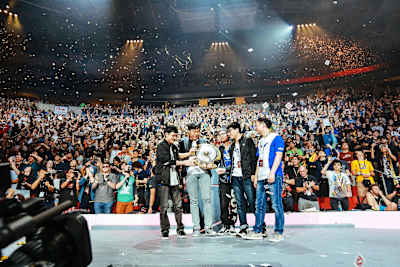
Wings pulled together to win TI6
© Valve
All of these players have a few things in common: They're captains of their respective teams, they've been around for years, and each of their squads underperformed at The International 2016. This in spite of looking strong leading up to the annual Dota 2 championship.
In the past, squads like Notail's OG, Puppey's Team Secret and LaNm's revitalized EHOME have been called "super-teams." The term itself has fallen out of vogue in recent years, but as recently as this summer the thinking behind them was as strong as ever. The thinking is thus: That throwing hotshot young players and industry veterans together on the fly is a recipe for multimillion-dollar success. Improve at a position, improve a team.
It's a very sexy idea. Fans feed on the nostalgia — the sight of names they recognize on a roster forming Voltron-like into a mathematically superior collective. Europe in particular, which has had a rough three years on pro Dota's central stage, was particularly susceptible to this thinking because it was the once-dominant region's best hope for a return to International glory.
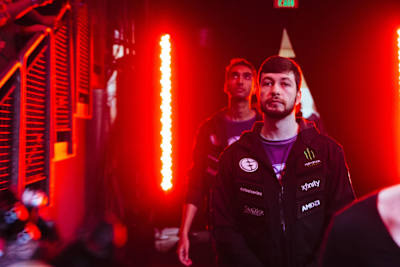
EG hasn't placed below 3rd at TI in as many years
© Valve
And so you get Team Secret, an organization originally built on European superstars and one Canadian dynamo. At its creation the team culled exclusively from other successful squads to create the platonic ideal of the esports "super-team." Fans loved it because they got to see their favorite players, old and new, make a go of it. Analysts loved it because the math checked out. Team Secret loved it because their combined strengths got them to Dota 2's main stage.
Yet when they got to that stage in 2015, Team Secret folded like laundry. Then, in 2016 and with a new lineup, they did it again. Despite putting together some of the best names, with all the best pedigrees, the squad hasn't broken into the Top 6 at The International.
Relationships, teamwork and chemistry all develop over time, and some pro players are more compatible than others. While Team Secret was replacing teammates at the very last second, leaving little room for developing chemistry, groups like Evil Geniuses have remained relatively stable for ages. As a result, EG not only became the first North American squad to win The International, while placing no lower than third for three years running (though now that change, for reasons beyond your typical roster shakeups).
Other teams have simply adapted to the times. TNC Gaming, captained by a player so associated with high-risk play that his antics have their own punch line, stepped back this year, and took a more supporting role. Demon (the player in question) may be an old name with a superstar past, but instead of clinging to a kill/death ratio, he's copying some of the most successful Dota 2 teams by using his veterancy to keep his players on the same page. As a result, TNC inverted the story of Team Secret by performing far beyond anyone's expectations.
That brand of Dota 2, however, isn't as readily apparent as your average "super-team." It's not as sexy, if you will. At least not in the short term.
Last year Valve, the developer of Dota 2, implemented the Majors. These smaller, developer-run tournaments sport prestige and prize pools closer to The International, but happen throughout the year, and in chosen countries around the world. For the first time ever, teams and viewers have a ramp leading up to the peak of eSports hype in August.
Fresh off of post-season roster shakeups, and a rebalanced meta (the soft rules that govern what "works" in pro Dota 2) individual players look stronger than ever. That makes the Majors exciting, but also a bit misleading: They can exaggerate the imperfections of a new team still finding its feet as well as the potential of a team of mechanically polished all-stars.
That’s doubly true for teams coming out of regions nobody was paying attention to in the first place. Southeast Asia, in particular, has finally begun to show its teeth via the aforementioned, TNC (of the Philippines) and South Korea’s MVP.Phoenix. The latter group didn’t just improve their placement over last year’s International; they outperformed both Team Secret and OG by a wide margin. Yet few saw it coming, thanks to their consistent, but just-shy-of-shocking performance at the Majors, as well as South Korea’s usually conspicuous absence from Dota 2’s uppermost tier.
MVP was one of this year’s perfect examples of bonds between teammates building slowly over time. And, thanks in part to the Majors, those bonds are crossing national lines. Unlike the mostly regional, independent tournaments not run by Valve, the Majors expose players from across regional lines more than ever before. More and more, Dota 2 is becoming a melting pot of different styles, and rosters halfway around the world from each other. Even Team Secret now seems to recognize the benefit of finding the right players for the right roles, regardless of veteran status or region.
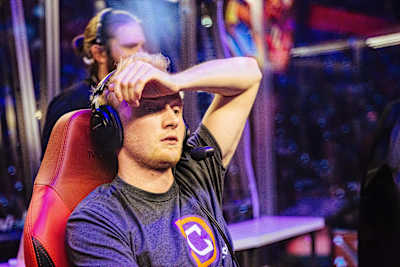
Digital Chaos shocked the world at TI6
© Valve
Although this, too, can be hard for fans to see and swallow. Often some of the best stories — and therefore the most fun — in pro Dota come from regional rivalries.
For instance Digital Chaos, which took second place at The International this year, is officially recognized as a North American team. Yet all but four of its members are European. It's tougher than ever to pin down that fun and easy tale of East-Vs.-West, or something similar.
Bear in mind, however, that your 2016 champions were an all-Chinese team. That particular story isn’t over just yet. It doesn’t need to be, either. Not when a team like Wings can make audience members laugh both in and out of game. Being a more "traditional" squad doesn’t mean they need to come off like they were grown in a lab at some boot camp, the way Eminem and Dre made 50 Cent. They can be a team with personality.
But personality, friendship, and compatibility are much harder to catalog. It’s tough to tell a captain that they should take chances on players that might eventually prove themselves to be top-tier material, given enough time and support. Honestly, wiith more than $9 million on the line at the end of the year, it’s just as tough to blame them.
For the scene as a whole, however, it’s time to take the long view. As opposed to combing through tantalizing, impenetrable numbers, it may be wise to look into who gels well with whom. Increasingly, these are the teams that have begun to dominate professional Dota 2, and will continue to do so. There’s still room for playing favorites and sentimentality. But as history has continued to show, sometimes a little bit of chemistry and companionship can go a long way.
For more Dota 2 coverage, follow @redbullesports on Twitter and Like us on Facebook.
