
Padel
The padel lob: how to perfect the shot that separates amateurs from pros
The smash gets the replays, but the lob decides who controls the rally. Here's how to hit, train and master every type of padel lob, and why you need to use it more often.
Part of this story






Watch a full Premier Padel match and try to count the lobs. You'll likely lose track before the end of the first few games. The lob is one of the shots professionals use most often, but one of the shots club players practice least.
The smash that flies over the side wall and the drop shot that barely clears the net get the replays and the loudest cheers, but the lob never shows up on the highlight reel. It sits in the background as the sport’s quietest, yet most effective, shot. It's already done its work a few seconds before the smash, volley or defining drop shot, pushing two opponents off the net and handing the attacking position to the pair that hit it, letting them take control of the rally.
Here's everything you need to know about the padel lob: why it matters so much, how to hit it effectively, how to train it and the five main types every complete player uses. Padel stars Delfi Brea,Alejandro Galán, Bea González and Juan Lebrón show how each one works at the top level.


01
Why the lob is padel's most underrated shot
Padel is a game of positions. The pair at the net attacks, the pair at the back defends, and the transition zone in between is where you get caught because balls arrive at your feet with little time to react, and you're more likely to end up in uncomfortable, vulnerable positions.
From the back of the court, the lob is the most reliable way to send both opponents backward and take the net, where most points are decided. A hard, low shot at two players standing at the net usually comes straight back as a volley. A good lob forces them to turn, run and hit an overhead under pressure, giving defenders time and opportunities to turn the tables.
02
How to hit a good lob in padel: the fundamentals
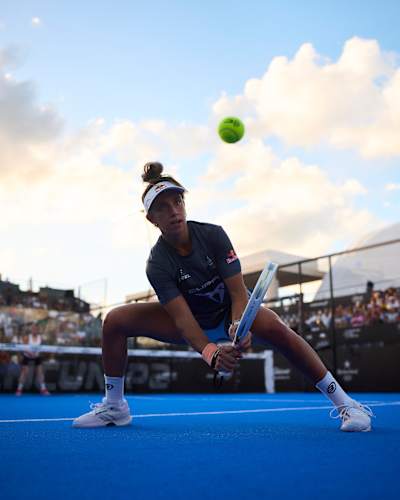
Decision-making, preparation, and positioning are key to hitting a good lob
© Premier Padel/Red Bull Content Pool
All lobs share the same foundation, and these tips will help you master them:
- Know when to play the lob: most amateurs only lob in emergencies, after a sharp volley or under pressure. Lob more often when you have time and balance, because that's when you can make it deep and precise.
- Prepare early. Turn your shoulders as soon as you see the ball coming and keep your backswing short. A long, late swing is the most common reason lobs land short.
- Get the racket under the ball. Open the racket face slightly and contact the ball in front of your body, around hip height. The lift should come from your legs and shoulder, with your wrist firm. Finish high, pointing the racket toward where you want the ball to land.
- Aim for depth. The perfect lob bounces in the last two metres before the opponent's back glass. That forces the player at the net to turn and chase it, leaving them no chance to smash it out of the court. Remember: a lob that hits the back glass before bouncing is out, so use height to control distance.
- Pick a direction. Lobbing over your opponent's backhand side (left shoulder for right-handed players, right shoulder for left-handed players) makes the overhead harder for them. Cross-court gives you more court to land the ball in, while down the line is quicker.
- Read the reaction and follow a simple rule: If your opponent turns their back and runs to the glass, move to the net. If they stay facing you and are ready to play the ball in the air, hold your position and prepare for their overhead shot.
03
The high lob: Delfi Brea and the art of buying time
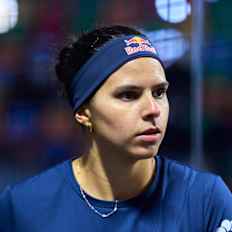
Delfina Brea is adept at controlling the tempo through deep lobs
© Samo Vidic/Red Bull Content Pool
The high lob is usually an emergency or tactical resource to gain time and create an opportunity to reposition. It’s most useful when opponents have you pinned in a corner and you need time to recover and regroup. Hit it as high as you can control and strive to drop it deep near the back glass, giving you and your partner a few seconds to reset.
The risk is length. A high lob that lands short is the easiest ball in padel to smash out of the court, so it’s worth sacrificing a bit of height to land the ball deep.
Delfi Brea is the clearest example on the women's tour. Playing on the right side next to Gemma Triay, the Argentine builds points from the back with huge patience, and the high lob is at the centre of it. When opponents push her into the corner, she sends the ball up and deep, recovers her position, and starts again. Over a long rally, the pair at the net have to keep turning, chasing and hitting overheads that rarely finish the point.
That patience has become her biggest strength. It helped her reach world number one in 2025, and in 2026 she and Triay won titles including the Italy Major in Rome and the Madrid P1.
Tip: on the high lob, slow your swing down. Height comes from the racket-face angle and the lift of your legs. Extra arm speed only adds distance and sends the ball long.
04
The quick lob: Juan Lebrón and the counter-attack
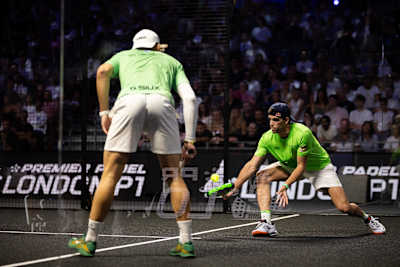
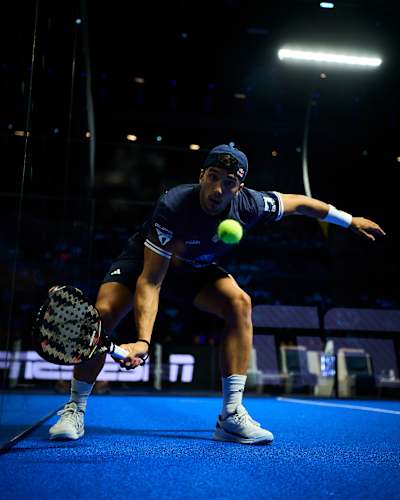
Juan Lebrón executing his signature backhand lob
© Samo Vidic/Red Bull Content Pool
The quick lob flies lower and faster. To be effective, it needs to catch opponents off guard and fly just over the net player's reach, so they have no time to get under it. Use it when opponents move very close to the net or lean forward, expecting a low ball.
Disguise is what truly makes it work. Prepare as if you are about to play a low drive or a soft ball to the feet, then lift the ball at the last moment. This lob is technically demanding and riskier: If it's too low, it becomes an easy volley or smash at your feet.
Few players use this lob as well as Juan Lebrón. 'El Lobo' built his career on moving from defence to attack faster than anyone, and the quick lob is one of his favourite tools. He waits for opponents to step in to close the net, then lifts the ball over them.
Lebrón plays alongside Leo Augsburger, one of the tour's hardest smashers. When Lebrón's quick lob sends the opponents back, he uses his speed to reach the net in a few steps and cover the reply, while Augsburger moves into the middle to finish after a potential short lob. That combination took them to the title at the 2026 Brussels P2 in April, with a huge win over world number one pair Arturo Coello and Agustín Tapia in the final.
Tip: practice the quick lob with the same preparation you use for your low forehand or backhand. If your opponents can read the difference, the quick lob loses its value.
05
The backspin lob: the shot smashers hate
The backspin lob, or sliced lob, adds spin to height. You cut under the ball with an open racket face, moving the racket from high to low. The ball floats, and after it bounces, it slows down and comes off the back glass with very little speed.
That bounce is the point of the shot. A ball that comes off the glass slowly stays close to the wall, leaving the opponent little room to attack. Heavy backspin also makes the overhead harder to time.
The backspin lob is especially useful against powerful smashers waiting on the left side for a short ball. It works best from mid-court or on hip-height balls, when you have time to shape the swing. From a fast ball deep in the corner, a clean high lob is safer.
Tip: keep your wrist firm and let the racket face angle create the spin. A big wrist movement makes the slice inconsistent and leaves the ball short.
06
The lob off the glass: Bea González and the lob that resets positions
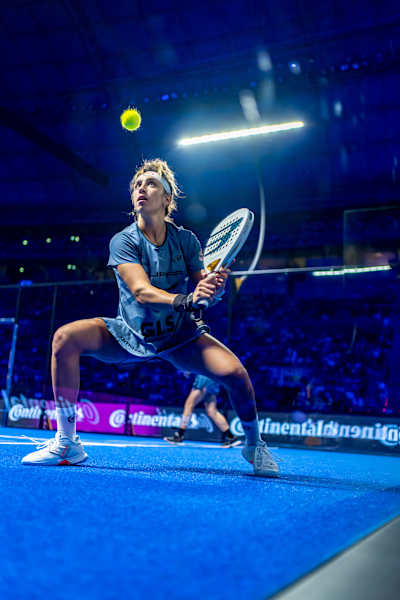
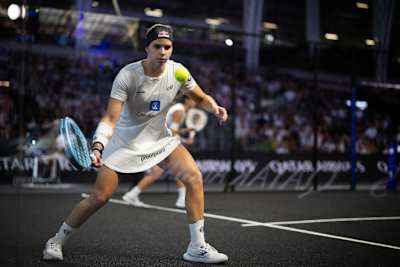
Beatriz González battles at Premier Padel 2025 Finals
© Alberto Nevado / Red Bull Content Pool
The lob off the glass comes after the ball bounces and hits your back wall. It is one of the most common lobs in professional padel because the glass gives you time. Let the ball come off the wall, move your feet under it and lift it back over your opponents.
The key is patience. Turn side-on, let the ball drop to a comfortable height and use your legs. The same rule applies when the ball hits two walls in the corner: the double-wall lob.
Bea González shows why this lob matters even for the most aggressive players. The left-side player from Málaga has one of the most powerful smashes in women's padel, and she needs to be at the net for it.
When opponents lob over her and push her to the glass, she lets the ball bounce off the wall and lobs it back deep, giving her time to move forward again and return to the position where she wins points.
That balance between defence and attack has made Bea and Paula Josemaría one of 2026's two dominant pairs. Between the Miami P1 in March and the Buenos Aires P1 in May, they won five straight tournaments.
Tip: let the ball come further off the glass than feels natural. Most club players play it too early, while it is still close to the wall, and lose control of the lift.
07
The volley lob: Alejandro Galán in the volley battle
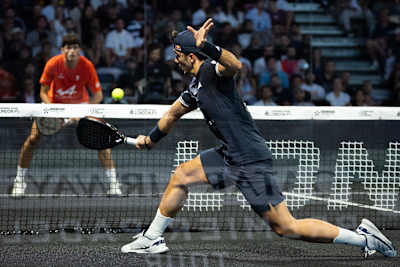
Alejandro Galán is one of the fastest players at the net
© Samo Vidic/Red Bull Content Pool
The volley lob is arguably the most delicate shot in padel. When all four players are at the net and the ball is moving fast, one player softens the volley and lifts it over the opponents. The pair exchanging volleys at close range suddenly has to turn and run back.
It takes soft hands and court awareness to judge when there is enough space behind your opponents. Open the racket face at contact, absorb some of the ball's speed, and guide it up with a short movement. If the ball comes in too fast, the volley lob flies long. If you push too little, it usually falls short and invites your opponent to smash.
Alejandro Galán is a master of the shot. The left-side player from Madrid is famous for his smash, but in fast volley exchanges his hands are just as dangerous. He absorbs the pace of a hard volley and floats it over his opponents' heads as they lean in, and suddenly he and Federico Chingotto own the net.
That ability to change a rally without power is part of what keeps Galán at the top. He and Chingotto have been the main challengers to the world number ones for several seasons, and they won the 2026 Madrid P1 in September in front of a home crowd.
Tip: practice volley lobs from short, fast exchanges with a partner at the net. Start soft and only increase the pace once you can land the lob deep several times in a row.
08
How to learn the lob: drills for club players
Most amateurs prefer drills that let them hit the ball as hard as they can. Smashes, volleys, and other aerial shots usually take up most of practice time. But practising the lob separates those who understand the importance of position and tactics from those who play at full speed the entire match. These four drills cover the basics to start mastering the lob:
- Target lobs. Place a towel or two cones about a metre in front of the back glass on the opposite side. Have a partner feed you balls from the net and play 20 lobs to each side, counting how many land in the zone.
- The three-step progression. Start with controlled, gentle lobs after the bounce, then increase height and depth, and finally practise in match situations while watching how opponents react.
- Lobs off the glass. Have a partner throw balls against your back glass, either with a racket or their hand. Let each one come off the wall and lob it deep. Alternate between single-wall and double-wall balls from the corner.
- Lob-and-move games. Play two-against-two points where the back pair must win the net with a lob before they can attack. It teaches you to follow your lob forward, the habit that turns a good lob into a won point.
Galán, Lebrón, González and Brea all hit shots that end up in the highlights. They also hit hundreds of lobs in every tournament that don’t stand out. Those lobs decide who controls the net, and in padel, the pair that controls it usually wins the match.


09
Where can I watch the best players in the world compete in Premier Padel?
Red Bull TV broadcasts every Premier Padel match from the quarter-finals onwards, which means every match from Friday to Sunday.
Find more information on all tournaments, including ticketing, match schedules, current scores, player updates and all the latest news on the Premier Padel website.
About the author
Part of this story