
Padel
How to choose the right padel racket: The ultimate guide
Learn everything you need to know to choose the padel racket that will help you shine and succeed on the court this season.
Part of this story





The racket is the most important piece of equipment to help you improve and enjoy your padel journey. Whether you are a beginner just starting to play padel or a very advanced player who is already trying to emulate the best Premier Padel players, your choice of padel racket will highly influence your performance and feel on the court.
“The choice of racket is very relative. It depends on the player’s weight, his style of play… There are a lot of factors to keep in mind. Obviously, I always recommend choosing high quality and good materials.” – says Ale Galán, currently world no. 3 and one of the best padel players in history.
Racket technology has advanced quickly since the first rackets were designed. New rackets now feature advanced technologies, adjustable weight systems, hybrid faces and anti-vibration functionalities.

With hundreds of options on the market, understanding how factors like shape, weight, balance, handle size and length, materials, and surface texture affect your performance, improve your game, and reduce injury risk can make all the difference. This guide will help you make an informed decision and choose the padel racket that fits your style and preferences.
01
Shape: Finding your fit
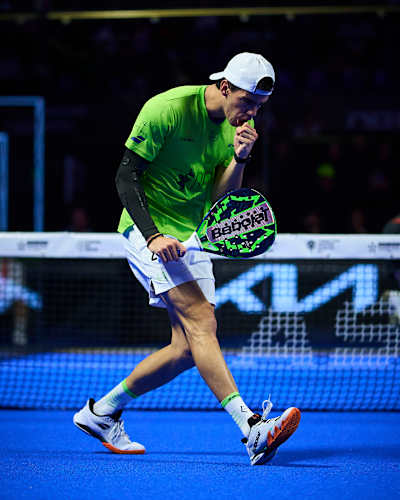
Juan Lebrón’s racket features a diamond shape and suits attacking players
© Premier Padel/Red Bull Content Pool
At first glance, the most obvious differences between padel rackets come down to their shapes. Round, teardrop and diamond are the main varieties of shapes you will see, with important differences between them:
- Round shape: This shape offers a larger sweet spot (the surface area where the racket hits the ball in optimal conditions), making it easier to hit accurate shots even if you don't strike the ball perfectly. This is ideal for beginners or defensive players who prioritise control over power. The larger sweet spot minimises miss-hits, creating a more forgiving experience on the court.
- Teardrop shape: Teardrop-shaped rackets, also called hybrid rackets, balance power and precision. The sweet spot is located slightly higher on the racket, blending the precision of a round shape with the power of a diamond shape. This makes it a versatile choice for intermediate players developing both defensive and offensive skills.
- Diamond shape: Diamond-shaped rackets are usually designed for advanced players seeking maximum power. The sweet spot is smaller and higher on the racket, demanding more precision and skill to hit effectively, but offering more intensity when shots are executed correctly. Aggressive players who often hit smashes and powerful volleys usually prefer this shape.
- Hitting surface: Shape also decides how much face you have to work with, and the spread is wide. Among the rackets used by today's top pros, the figure ranges from around 485cm² to 535cm². A larger face widens the sweet spot, even between two diamond rackets.
02
Weight: Power vs manoeuvrability
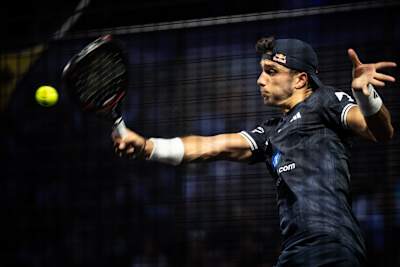
The racket’s weight significantly affects its power and manoeuvrability
© Samo Vidic/Red Bull Content Pool
Although padel rackets must meet certain measurements to comply with official rules, weight can vary between models and significantly affect performance and suitability for different players, especially in terms of power and manoeuverability (the ability to move the racket easily in different directions).
Under the International Padel Federation (FIP) Rules of Padel, a racket can measure up to 45.5cm in total length, 26cm in width, and 38mm in thickness, and it must carry a non-elastic safety cord of up to 35cm that you wear around your wrist. The rules set no weight limit, which explains why the figure changes so much from one model to the next.
- Lightweight rackets (350-360g): These lighter rackets are easier to handle, offering quick, smooth manoeuverability and less strain on the player's wrist and arm. Lightweight rackets are perfect for beginners or players who rely on speed and quick reactions. However, they may lack the strength needed for strong, attacking shots.
- Medium-weight rackets (360-370g): These offer a balance between power and control. They provide enough weight to deliver powerful shots while still being manageable for most players. Intermediate players often prefer this range because it helps them develop their game in a comprehensive, versatile way.
- Heavy rackets (370-380g): Heavier rackets are favoured by advanced, strong players in good shape who can handle the added weight. They offer increased power and stability, which benefits aggressive players who dominate with forceful smashes. However, they require good technique and strength to manoeuver effectively.
- Weight ranges and women's models: Most brands now list a weight range, such as 355-365g, or a figure with a tolerance, such as 370g ±10g, because small differences between units of the same model are normal. Women's signature rackets tend to sit at the lighter end. Delfi Brea's current racket weighs 350-360g, while Juan Lebrón's comes in at 370g.
03
Balance: Tailoring your playstyle
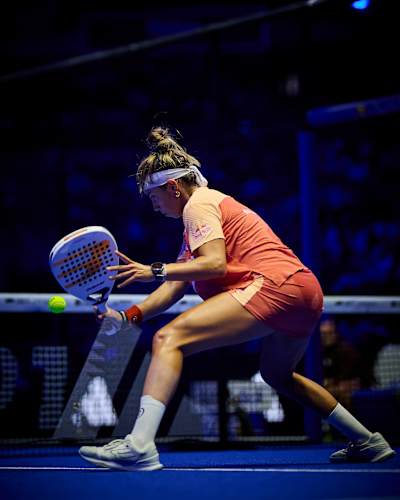
Bea González’s racket perfectly fits her precise and relentless style
© Premier Padel/Red Bull Content Pool
Beyond shape, balance is another critical factor influencing a racket's behaviour and performance. Balance refers to how the weight is distributed throughout the racket, and it can dramatically affect your play style. Weight can be concentrated toward the head, the handle or distributed evenly, with each configuration offering unique advantages.
- Head-heavy balance: Rackets with a head-heavy balance provide more power, making them ideal for aggressive players who focus on decisive aerial shots. The added weight in the head increases the momentum during swings, generating more force behind each shot. However, they can be harder to control, especially in defensive situations.
- Head-light balance: These rackets are easier to manoeuvre, offering better accuracy and quick response times. Head-light rackets suit defensive players who rely on speed and precision to outmanoeuvre opponents. While they sacrifice power, they also allow quicker volleys and reactions at the net.
- Even balance: Even-balanced rackets offer a middle ground, blending energy and control. This balance suits all-round players who don't specialise in one style but adapt to different situations on the court. It's a versatile choice for those looking to improve their overall game.
- Adjustable balance: Many high-end rackets now let you change the balance yourself. Screws, plates or gel inserts can add up to around 12g at the top of the racket, moving the balance point by roughly 1cm. Start with a lighter setup and add weight to the head as your technique improves.
04
Handle size and length: Comfort and control
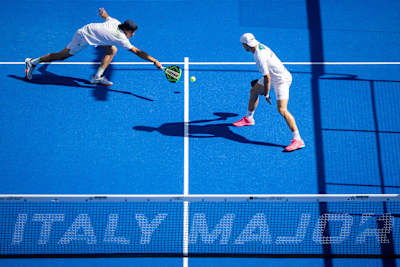
Juan Lebrón stretches for a shot in Rome
© Samo Vidic/Red Bull Content Pool
While often overlooked, the handle size and length of a padel racket are critical to determining levels of comfort and precision and to help reduce the risk of injury – mainly in the wrist, forearm, elbow and shoulder. Official rules state that the racket must measure no more than 45.5cm (including the handle and head) and that the maximum handle length is 20cm.
Keeping these limits in mind, the right handle dimensions can improve your grip, reduce strain and improve manoeuvrability, depending on your preferences.
- Standard handle size: A large majority of padel rackets come in a standard handle size that fits the majority of players. This size offers a good balance of comfort and control, making it suitable for a wide range of players. It provides enough grip for precise control during both attacking shots at the net and defensive shots close to the back wall.
- Thicker handles: Some players, especially those with larger hands, prefer a thicker handle that feels tighter and closer to their palm and fingers. You can thicken handles by adding overgrips, extra "layers" that increase thickness and provide extra cushioning. A thicker handle can offer more stability and reduce wrist strain during powerful shots. However, it may reduce your ability to make quick adjustments, so it suits players who rely on powerful, steady strokes rather than quick, agile movements.
- Longer handles: Some rackets come with a slightly longer handle, which can offer better leverage for two-handed backhands, as well as more reach and a bit of extra power. This feature is particularly useful for players who occasionally hit with both hands or need extra reach to cover the court. However, it can also make the racket feel less manoeuvrable and heavier, so advanced players typically prefer it. Players transitioning from tennis will likely also benefit from a longer handle that more closely resembles those on tennis rackets.
- Handle technology: Some rackets now place an elastic material along the handle to cut the vibrations that reach your arm on off-centre hits. Others come with a slightly extended grip for added leverage on powerful shots.
05
Materials: Impact on performance and durability
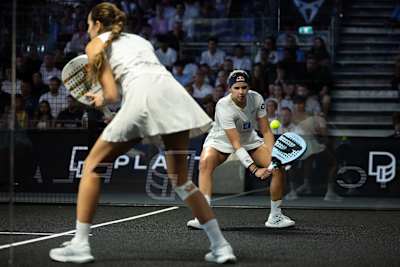
Delfina Brea connects with the ball in London
© Samo Vidic/Red Bull Content Pool
The materials used in a padel racket influence its weight, durability and performance, among other characteristics. Aside from less common materials, two main types of materials make up padel rackets, both on the surface and in the core.
- Carbon fibre: Rackets made from carbon fibre are lightweight yet strong, offering excellent power and precision. They are stiffer, which means they transfer more energy to the ball, making them ideal for advanced players who need maximum power and accuracy. However, their rigidity makes them less forgiving of miss-hits. Carbon fibre also increases the racket's durability, as it is a rigid material that withstands hits well.
- Fibreglass: Fibreglass rackets are softer and more flexible, providing greater comfort and control for beginners. This material is more forgiving, making it easier to hit consistent shots even when you strike the ball far from the sweet spot. Beginners or intermediate players often prefer fibreglass rackets for their softer feel and easier touch on the ball. Despite these benefits, fibreglass is usually less durable and more fragile than carbon fibre.
- Carbon weave (3K, 12K, 18K): The number on many carbon faces tells you how many thousand filaments make up each thread. Although standards and carbon types vary, a tight 3K weave feels dry and firm, 12K is the common middle ground, and the more open 18K tends to feel more elastic. The core still has the bigger say in how stiff a racket plays.
- Hybrid faces: More rackets now blend both fibres in the same face. Hybrids offer easier power and more comfort than pure carbon while keeping more response than pure fibreglass, making them a strong option for intermediate players.
- Core materials (EVA foam vs soft foam): The core of the racket can be made of EVA (ethylene-vinyl acetate) foam or soft foam. EVA rubber is firmer, more resistant, and offers a good balance between power and finesse, making it suitable for most players. Soft foam provides more comfort and shock absorption, reducing vibrations and easing arm strain, which benefits beginners and injury-prone players but sacrifices durability. Some cores now combine densities, with a softer layer between two firmer ones, responsive on hard hits and comfortable on slower ones.
06
Surface texture: Enhancing spin and control
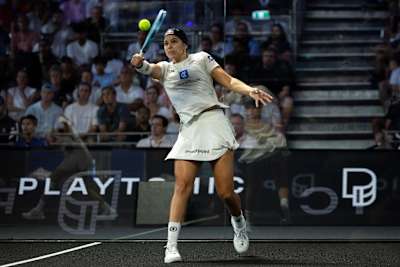
The texture of the racket can help with adding spin to the ball
© Samo Vidic/Red Bull Content Pool
Another subtle yet significant aspect of a padel racket is its surface texture. The texture can boost your ability to put spin on the ball, affecting how it behaves after contact. From smooth to rough surfaces, the texture can give you an edge in executing advanced shots.
- Smooth surface: A smooth surface provides a more consistent and predictable ball trajectory, making it easier to control shots. Beginners who need stability and precision without the added complexity of spin generally prefer this type of surface.
- Rough surface (sandpaper or 3D patterns): A rough surface allows for greater spin potential, giving advanced players more precision over the ball's trajectory and bounce. This is particularly useful for executing advanced shots like slices, drop shots or topspin smashes. The added grip helps create more effective spin, which can be a decisive factor in higher-level play. Rough finishes are now standard on pro models, so most advanced rackets already come with extra spin potential built in.
07
The padel rackets used by the best players in the world
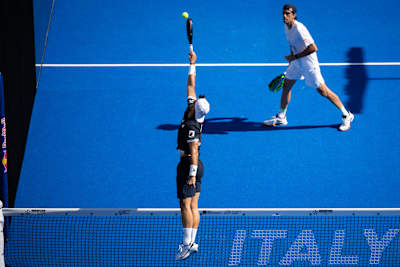
Alejandro Galán’s racket offers a mix of control and power
© Samo Vidic/Red Bull Content Pool
Differences between rackets matter even more at the professional level, where players use rackets that match their skills and playing style. Elite players can notice even the slightest difference between rackets, since they are their main tool to shine on the court. These are the padel rackets used by some of the best players in the world:
- Juan Lebrón's Babolat Viper Juan Lebrón 3.0:Juan Lebrón, known for his aggressive, creative shots and now world No. 5, uses the Babolat Viper Juan Lebrón 3.0. This racket is designed for explosive power, featuring a diamond shape and a head-heavy balance that maximise strength for forceful smashes. Its 3K carbon face adds an extra carbon power layer over a hard EVA core, delivering a firm, highly reactive feel at 370g. Babolat's Dynamic Stability System reinforces the racket's heart to keep it steady on off-centre hits, and a textured surface enhances spin, allowing Lebrón to add devastating effects to his shots. The combination of power and spin makes this racket ideal for players who dominate the game with aggressive play.
- Alejandro Galán's Adidas Metalbone Ale Galán 2026: Alejandro Galán, one of the most versatile and explosive players in the world, currently world No.3 with Federico Chingotto, uses the Adidas Metalbone Ale Galán 2026. This racket features a diamond shape with a head-heavy balance that provides a high-quality mix of power and control. The customisable weight system lets Galán adjust the racket's balance to his play style, with up to 11.2g of extra weight available. The octagonal structure adds stiffness and stability, improving precision on powerful shots. Its faces use 16K aluminised carbon over an EVA Soft Performance core, a softer, more elastic rubber than most power rackets use. At the same time, the rough Spin Blade Decal surface increases spin, making this racket versatile for players who mix aggressive shots with tactical control.
- Bea González's Bullpadel Pearl 27: Bea González, renowned for her explosive and powerful play, uses the Bullpadel Pearl 27, unveiled at the Premier Padel Málaga P1 in July 2026. This racket has a diamond shape and a new Pearl Core. This inverted triangular structure minimises weak spots and adds stability on impact, which is essential for her aggressive dynamic style. The face, featuring Bullpadel's Fibrix blend of carbon fibre and fibreglass, provides a soft yet firm touch, while the Vibradrive system in the handle reduces vibrations on off-centre hits. Additionally, the head-heavy balance, adjustable through Bullpadel's Custom Weight plates, adds extra power. This racket is ideal for players who value control and finesse but don't want to sacrifice raw power.
- Delfina Brea's Bullpadel Vertex 05 W 27: Delfina Brea, joint world No.1 with Gemma Triay, uses the Bullpadel Vertex 05 W 27. The women's version of Bullpadel's Vertex family keeps the diamond shape and core technology of the men's models in a lighter 350-360g format. Its balance of around 25.4cm sits lower than the Pearl 27's, which makes it quicker to move at the net. The Fibrix face sits on a three-density MultiEVA core, the twisted Curv:Aktiv frame spreads vibrations, and Ease Vibe dampeners absorb up to 49%. This racket suits all-round players who switch between defending from the back and finishing at the net.


Before deciding which padel racket you will add to your equipment set, consider how each feature affects your playing style and skill level. Whether you're just starting or looking to refine your game and take it to the next level, understanding these aspects will help you choose what you actually need and not what looks best, which is among the top mistakes amateurs make.
Before you buy, try a few models on court. Many clubs and shops lend demo rackets, and an hour with two or three options will tell you what you need to know to decide.
Find more information on all tournaments, including ticketing, match schedules, current scores, player updates and all the latest news on the Premier Padel website.
About the author
Part of this story