









Red Bull Motorsports
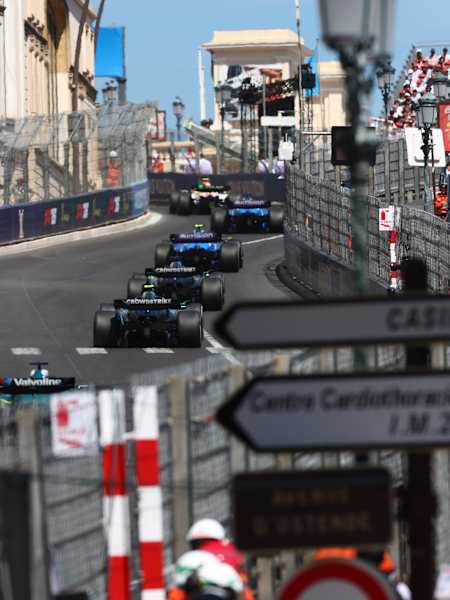
F1
These are the greatest Formula One street circuits
Spectacular, unforgiving and utterly unpredictable – street circuits push F1 racing to its limits. Discover what separates a good street track from a truly great one.
Part of this story
With zero margin for error, street circuits deliver some of the most electrifying moments in F1. But, what makes one stand above the rest? Read on to find out what a street circuit is and explore some of the greatest street races in the world.
What is a street circuit?
A street circuit is a track laid out on public roads, where drivers weave through existing urban environments, with barriers, fencing and minimal runoff areas defining the limits of the track. With no room for error, on narrow streets, driver skill is often decisive. For decades, Monaco provided the template, but Singapore proved that the format could work in even the busiest of cities.
Tracks like Albert Park Circuit, Las Vegas Strip Circuit and Jeddah Corniche Circuit blend public roads with purpose-built sections to create faster, more flowing layouts. While they retain the unforgiving walls and temporary infrastructure of traditional street tracks, they often feature longer straights and higher cornering speeds, reflecting modern F1’s demand for spectacle and overtaking opportunities.
Together, they illustrate how the street circuit has evolved from the claustrophobic challenge of Monaco to high-speed hybrids that still carry the same ever-present risk.
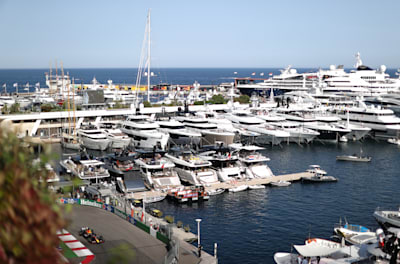
The iconic Circuit de Monaco
© Getty Images/Red Bull Content Pool
Street circuits vs permanent race tracks
The very first Grand Prix was held on public roads around Le Mans in France in 1906. In 1907, the world’s first purpose-built race circuit was opened in Brooklands outside London and, ever since then, elite motor racing has been held on street circuits and permanent tracks. The very best offer the characteristics of both: the Bus Stop chicane at Spa-Francorchamps is evidence that it used to be a public highway.
Each format has its own advantages: grandstands make it easier for spectators, while there are dedicated pit and garages spaces for the team and a superior racing surface. On the other hand, street circuits bring motor racing into the heart of the city, providing a stunning backdrop for the action and an unbeatable sense of occasion.
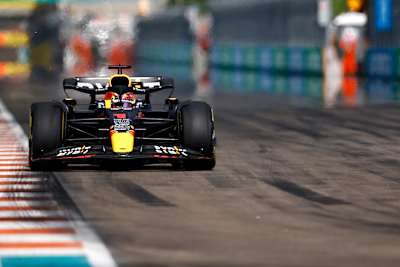
Verstappen on track and in front in Miami
© Chris Graythen/Getty Images/Red Bull Content Pool
A quick look at the history of F1 shows that these tracks go in and out of fashion. The 1980s saw street races in Detroit, Long Island and Adelaide and the first two decades of the 21st Century saw F1 move into huge permanent circuits like Shanghai, Bahrain and the Circuit of the Americas. But right now, street circuits are back on trend with Miami, Jeddah and Las Vegas all arriving in recent seasons and Madrid’s Madring becoming the new home of the Spanish Grand Prix this year.
These new street races are attractive to promoters because they can also be set up and packed away quickly, allowing the space to be used for the rest of the year. The Madring also promises to offer the best of both worlds, with permanent fixtures like the massive Monumental banked curve and the first covered paddock in F1, as well as racing on the streets around an event space just five minutes from the airport.
01
Circuit de Monaco

Max Verstappen races past the harbour in Monaco
© Getty Images / Red Bull Content Pool

Isack Hadjar follows Max Verstappen through the Loews Hairpin
© Sutton Images / Red Bull Content Pool

Max Verstappen races around the Circuit de Monaco
© Getty Images / Red Bull Content Pool
- Track length: 3.33km (2.074 miles)
- Fastest lap: 1m 12.909s – Lewis Hamilton in 2021
- Turns: 19
The jewel in F1’s crown, where the elite come out to party: Monaco is the place where drivers and fans rub shoulders, the harbour bulges with super yachts and drivers celebrate by diving in the pool at the Red Bull Energy Station. It makes up part of the triple crown of motorsport, along with the Indy 500 and Le Mans 24 Hours. Legendary winners here include Graham Hill, Ayrton Senna and Michael Schumacher.
As the oldest, shortest and slowest circuit on the modern F1 calendar, races can be processional, but while overtaking is hard, it’s anything but easy. There's often action at the first corner, Sainte Devote, the Loews Hairpin (which requires the cars to be fitted with a special steering rack) and the harbour chicane – where Alberto Ascari got it badly wrong in 1955 and ended up in the Med.
In 2025, F1 made a bid to spice up the racing by adding an extra pit stop. It didn’t work and there was only one overtake in a predictable race. Max Verstappen said: "You can't race here anyway, so it doesn't matter what you do. One stop, 10 stops. We were almost doing Mario Kart – maybe you can throw bananas around.” Be careful what you wish for… In 2026, it’s back to the old recipe, so let’s see what F1’s next generation of cars make of the circuit.
02
Las Vegas Strip Street Circuit

Welcome to the fabulous Las Vegas Strip
© Getty Images / Red Bull Content Pool

Las Vegas GP winner Max Verstappen
© Getty Images / Red Bull Content Pool

Isack Hadjar takes a spin around Las Vegas
© Getty Images / Red Bull Content Pool
- Track length: 6.20km (3.853 miles)
- Fastest Lap time: 1m 33.365s – Max Verstappen in 2025
- Turns: 17
Nowhere puts on a bigger show than fabulous Las Vegas. The Las Vegas Grand Prix is dazzling with its run down the Strip, past the Bellagio fountains and around the Sphere. By comparison, it’s been tame as a sporting challenge, but has improved year on year. In 2023, after a bumpy start to the weekend with a flying manhole cover in FP1, Max Verstappen ultimately took the win ahead of Charles Leclerc. In 2024, he sealed his fourth World Championship and in 2025 there was drama on and off the track with Verstappen chasing down Lando Norris in the World Championship and both McLarens dramatically disqualified after the race.
Verstappen clinching his championship isn’t the first time a driver has sealed the deal in Vegas: in the early '80s, F1 held two tedious races in a car park as the final round of the season and called it the Caesars Palace Grand Prix. It’s proof that street racing has come a long way. But at least Nelson Piquet, the father of Max’s girlfriend Kelly, and then Keke Rosberg, father of 2016 champion Nico, wrapped up their world titles in 1981 and ’82.
03
Marina Bay Street Circuit

Spectacular from start to finish: Singapore Grand Prix
© Getty Images / Red Bull Content Pool

Racing through the night on European time
© Getty Images / Red Bull Content Pool

The Singapore Grand Prix was F1's first night race
© Getty Images / Red Bull Content Pool
- Track length: 4.93km (3.07 miles)
- Fastest lap: 1m 33.808s – Lewis Hamilton in 2025
- Turns: 19
F1’s first night race, the Singapore Grand Prix combines spectacle and glamour with the most physically exhausting challenge in the championship, as drivers race through the night in the extreme humidity. It's also the only track to offer a floating grandstand, where cars actually pass underneath spectators. The track's bumpy finish straight adds to the event, delivering huge showers of sparks and just to spice things up, there’s often the occasional monitor lizard marching around the place.
In 2023, the race produced one of the biggest shocks of the modern era, as Carlos Sainz claimed victory and ended Oracle Red Bull Racing’s dominant winning streak – the only race that season not won by the team. With five wins, Sebastian Vettel has the record around Marina Bay, including three for Red Bull Racing and, poignantly, in 2024 it was Daniel Ricciardo’s final race in the championship.
04
Albert Park Grand Prix Circuit

Liam Lawson arrives in Albert Park in style
© Getty Images/Red Bull Content Pool

The start of the Australian Grand Prix
© Getty Images/Red Bull Content Pool

Melbourne forms the backdrop for the Australian GP
© Getty Images/Red Bull Content Pool
- Track length: 5.28km (3.280 miles)
- Fastest lap: 1m 19.813s – Charles Leclerc in 2024
- Turns: 14
Take the tram from central Melbourne, glide past the MCC and Rod Laver Arena, home of the Australian Open, get out at Albert Park and cross the lake on the temporary pontoons and into the paddock. And after the race, you can get startled by a possum before heading to dinner in friendly St Kilda. The Australian Grand Prix is one of the most convivial destinations on the F1 calendar and it was back as the curtain raiser to the 2026 season.
The new Albert Park Grand Prix Circuit is 23m shorter and has two fewer corners, but the widened and newly resurfaced track offers more opportunity for overtaking and wheel-to-wheel racing – all set against the stunning Melbourne skyline. The track itself is bumpy – shaking newly built cars apart – and narrow in a few sections which makes it tough to pass, yet the cars hit speeds of 235kph. That adds up to a testing circuit where mistakes are punished, giving us a thriller Down Under.
05
Baku City Circuit

Liam Lawson races through the streets of Baku
© LAT Images / Red Bull Content Pool

Max Verstappen threads the needle through the narrow parts of the old city
© Getty Images / Red Bull Content Pool

Max Verstappen clears Baku's long grandstand straight to win in Baku
© Getty Images / Red Bull Content Pool
- Track length: 6.00km (3.730 miles)
- Fastest lap: 1m 43.009s – Charles Leclerc in 2019
- Turns: 20
Even though it has eight 90-degree corners, Azerbaijan's Baku City Circuit is a super-fast circuit with a massive start/finish straight that gives drivers lots of opportunity to pass in front of the grandstands. The unofficial fastest speed here is 378kph, set by Valtteri Bottas in a Williams in free practice for the 2016 European Grand Prix, running an ultra-low downforce configuration – probably the fastest speed reached by an F1 car on a race weekend.
The track stands out from other circuits for a number of reasons, not least for the stunning location, which loops around the ancient city of Baku. While the backdrop may be serene, the racing has proved anything but: Baku has seen plenty of racing chaos with safety cars, crashes, crashes behind safety cars, cars reversing into each other and bold overtakes.
06
Miami International Autodrome

Max Verstappen leads the field away at the start of the Miami Grand Prix
© Getty Images / Red Bull Content Pool

Max Verstappen on the narrow Miami street circuit
© Getty Images / Red Bull Content Pool

More fun in F1: Max and Yuki in the full-size Lego cars
© Getty Images / Red Bull Content Pool
- Track length: 5.41km (3.363 miles)
- Fastest lap: 1m 29.708s – Max Verstappen in 2023
- Turns: 19
Multicultural, musical and vibrant, Miami is the 11th city to host F1 in the USA and brings a completely new flavour to the championship. The Miami Grand Prix takes glamour to a whole new level with so many celebrities crowding on to the grid, there's barely room for the cars. Meanwhile, the tight track weaves around the Hard Rock Stadium, home to the famous Miami Dolphins.
It’s delivered iconic moments, including Max Verstappen chasing down Charles Leclerc to win the inaugural event, Verstappen winning from ninth on the grid in 2023, Lando Norris’s first win in 2024 and Oscar Piastri’s triumph in 2025. And that year, the parade lap that put the drivers behind the wheel of life-size Lego F1 cars was perhaps the most fun the racers have ever had.
07
Jeddah Corniche Circuit

Isack Hadjar races along the Red Sea coast
© Getty Images / Red Bull Content Pool

Max Verstappen kicks up the desert fesh-fesh in Jeddah
© Getty Images / Red Bull Content Pool

The Jeddah Corniche races around the famous Pilgrim Port
© Getty Images / Red Bull Content Pool
- Track length: 6.17km (3.836 miles)
- Fastest lap: 1m 30.734s – Lewis Hamilton in 2021
- Turns: 27
Postponed for 2026, the Jeddah Corniche is not only F1’s fastest street circuit, it’s also up against the clock itself. It was put in place to host the Saudi Arabian Grand Prix until the completion of the Qiddiya Speed Park Track as its permanent home. But Jeddah Corniche is jaw-droppingly fast for a street circuit, with average speeds over 252kph. At 6.17km, it’s the second-longest circuit in F1, behind only the mighty 7km Spa-Francorchamps, home of the Belgian GP.
It’s also eye-catching as cars race beside the Red Sea, and narrow, demanding absolute precision from the drivers and nerve. Qiddiya is expected to be ready soon, but it already has a tough act to follow.
08
Macau (Guia Circuit)

Mattia Colnaghi races around the tight streets of Macau
© Dutch Photo Agency / Red Bull Content Pool

Macau is where young drivers can prove their F1 potential
© Dutch Photo Agency / Red Bull Content Pool

Mattia Colnaghi heads down Macau's long straights
© Dutch Photo Agency / Red Bull Content Pool
- Track length: 6.12km
- Fastest lap: 2m 15.561s – Théophile Naël in 2025
- Turns: 24
The fearsome Guia street circuit has long been regarded as a proving ground for future Formula One talent. They’ve been racing cars around the streets of Macau since 1954 with the Grand Prix weekend now hosting the Formula Regional World Cup and Formula 4 World Cup. At just 7m wide at points, Guia is much too narrow for F1 cars and so the amazing Macau Grand Prix has never been part of the F1 schedule. But it is where many future greats of the sport write their legend.
Race winners here include legends like Ayrton Senna, Michael Schumacher andDavid Coulthard and from the current grid, Max Verstappen, Charles Leclerc and most recently Arvid Lindblad who won here in F4. There aren't many places that make Monaco look easy, but Macau is one. The 6.12km track is incredibly unforgiving, thanks to an insidious cocktail of high speeds, a slippery surface and crash barriers close to the track that form immovable objects to meet irresistible forces. It's probably the most epic street circuit currently in use, but with no room for error, things can go quite wrong quite quickly.
Part of this story


