


Gaming
Gaming
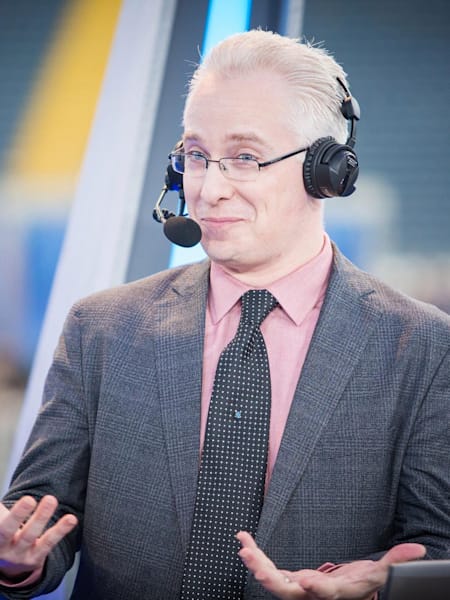
Alan 'Nahaz' Bester predicts ESL One Hamburg
With ESL One Hamburg imminent, we caught up with statistics professor turned Dota analyst Alan 'Nahaz' Bester to discuss all things Dota 2.
Speaking of unfamiliar faces, it feel like a lifetime since we’ve seen the broad smile of professor turned Dota 2 analyst and statistical guru Alan 'Nahaz' Bester on an analyst desk at a big event. He’s set to return to the fray this weekend, so we caught up with him to discuss the patch, the event and his plans moving forwards.
ESL One Hamburg will sadly mark the end of a fantastic patch in 7.06. Are you excited to see change coming? Are the changes pub- or pro-game-driven?
Nahaz: I think it says something that people are complaining and the top thread on Reddit every day is demanding a new patch but we’re still seeing innovation. We’re seeing truly new drafts all the way until the end of the patch. I think we can pretty safely call this the most successful patch in the history of Dota, I really do.
I think it’s going to be the first time in a while that some of the changes in 7.07 are going to be much more focused around pub games than the pro game and I think this is the first time in quite some while that you’re going to be able to say that. I think IceFrog and the team realise that everyone is ready for something new in their pubs.
With so many tournaments in such a short burst of time, and Dota Pit starting immediately after the touted patch date, do you think Valve might release two different versions for pubs and pro games?
Nahaz: I think that that’s one of the things that won’t change. You never say never with Valve, but that’s the closest you get to it. Valve and the team behind Dota have been incredibly reluctant to have any kind of version-differentiation ever, to the point that only if you go back to original Dota was there actually a tournament version. The idea was that the events would always be played on the last tested and stable patch and the current version wasn't used for tournaments until some time later.
Now, though, I’ve actually done pro series and qualifier series for major LAN events and The International where the patch has actually changed mid-series. If they wouldn’t have a tournament event in those circumstances, I can’t see any circumstance in which it would happen. The CS:GO scene is the same way, or at least it’s evolved that way. I know a few people who've been at events where there have been Valve coders for CS:GO present. They discover a bug mid-game and they’ll go to a backroom and fix it. Dota 2, partly because of [the anonymous and reclusive] IceFrog’s lead, has never been quite as visible as that, but I think you definitely have a similar thing going on.
Do you think we will at least see patch notes dropped to professionals before it goes live?
Nahaz: My honest answer is no. There’s a very strong tradition that the patch notes are released to everybody at the same time. There are quite a few people in the pro ranks that will have a good idea of what’s coming. You never know quite who you’re talking to, but there will be questions relayed to pro players and you’ll get emails from IceFrog saying, “What do you think about this?” So we have a pretty good idea of what’s on its way. When you see some of the private Discord chats and so on, you have a decent idea of what’s being looked at and can make some very strong educated guesses about what’s coming. I'm fairly confident that you’re not going to see pro players getting the patch notes before anyone else.
Do you think implementation of gameplay patches will prove problematic given the seemingly crazy amount of tournaments we have in the new professional circuit this year?
Nahaz: My answer to that comes in an almost two-pronged approach. If you look at the timing of patches historically, they’re fairly stable. This is a little on the late side for a post-TI patch, but it’s not that late. The timing of the patches throughout the season has generally been stable, even before the last incarnation of the major system. I think it’s going to be pretty much the same patch cycle that we’ve already seen, but I think we're more likely to see patches released right after major events are complete. Otherwise, we’re going to have problems like we’ve had in the past. People in Dota tend to have a short attention span, as across most of esports (which makes sense as it’s all pretty new), but you go back a couple of years before the major cycle and it wasn’t unusual that we had tournaments just after a major patch was released.
The last major event I did was the Starladder Invitational out in China and that event was just after a sizeable patch. The teams are used to it and understand that it’s part of the nature of the game and the competition. In fact, I have had a theory for a couple of years that it’s not necessarily a bad thing. TI is a new patch, but because TI is so long, it gives teams capacity to innovate more than any other tournament. So, to me, if I’m coaching a team, I’m saying, “Hey, these tournaments right after big patches are an opportunity for us to practice adapting to the meta and finding strategies that work on the fly and finding the types of adjustments we’re going to need if we want to win a two-week tournament out in Seattle.”
What are your general thoughts on the new pro circuit? There have been some murmurs of discontent over Captain’s Draft giving qualifying points which we don’t necessarily agree with. What are your thoughts?
Nahaz: I am really, really happy with where the scene is right now. I have no issue whatsoever with Captain’s Draft being a minor either. You’re talking about double-digit majors, not double digit events total. There’s double-digit majors and these tournaments are worth five times the amount of qualifying points as the minors. When you’re talking about the percentage of points given out at the Captain’s Draft event as a percentage of the total pool it’s genuinely minuscule. I think it’s pretty silly for people to get caught up in hysteria around Captain’s Draft awarding points. Honestly, I don’t buy the argument at all.
For the scene as a whole, at least so far, there’s so much more continuity already. If you look at the top four finishers from TI in the last two seasons, there’s only one of them that has won more than two LAN events in the calendar year (franchises, regardless of roster changes following their top-four finish at TI). The whole idea of initial change with roster locks and so on was that it was meant to promote continuity. However, because the top teams were playing so infrequently, I always felt that the team was lacking the storylines and continuity that helped teams get to the higher level.
What's amazing and what I’m hearing now, even talking to minor tournament organisers, is that they were initially calling up teams like EG for direct invite slots and saying, “Hey, do you want to come out and play at our event?” and now they’re actually getting calls from top-tier teams asking to play their event. We’re going to continue to see a lot of top teams colliding and I think that’s great for the scene.
Do you think it promotes the 'tier two' scene as much as people initially thought?
Nahaz: A lot of people think it’s an either/or. They think we either see all of the top teams at an event, or events with basically no top teams and more opportunity for those on the fringes. I think we can, and do have both. If you take the Keen Gaming team who are at ESL One Hamburg, all they did was go through iG, iG.V and LGD to get here. I think we’re going to see a lot more Dota played by the top teams but because of the qualifier mandate we’ll see a great mix. Keen are an open qualifier team who will be playing in our first ever new format major event. That’s much like when Unknown made it to the first-ever Valve hosted major all the way back in Frankfurt. I think it’s a win-win for a fan.
Equally, many don’t agree with direct invitations being handed out without solid reasoning behind it. It arguably gives teams a chance to grab qualifying points by just winning one or two series and not even playing through often arduous qualifiers. What do you think should happen?
Nahaz: I think that the place where the scrutiny has to fall is really the majors. I think when you look at the minors, I’m reluctant to get too bent out of shape on the formatting and invitations to the minors. I think because there are more events, there’s scheduling issues and the percentage of total points available at these minor events are so small that we shouldn’t get too held up.
When you start to consider major invites, I do think we need to be careful. Valve are very hands-off in their approach to managing the pro scene but there are signs that they’ve become a little more involved, and I think there are most likely conversations happening behind the scenes around direct invites. For ESL One Hamburg you can’t argue with Liquid and Newbee, the top two finishers at TI. Going forward, we definitely need to keep an eye on them. If the majors continue to house eight teams and we’re going to have two direct invite slots, which I expect a lot to be, the identity of those two directly invited teams needs to have a structure applied to it and it probably shouldn’t always be the same two teams. Everybody needs to make sure that the invite process makes total sense.
Can you see anyone stopping the seemingly unstoppable Team Liquid train – especially on 7.06?
That’s one of the big storylines heading out into the tournament. Can anyone beat Team Liquid? The last Sunday of ESL One Hamburg will be the six-month anniversary of the last time Liquid were eliminated from a LAN tournament by iG.V at the Kiev Major. That’s five straight LANs and it’s a long, long time.
If you ask me for one theme that stands out to me about the meta it’s support play
Do you see an upset, then, or are they just too strong?
Nahaz: I think Liquid, for reasons we’ve discussed, have to be heavy favourites. I am super-excited to see Virtus.pro back in action, though. You’ve got two of the all-time leaders in K/A/D in their two young cores in Roman “RAMZES666” Kusnarev and Vladimir “No[o]ne” Minenko. They’re incredible players and this is a team that made the decision to stay together post-TI disappointment and have therefore been together a while. If you ask me for one theme that stands out to me about the meta, it’s support play. I think this is the age of super supports. There have been a lot of changes that I think have improved the quality of life for support players in pubs but also had a positive impact on the pro scene.
It seems like an age since we last saw you on an analyst desk. You were considering committing to esports and moving away from teaching for a little while. What’s the plan?
Nahaz: I am planning on attending and working at more Dota events over the coming events. Hopefully you’ll see me on more desks in the next few months. I made the decision to take a year off academia. Look, I love teaching and love what I do as a professor, but I'm going to take a year and explore what I can do in esports, both on the talent and business side. After that, I’ll make a decision. We just had a move as a family and my wife is working a great job which she is very happy at. That makes me lucky that I have a little bit of flexibility to explore some opportunities and I'm really excited about it. I obviously love the analytical side, but I taught statistics to business people in Chicago for 10 years which makes me very interested in the business side of things and esports development as an industry.
For more esports coverage, follow @RedBullEsports on Twitter and Instagram and like us on Facebook.
