
Padel
How to play padel like Delfina Brea: 5 skills that made her world No.1
The safest hands in the women's game hide one of its most aggressive minds. Here are the five qualities that turned a kid from Buenos Aires into the player nobody wants across the net.
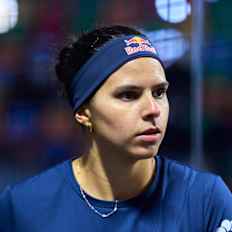

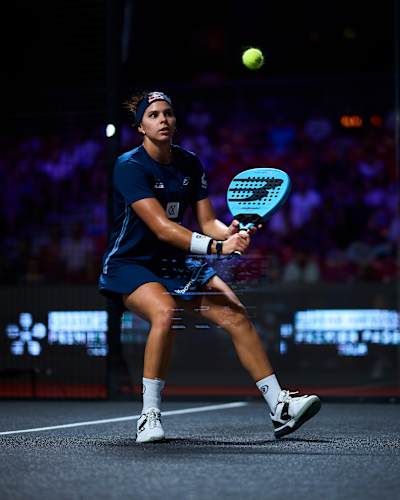
Delfina Brea built her game on a padel court that was, quite literally, her backyard. Raised at Club El Monasterio in Buenos Aires, owned by her father, Nito Brea, the Argentine developed the fierce competitiveness and tactical intelligence that have taken her to world No.1 alongside Gemma Triay. From the right side of the court – traditionally the domain of patient builders – Brea has redefined the role with one of the most aggressive and intelligent games in Premier Padel. These are the five skills that made her the best in the world.
01
Consistency: the art of never giving the point away
There is a strong case for calling Brea the best defender in the women's game, and the numbers back it up: her unforced error count is consistently among the lowest on tour. That reliability has a knock-on effect that opponents rarely account for. Whoever plays to her left inherits a freedom most left-side players never experience. With Brea holding her half of the court, her partner can take risks, chase winners and play with a creativity that would be reckless alongside anyone else.
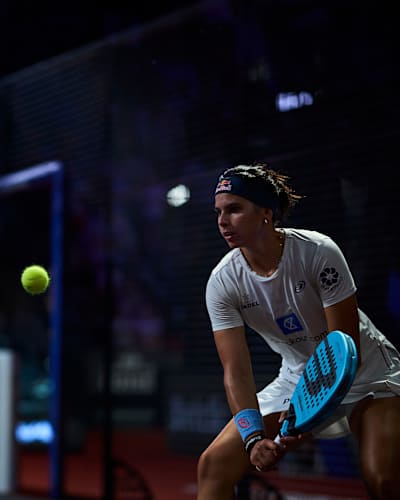
Delfina Brea possesses exceptional defensive skills
© Premier Padel/Red Bull Content Pool
The physical component is obvious to anyone watching. Brea reaches balls that have no business coming back, sliding into corners and scraping shots off the glass at full stretch. But her true signature in defence is not the retrieval itself. It's the lob.


Brea executes her lobs with surgical precision and depth, over and over, from positions where most players would settle for survival. A ball that should end the rally instead floats past the attackers' reach, lands within a metre of the back glass, and suddenly the pair that owned the net is retreating while Brea and Triay walk forward to claim it. Neutralising attacks and taking the initiative away from her opponents is what separates her from every other defender on tour.
02
Patience: knowing when to strike
Those who have coached Brea describe her as a player who arrives at matches with a plan and, more importantly, the ability to adjust it the moment something better appears. Like a supercomputer, she reads opponents after every single shot, spotting the weak spots on the other side of the court, like the volley that arrives a fraction late or the backhand that struggles under a heavy lob, and adjusts her targets accordingly, often within a few points.
Fans and viewers can best appreciate that ability to read the game through Brea’s control of rhythm. Padel rewards players who use strength and speed as resources, not default settings, and few understand that reality as well as 'Delfi' does. When a point calls for acceleration, she takes it early and attacks. When opponents find their timing and start embracing the pace, she mixes in slower, deeper balls that freeze the rally and force rivals to rethink their approach.
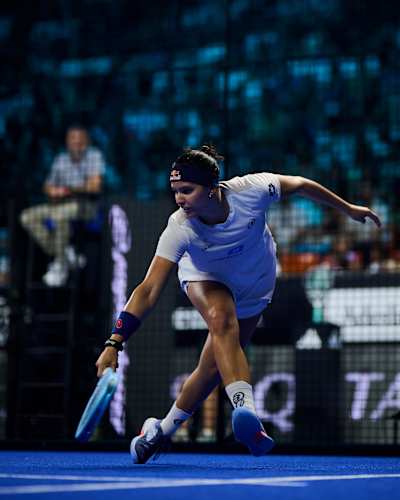
Brea is constantly recalibrating during matches
© Premier Padel/Red Bull Content Pool
That variety and gear shifting are what frustrate opponents most. Beating Brea requires generating everything yourself: the pace, the angles, the openings. Nothing arrives for free, and over three sets, manufacturing all of that against a player who is constantly recalibrating becomes an exhausting assignment.
03
Aggressiveness: a builder with a finisher’s instinct
The right side has traditionally come with a concrete job description: build the point, handle pressure, let the left side finish. Brea appears to have skipped that page. Excluding left-handers, who enjoy a natural advantage with their forehand towards the middle, she is arguably the most aggressive right-side player in the women's game, and her transition from defense to attack breaks every rule associated with that traditional position of builder and handler.
Brea’s víbora is remarkably aggressive for a right-side player: a deep, spin-heavy missile that keeps rivals pinned against the back glass. At the net, she keeps polishing the art of hiding the intention, direction and speed of her volley until the very last millisecond. The racket face gives nothing away; her shoulders and hips suggest one direction, and the ball leaves for another, as defenders remain dumbfounded and constantly struggling to figure Delfi out.
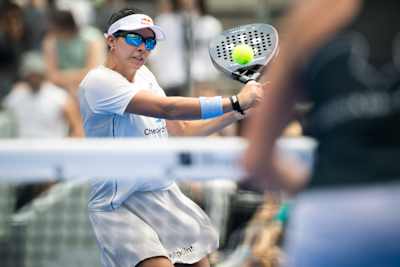
Brea disguises her volleys until the last moment
© Samo Vidic/Red Bull Content Pool
04
Positioning: always a step ahead of the ball
Some players cover the court with just their legs. Brea adds her mind to that equation. Her footwork and court awareness are elite, and that combination means she is almost never caught off balance, even in rallies played at the highest pace.
The clearest example of that IQ is her elite ball reading off the glass. Rather than waiting to see how the ball comes off the back wall, like most players do, Brea anticipates the trajectory before the bounce. The practical consequence is that she covers less distance than almost anyone on tour, allowing her to transition into the next position. What looks like speed is, more often, arithmetic done earlier than the opponent's.
That discipline shows in how she manages her side of the court. Brea commands the centre, closing passing lanes before the opposing pair has even identified them, and forcing rivals into the low-percentage shots down the line or through impossibly tight windows, drawing the same kind of mistakes that she is so outstanding at avoiding.
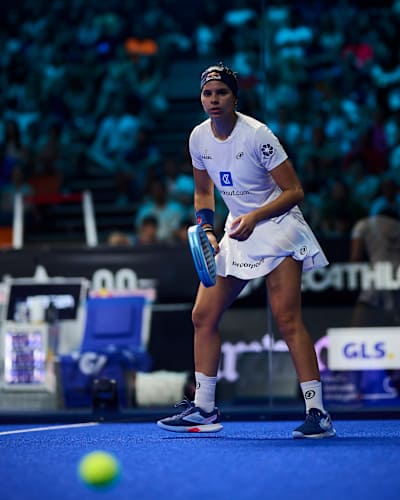
Footwork and court awareness keep Delfina Brea one step ahead
© Premier Padel/Red Bull Content Pool
05
The volleying game: pressuring opponents at will
At the net, Brea adapts to whatever the situation demands. Under heavy fire, when opponents are drilling balls at her body from close range, she excels at the positioning volley, absorbing pace rather than adding it, and placing the ball where the gaps are. The ball slowly moves into a neutral zone, the point resets, and the attack that should have ended the rally comes to nothing. Surviving the transition zone is one of the least glamorous skills in padel and one of the most decisive, and few players in the world manage it as calmly.
When the balance of the point tips in her favour, her mindset changes completely. Brea's attacking volleys are flat, penetrating and driven with aggressive weight, aimed at the opponents' feet or straight into the fence, often allowing only a weak, floating return that either she or Triay puts away.
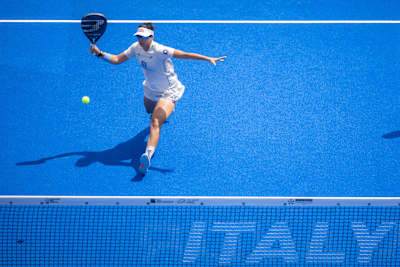
Brea's volleys can turn quickly defence into attack
© Samo Vidic/Red Bull Content Pool
06
Bonus: keeping calm under pressure
Argentine players carry a reputation for competitive fire, and Brea is no different. What sets her apart is how she feeds off it. In the moments when matches tighten, and other players get carried away by the intensity, she goes quiet, reassuring her partner, playing another patient lob, making the right choice one more time. The temperament looks natural, and partly it is, but it has also been built deliberately, through years of psychological work off the court. She and Triay share a sports psychologist to manage the implications of an elite partnership, a process Brea has described as "literal couples therapy."

Brea's temperament is just as impressive as her technical ability
© Premier Padel/Red Bull Content Pool
I'm a demanding person, and I trust that's what will carry me forward

That practice translates into a specific kind of toughness. Brea knows how to suffer through the most challenging stretches of a match without her level dropping, and, just as importantly, she knows how to hold her partner up emotionally when the scoreboard is against them. In a doubles sport, that invisible ability wins as many titles as any powerful smash.
The standard she holds herself to explains the rest. "I'm a demanding person, and I trust that's what will carry me forward," she says. On the evidence of the last two seasons, it has carried her further than any Argentine woman in more than a decade.


The quiet No.1
Nine titles last season and a climb to the top of the rankings alongside Gemma Triay would be, for most careers, the destination. For Brea, at just 26 years old, they’re just the result of a consistent formula: fewer errors than anyone, better decisions than most, and a calmness that turns close matches into her biggest motivation.
Padel produces louder players and flashier highlight clips, but the rankings ultimately reward players who keep winning and posting strong results. And right now, the best example of that is Brea’s quiet consistency.
07
Where can I watch Delfina Brea play?
You can watch Delfina Brea and every Premier Padel match live on Red Bull TV. For full tournament schedules, results and player news, head to the Premier Padel website.
About the author