










Surfing

Surfing
WSL 101: Your guide to the World Surf League
From Big Wave to the Longboard Tour, the World Juniors to the Championship Tour and all points in between, here's your cheat notes for everything you'll ever need to know about the World Surf League.
Part of this story
01
What is the WSL?
The World Surf League (WSL) is a beast. Roughly 1,000 surfers around the world battle it out in WSL events every year, across the four tiers of shortboard competition, as well as the Longboarding and Big Wave Tours.
Starting with the Junior and Qualifying Series, run across seven global regions, surfers progress to the Challenger Series and then, hopefully, the biggest stage of them all, the Championship Tour, which decides the world champions. How does it all work? Let's take a look.
Watch the World Surf League Championship Tour on Red Bull TV – streaming on web browsers, mobile apps, and Smart TVs
02
How do surfers qualify for the WSL tours?
There are three tiers of shortboard competition on the WSL, the Qualifying Series (QS), the Challenger Series (CS) and the Championship Tour (CT). Any surfer who's paid an annual World Surf League membership can enter Qualifying Series events. These can be relatively small local affairs with less than 50 people competing, up to larger events with 100-plus competitors flying in to fight it out for points.
These events are ranked from QS1000 to QS6000, depending on the quality of wave and the size of the prize pool. The bigger the competition, the more points you can win, and the closer you get to qualifying for the next level of WSL competition.
Surfers who garner enough points in their region over the course of a QS season qualify for the Challenger Series, which is the final stepping stone before the highest echelon, the Championship Tour.
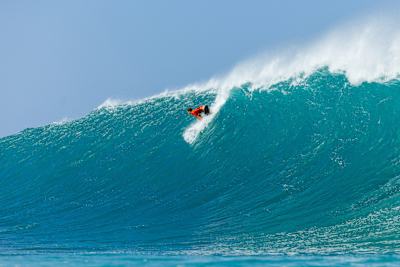
Jack Robinson rolling into the first perfect 10 of the 2025 season
© Brent Bielmann/World Surf League
A Challenger Series event sees 80 men and 48 women compete. These numbers comprise 49 men and 30 women who've qualified through the seven WSL regions (Australia/Oceania, Asia, Africa, Europe, Hawaii/Tahiti Nui, North America and South America), as well as the two World Junior Champions from the previous year, and a long list of surfers who missed the cut on the Championship Tour that year, or were highly ranked on the previous year's Challenger Series.
There are seven events around the world on the 2025–26 Challenger Series, from Australia to South Africa, the USA to Portugal, Brazil and Hawaii. A win is worth 10,000 points, and competitors count their best five of seven results for the season. Finish in the Top 10 of the men's CS or the Top 7 of the ladies' CS and you've qualified for the follwoing year's Championship Tour!
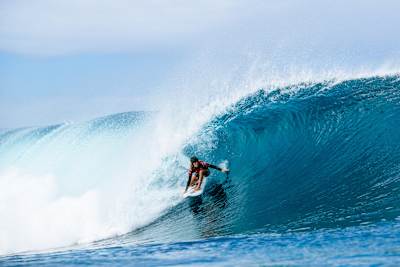
Caity Simmers, on top of the world and sitting pretty at Pipeline
© Tony Heff/World Surf League
The CT comprises 34 men and 22 women, with two male and two female wildcards joining the field at every event. In 2026 there will be 12 events on tour, and after five controversial years the World Surf League has scrapped the Mid-Year Cut and WSL Finals, meaning the world champion will be decided from the season's final rankings.
In another wildly popular move, the annual event at Pipeline has been moved from the start of the season to the very end, meaning that surfing's spiritual home will most likely once again decide the sport's world champions. To further enhance the chances of that happening, the 2026 Pipe Masters will be worth 15,000 points, compared to the 10,000 on offer at each of the 11 other events.
03
Can I become a WSL surfer?
Yes! Anyone can sign up. Once you've paid your annual membership fees, you're welcome to enter Qualifying Series events around the world, though you can only earn points towards making the Challenger Series in your home region.
04
How many surfers compete on the World Surf League?
There are thousands of surfers competing on the Qualifying Series in the seven WSL regions, with events held in countries as far flung as Canada, India, Peru and South Korea.
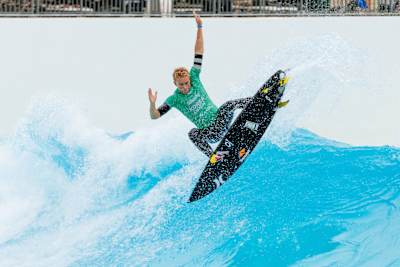
Australian Jarvis Earle competes in a South Korean wave pool on the WSL QS
© Cait Miers/World Surf League
Every year, 80 men and 48 women graduate from the QS to compete in the Challenger Series, in an attempt to qualify for the top-level Championship Tour.
The first nine events on the 2026 Championship Tour will comprise 34 male and 22 female surfers, with two male and female wildcards at each. Events 10 and 11 will feature a reduced field of 24 men and 16 women.
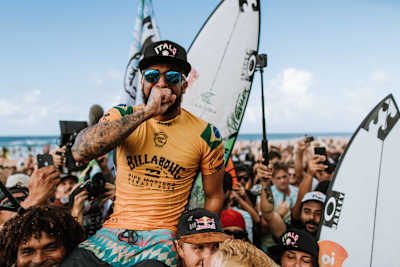
Italo Ferreira was the last surfer to win a world title at Pipe, in 2019
© WSL/Ed Sloane
The 2026 Championship Tour season concludes at Pipeline, with the full roster of 34 male and 22 female surfers all competing once again. The Pipe Masters will carry extra weight, with 50 percent more points on offer than at a standard event. The top eight male and female surfers heading into Pipeline will receive advanced seeding, creating a high-stakes finish to determine the year's world champions at surfing's ultimate proving ground, the North Shore of Oahu, Hawaii.
05
Who are some famous WSL surfers?
Kelly Slater is unquestionably the greatest surfer of all time, with 11 world titles headlining an endless list of achievements, and an influence on the sport that extends far beyond competition. From pushing surfboard design and wave-pool technology, to environmental work and his status as a full-blown '90s celebrity, Slater is a global athlete, mentioned in the same breath as icons such as basketball player Michael Jordan, golfer Tiger Woods and tennis player Serena Williams.
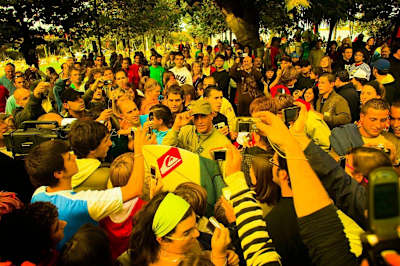
Kelly Slater, commanding the crowd
© Steve Sherman
Andy Irons gained fame around the world as the first surfer to genuinely challenge Slater, claiming three-straight world titles in a sizzling run from 2002-2004, and making such an impact in his tragically short life that the Governor of Hawaii decreed February 13 to be known as Andy Irons Day.
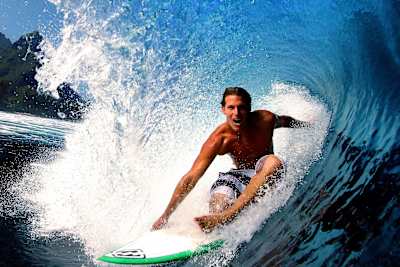
Andy Irons at home in Kauai
© Mike Coots
A similar honour was bestowed upon fellow Hawaiian world champion Carissa Moore, her five women's world titles resulting in January 4 being named Carissa Moore Day.
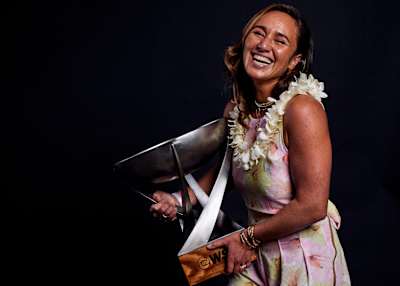
Carissa Moore, 2021 WSL World Champion
© Brian Bielmann/WSL
Gabriel Medina, who became Brazil's first world champion in 2014 and has since won two more titles, is a megastar in his homeland. Often seen the cover of national newspapers and magazines, and with over 14m Instagram followers, Medina's celebrity is on a par with his country's most celebrated football players (as long as they're not named 'Neymar').
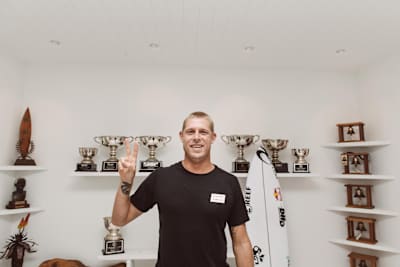
Trophy room, much?
© Corey Wilson/Red Bull
Mick Fanning is an Australian celebrity of the highest order thanks to winning three world titles in the face of family tragedy and his encounter with a great white shark while surfing the final of the J-Bay Open in 2015. Eight-time world champion Stephanie Gilmore and seven-time world champion Layne Beachley are also incredibly well-known figures in their homeland.
While they might not be global celebrities, surfers like Japan's Kanoa Igarashi and Portugal's Frederico Morais are huge in their homelands, while Championship Tour surfers Ramzi Boukhiam, from Morocco, and Indonesia's Rio Waida were both national flag bearers at the Tokyo Games.
Who's next? Caity Simmers, Molly Picklum, Griffin Colapinto and Jack Robinson are all teetering on the precipice of global stardom... stay tuned!
06
How do WSL heats work?
On the QS and CS heats are made up of four surfers, with two advancing to the next round, before heats become one-on-one by the finals. On the CT, the opening and elimination rounds see three-surfer heats, with the top two advancing. From then on it's one-on-one until the trophies are given out. Heats run anywhere from 20 to 30 minutes, though time can be added if the conditions call for it.
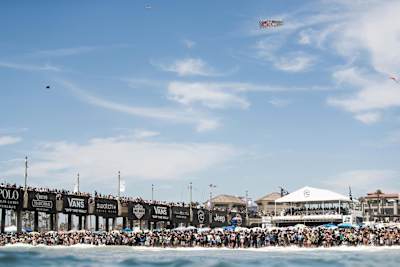
The US Open beach scene is like nothing else in surfing
© Jimmy Wilson
Individual waves are scored out of 10 points and a surfer's best two waves make up their heat total. Surfers are given right of way to catch waves in an order determined by the priority judge, but there's no limit to the number of waves a surfer can ride.
At the start of the heat there's no priority and once a surfer catches a wave they go to the back of the line and are given second, third or fourth priority, depending on how many surfers are in the heat. If you drop-in on or get in the path of a surfer with a higher priority, the judges may rule an interference against you and penalise you either a half or full wave out of your final score.
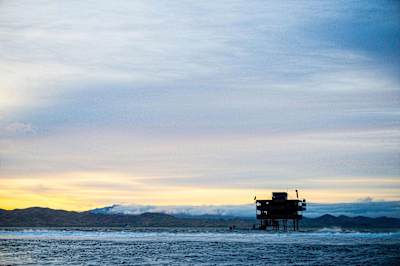
Judging tower, Fijian style
© Ryan Miller
While the surfer with first priority will often sit and wait for a good-looking wave, those with lower priority might stay a little busier, rolling the dice on smaller waves and hoping they shape up into something better. Priority can be a surfer's best friend if they're skilled at reading the ocean and can pick the better waves, but being too patient can leave them undone if mother nature doesn't come to the party before time runs out.
Although it takes anywhere from three-to-five days to run an event, due to the fickle nature of waves and weather, anything up to a 12-day window is allowed in competition.
Occasionally on the CT one-on-one heats are run in an overlapping format with two heats in the water simultaneously, offset by half a heat. In these instances heats can be up to 46 minutes long. Upon entering the lineup competitors cede all priority to the pair of competitors who were already in the water, before gaining right of way in the second half, over the new surfers who've just joined them. This might sound complicated, but it's actually a great way to cram more surfing into less time. Kelly Slater came up with this format.
07
How is a WSL heat scored?
Let's look to the WSL Rulebook for a full breakdown.
Surfers must perform to the WSL judging key elements to maximise their scoring potential.
Judges analyse the following major elements when scoring a Ride:
- Commitment and degree of difficulty
- Innovative and progressive manoeuvres
- Combination of major manoeuvres
- Variety of manoeuvres
- Speed, power and flow
It’s important to note that the emphasis of certain elements is contingent upon the location and the conditions on the day, as well as changes of conditions during the day.
A panel of five judges score each wave on a scale of 1-to-10. For every scoring ride, the highest and lowest judged scores fall off and the surfer receives the average of the remaining three scores.
In any round, a surfer is looking to lock-in their two highest-scoring waves. The top single wave score is a 10, for a possible 20-point heat total.
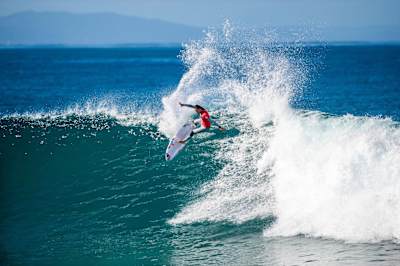
Jordy Smith, damn near perfect
© Trevor Moran
There have been eight Perfect 20 heats in the history of the Championship Tour. Kelly Slater is the only person to achieve this feat three times, while Owen Wright is the only other surfer to do it twice.
Jordy Smith famously surfed a perfect heat at Jeffreys Bay in South Africa in 2017, to the delight of an adoring hometown crowd, but American Shane Beschen can claim ultimate bragging rights. He scored a barely believable Perfect 30 in 1996, back when heats still counted a surfer's best three waves.
08
What do the different coloured WSL jerseys mean?
Surfers are allocated brightly coloured jerseys so that judges and competitors can identify them more easily. This is very necessary given the nature of the environment they compete in, a long way out to sea and often shrouded in fog or lost in sun glare.
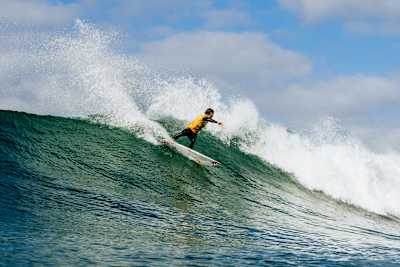
Griffin Colapinto back in action and defending the yellow jersey at Bells
© Aaron Hughes/World Surf League
In recent times, the WSL have introduced a yellow jersey to signify the number one ranked surfer on the Championship Tour at that time. In most other heats the higher-seeded surfer traditionally wears red.
09
What's the WSL 2026 Championship Tour schedule?
There are 12 events on the Championship Tour in 2026, starting off with the three-event Aussie leg.
Event
Date
Destination
April 1-11
Bells Beach, Victoria, Australia
April 17-27
Margaret River, Western Australia, Australia
May 2-12
Snapper Rocks, Queensland, Australia
Surf City El Salvador Pro
May 28–June 7
Punta Roca, La Libertad, El Salvador
VIVO Rio Pro
June 12-20
Saquarema, Rio de Janeiro, Brazil
Corona Cero Open J-Bay
July 10-20
Jeffreys Bay, Eastern Cape, South Africa
Tahiti Pro
August 8-18
Teahupo'o, Tahiti, French Polynesia
Fiji Pro
Aug 25–Sept 4
Cloudbreak, Tavarua, Fiji
Lexus Trestles Pro
Sept 11-20
Lower Trestles, California, United States
Surf Abu Dhabi
July 11-20
Hudayriat Island, Abu Dhabi, UAE
Peniche
Oct 22–Nov 1
Supertubos, Peniche, Portugal
Pipe Masters
Dec 8–20
Oahu, Hawaii, United States
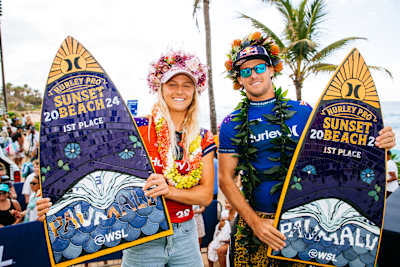
Trophy time for Molly Picklum and Jack Robinson at Sunset Beach
© Tony Heff/World Surf League
10
Who is the current WSL champion?
YEAR
MALE
FEMALE
2015
Adriano de Souza
Carissa Moore
2016
John John Florence
Tyler Wright
2017
John John Florence
Tyler Wright
2018
Gabriel Medina
Stephanie Gilmore
2019
Italo Ferreira
Carissa Moore
2021
Gabriel Medina
Carissa Moore
2022
Filipe Toledo
Stephanie Gilmore
2023
Filipe Toledo
Caroline Marks
2024
John John Florence
Caitlin Simmers
2025
Yago Dora
Molly Picklum
11
History of the World Surf League
Hawaiian surfers Randy Rarick and Fred Hemmings founded the International Professional Surfers (IPS) in October 1976, in an attempt to bring the world's existing surfing competitions under one umbrella. The nine events that had already been run that year were factored in, as well as a handful more to come and, in January of 1977, 23 year old Australian surfer Peter Townend was crowned the first ever IPS World Champion.
The following year, Hawaiian surfer Margo Oberg was crowned as the first-ever female world champion, alongside South African Shaun Tomson on the men's side. The IPS crowned world champions until 1982, with Australian Mark Richards landing an incredible four-in-a-row from 1979 and Oberg claiming three all up.
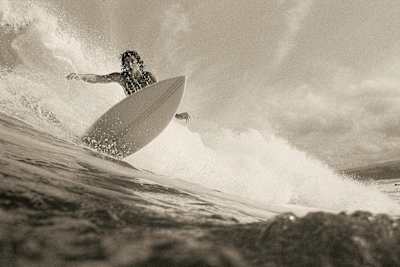
Mark Richards at Haleiwa in 1976
© John Witzig
12
IPS World Champions
YEAR
MALE
FEMALE
1976
Peter Townend
1977
Shaun Tomson
Margo Oberg
1978
Wayne Bartholemew
Lynne Boyer
1979
Mark Richards
Lynne Boyer
1980
Mark Richards
Margo Oberg
1981
Mark Richards
Margo Oberg
1982
Mark Richards
Debbie Beacham
13
The creation of the ASP
In 1983, Australian Ian Cairns created the Association of Surfing Professionals (ASP), convinced his peers to join him, and moved the league's offices to California in pursuit of sponsor dollars. With more events and increased prize money, the ASP experienced strong growth through the '80s and '90s. Like most sports it was a rollercoaster however and the structures and formats of the league has been in a constant state of flux from the start.
The ASP's first Longboarding world champion was crowned in 1986 and the first Junior world title was decided in 1998. As the number of competitive shortboard surfers increased, the tour was split in 1992 and surfers would now have to graduate from the World Qualifying Series before they could chase a world title on the elite World Championship Tour.

14 min
The Ripple Effect: Cooly Kids
How has Coolangatta, population 5k, produced more surfing champions than anywhere else on Earth?
In 1999, the ASP moved their head office to Coolangatta on Australia's Gold Coast in order to be closer to the 'Big Three' surf brands: Rip Curl, Quiksilver and Billabong. Under the stewardship of 1978 World Champion Wayne Bartholomew as CEO, the WCT moved to a quality-over-quantity approach and the legendary Dream Tour era was born. This was a golden age for surfing and, with the backing of a booming surf industry, the schedule of events suddenly looked like every surfer's bucket list.
The 1990s also saw the arrival on the scene of a certain Robert Kelly Slater, who won his first world title in 1992 and then five straight between 1993 and 1998. Much like Michael Jordan and basketball or Tony Hawk and skateboarding, Slater becoming a household name boosted surfing's profile as well.
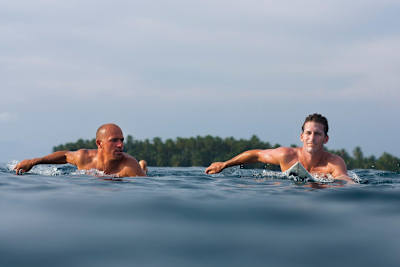
Kelly Slater and Andy Irons
© Pat Stacy
In the early 2000s, surfing's first live webcast landed. The ASP, which was now accessible to surf fans around the world, continued to boom, driven by the fierce rivalry of Kelly Slater and brash Hawaiian Andy Irons. An American consortium, including members of Slater's management, team bought the ASP in 2012 and in 2015 they rebranded.
14
ASP World Champions
YEAR
MALE
FEMALE
1983–84
Tom Caroll
Kim Mearig
1984–85
Tom Caroll
Frieda Zamba
1985–86
Tom Curren
Frieda Zamba
1986–87
Tom Curren
Frieda Zamba
1987–88
Damien Hardman
Wendy Botha
1988
Barton Lynch
Frieda Zamba
1989
Martin Potter
Wendy Botha
1990
Tom Curren
Pam Burridge
1991
Damien Hardman
Wendy Botha
1992
Kelly Slater
Wendy Botha
1993
Derek Ho
Pauline Menczer
1994
Kelly Slater
Lisa Andersen
1995
Kelly Slater
Lisa Andersen
1996
Kelly Slater
Lisa Andersen
1997
Kelly Slater
Lisa Andersen
1998
Kelly Slater
Layne Beachley
1999
Mark Occhilupo
Layne Beachley
2000
Sunny Garcia
Layne Beachley
2001
CJ Hobgood
Layne Beachley
2002
Andy Irons
Layne Beachley
2003
Andy Irons
Layne Beachley
2004
Andy Irons
Sofia Mulanovich
2005
Kelly Slater
Chelsea Georgeson
2006
Kelly Slater
Layne Beachley
2007
Mick Fanning
Stephanie Gilmore
2008
Kelly Slater
Stephanie Gilmore
2009
Mick Fanning
Stephanie Gilmore
2010
Kelly Slater
Stephanie Gilmore
2011
Kelly Slater
Carissa Moore
2012
Joel Parkinson
Stephanie Gilmore
2013
Mick Fanning
Carissa Moore
2014
Gabriel Medina
Stephanie Gilmore
15
The World Surf League – surfing's governing body since 2015
The World Surf League (WSL) has been running surfing since the ASP rebranded in 2015. The headquarters moved from Australia back to Santa Monica, California, and the broadcasting of Championship Tour events was taken in-house, amongst other changes.
Most significantly however, between the battles of Carissa Moore, Stephanie Gilmore and Tyler Wright, the introduction of equal prize money, and the recent heavy water performances of Caity Simmers and Molly Picklum it's been an incredible time for the advancement of female surfing.
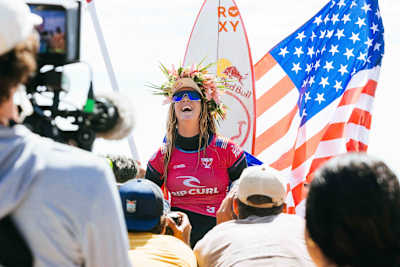
Caroline Marks ascends surfing's throne
© Cait Miers/World Surf League
In 2023, Caroline Marks became the first new female world champ since 2016, with Caity Simmers adding her name to the list 12 months later, followed by Molly Picklum etching her name on surfing's biggest trophy a year after that.
On the men's side of things, the 'Brazilian Storm' was upgraded from light rain to a full blown tempest, with Hawaii's John John Florence the only surfer stopping Brazilians Italo Ferreira, Adriano de Souza, Gabriel Medina and Filipe Toledo from clean sweeping the past 10 years.
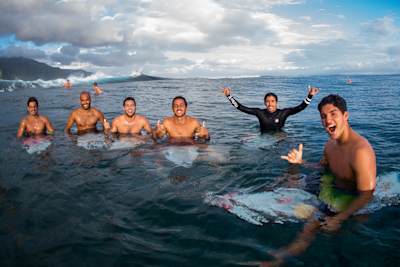
The smiling faces of the deadly Brazilian Storm
© Renato Tinoco
A new generation led by Griffin Colapinto, João Chianca and Jack Robinson are slowly taking over the business-end of the rankings, their sights set squarely on world titles sooner rather than later.
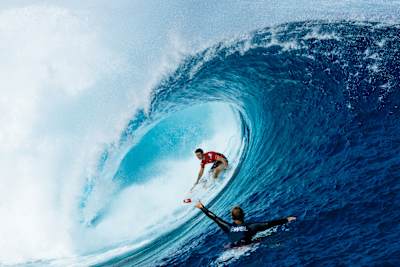
In 2025 Griffin Colapinto has levelled up in waves of consequence
© Brent Bielmann/World Surf League
The next few years are shaping up as some of the most exciting in WSL history, with a new era looming, and the women pushing their performances harder than ever before. If you haven't tuned in before, what are you waiting for?
Watch the World Surf League Championship Tour on Red Bull TV – streaming on web browsers, mobile apps, and Smart TVs
Part of this story
