
Athletics
Simon Ehammer and the art of doing everything well
A deep dive into Simon Ehammer’s rise in both the decathlon and heptathlon – where speed, strength and skill collide across two punishing days of elite competition.



Every sport has its own magic – football its flair, surfing its flow, triathlon its suffering - but no discipline demands more than the decathlon.
Across two days, athletes compete in 10 events that test everything: explosive power, raw strength, refined technique and endurance. It's versatility at its highest level.
Few embody that versatility better than Simon Ehammer. The Swiss athlete is not only one of the world’s leading decathletes, but also an elite long jumper – and, more recently, a record-breaker indoors. At the 2026 World Indoor Championships in Toruń, he set a new heptathlon world record of 6,670, underlining his ability to combine speed, power and technique at the highest level
Decathletes rarely resemble specialists. They lack the extreme physiques of sprinters, distance runners or swimmers. Instead, they're balanced athletes – capable of everything, defined by no single trait.
It's often said that those who do everything can't excel at anything. Ehammer disproves that. The Swiss athlete is not only among the world’s best multi-event athletes, but also one of the finest long jumpers competing today.
01
One competition, not 10
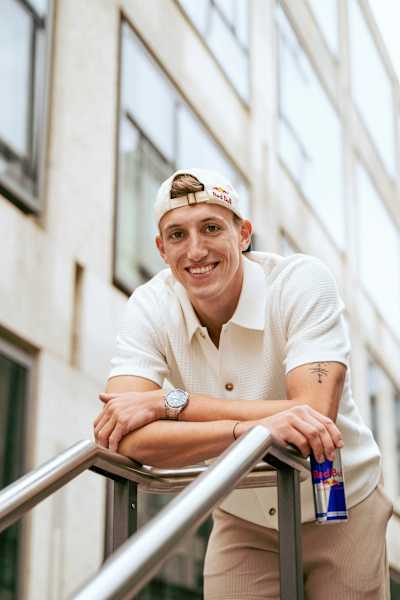
Ehammer's goal is to achieve balance - no easy feat in the decathlon
© Little Shao
The decathlon is relentless. Yet its defining principle is simple: it's not 10 separate events, but one continuous competition spread over two days.
Ehammer and his coach René Wyler approach it as a single performance, carefully paced and managed from start to finish.
02
Day one – speed, strength and momentum
Most decathletes favour the first day. It consists largely of explosive, familiar events – and suits Ehammer perfectly. If things go to plan, he builds a lead early.
100 metres – the perfect start
Ehammer wakes at 5am., four hours before competition begins. After breakfast and a full warm-up, he lines up for the 100 metres.
With a personal best of 10.34s, he ranks among the fastest decathletes. For context, the world record – held by Usain Bolt – stands at 9.58s.
The race isn't just an opener; it's also crucial preparation for what follows.
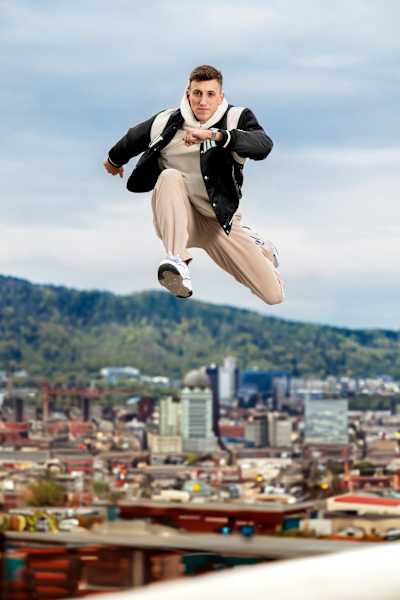
Simon Ehammer is among the world's best long jumpers
© Little Shao
Long jump – his standout discipline
Ehammer heads straight from the track to the long jump, often with his spikes already in hand. His run-up is measured precisely at 41.90m, requiring 19 steps.
Remarkably, he often jumps further in the decathlon than in specialist long-jumping competitions. He doesn't really have an explanation for why that might be; perhaps it's because he enjoys the attention of the crowd, which is often more intense during a decathlon. Or perhaps it's because the pressure is greater in the specialist events. His personal best of 8.45m is the longest jump ever recorded within a decathlon.
The standalone world record, set by Mike Powell in 1991, remains at an incredible 8.95m.
Despite being his strongest event, Ehammer trains it relatively little – partly because he's mastered it, and partly to reduce strain on his ankles.
After the long jump, there's a longer break. Ehammer then eats something – a bar, rice cakes, or pasta.
Shot put – power through precision
The third event demands a complete shift in approach. Shot put isn't about speed, but timing and control.
Ehammer must channel force from the ground up – feet, hips, torso, then shoulder – before releasing the shot. When executed perfectly, the throw feels effortless; when mistimed, it's punishing.
His personal best is 15.31m. This puts him in the upper middle of the pack among decathletes, but he's worlds apart from the best specialist: the world record held by Ryan Crouser stands at 23.56m.
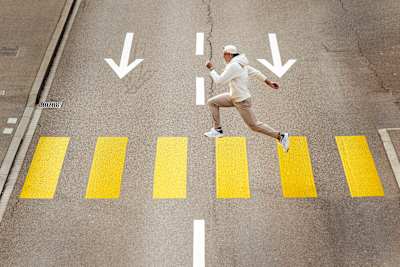
Up and away: Ehammer has a long-jump PB of 8.45m
© Little Shao
High jump – finding balance
The high jump presents one of Ehammer’s biggest challenges. After the slower rhythm of shot put, he needs to regain speed and focus. Yet too much speed can be a disadvantage. Controlling the curve and hitting the exact take-off point is crucial.
Even so, Ehammer consistently clears two metres, with a best of 2.08m. The world record, set by Javier Sotomayor, is 2.45m.
400 metres – endurance meets speed
The final event of day one takes place late in the evening, often around 9pm – 12 hours after the start.
The 400 metres sits awkwardly between sprint and endurance, demanding both. Ehammer performs strongly here, with a personal best of 47.18s. The world record, held by Wayde van Niekerk, is 43.03s.
Afterwards, recovery begins immediately – typically with an ice bath, followed by dinner and a small ritual: a wheat beer, ideally non-alcoholic, to support recovery.
Tradition, routine and motivation
Ehammer values tradition and draws strength from his roots in Appenzell in north-east Switzerland and his family’s ties to the Tyrol region. His tattoo – the Tyrolean eagle – reflects that connection.
At 26, he's already building for the future, both in sport and beyond, alongside his wife Tatjana Ehammer [née Meklau, an elite-level hammer thrower and ski-cross athlete who competes for Austria].
03
Day two – technique, tactics and pressure
The second day shifts the emphasis. Technical events dominate and weaknesses are harder to hide. The events require extensive technical training, and sometimes significant progress can be made over years of practice. Leads, however, can disappear much more quickly.
110m hurdles – rhythm and repetition
This is one of Ehammer’s strongest disciplines: 10 hurdles, three strides between each – precision is everything.
It's the discipline he practices most often, which is surprising only until you realise that it allows him to train a particularly wide range of skills: those for the sprint events as well as those for the jumping events. His personal best is 13.38s. The world record, set by Aries Merritt, stands at 12.80s.
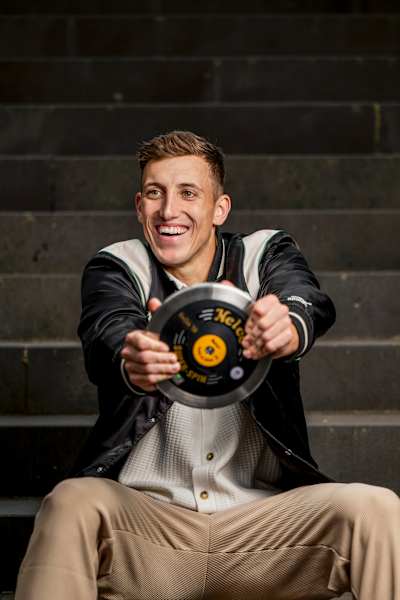
The discus is Ehammer's weakest event, but he's making good progress
© Little Shao
Discus – inconsistency exposed
Discus remains Ehammer’s weakest event. The movement isn't yet completely automated, not quite second nature, and this leads to variable results.
On good days, he exceeds 40 metres; on others, he may fall to the mid-30s. His best is 42.72m, while the world record, set by Mykolas Alekna, is 74.35m.
The pursuit of 9,000 points
Breaking the 9,000-point barrier is one of the great milestones in the decathlon, achieved by only a select few.
As a rule of thumb, athletes need to be able to accumulate around 9,500 points across their individual bests to reach that mark. Ehammer is within striking distance of that target.
Pole vault – spectacular recovery
Pole vault is among the most visually striking events and it offers Ehammer a chance to regain ground after the discus.
His best is 5.35m. The world record, held by Armand ‘Mondo’ Duplantis, stands at 6.31m [for now - the Swede has broken the world record 15 times already at time of writing].
With a high approach speed and carefully selected poles, Ehammer maximises his natural strengths here.
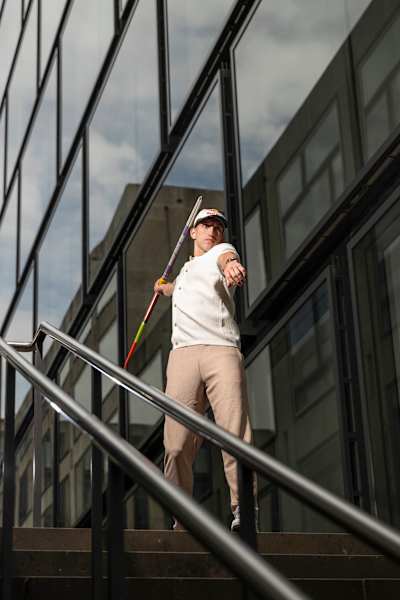
Strengthen weaknesses: Ehammer is less suited to throwing than to speed
© Little Shao
Javelin – closing the gap
Javelin highlights the importance of consistency in the decathlon. It's said that a decathlete reaches his peak competitive age at 28. Simon therefore has two years left to maximise every element, and he intends to use the time wisely. It's pointless to have a standout performance in one event. The goal must be a consistently high level across as many events as possible.
Ehammer’s current best is 55.98m, but his aim is to regularly reach between 60 and 62 metres. The world record, set by Jan Železný, is 98.48m.



1,500 metres – the final reckoning
The decathlon concludes with its most dreaded event. After two days of exertion, the 1,500 metres often decides the final standings.
For Ehammer and coach Wyler, it's a balancing act. How much time can they invest here without sacrificing the other events? Wyler often says that there simply aren't enough days in the week to train properly for the decathlon. Simon knows he needs to improve his 1500m, but traditional long-distance running is too time-consuming and would slow him down in the shorter distances.
He therefore approaches it differently, training with repeated short sprints rather than traditional long-distance runs. His personal best is 4m 42.54s. The world record, held by Hicham El Guerrouj, is 3m 26s.
Ehammer often enters this final race in the lead, sometimes losing places but increasingly holding on for podium finishes.
04
The mindset of a decathlete
Ehammer’s ambition is unmistakable. Earlier in his career, he would sometimes withdraw when things went wrong. Now, he's learned to manage setbacks without losing intensity.
That combination – discipline and drive, composure and edge – may be exactly what defines a great decathlete.