
Cycling
Why Tour de France teams travel with their own mattresses
From personalised mattresses and sleep tech to nutrition, massage and cryotherapy, discover how Tour de France teams optimise every minute of recovery between stages.
Part of this story


There is a saying that the winner of the Tour de France isn’t necessarily the strongest rider, but the best prepared.
Years of training, months of build-up and weeks spent optimising everything from on-bike positioning to rest and recovery protocols can be the difference between winning the yellow jersey and finishing on the second step in Paris.


But when it comes to the cut and thrust nature of the three weeks of racing, a rider can only focus on the road ahead of them, relying on the round-the-clock work of an army of support staff to keep them in the best possible condition.
From post-stage recovery windows to personalised mattresses, here’s how WorldTour teams have left no stone unturned when it comes to recovery and performance.
01
The three Rs
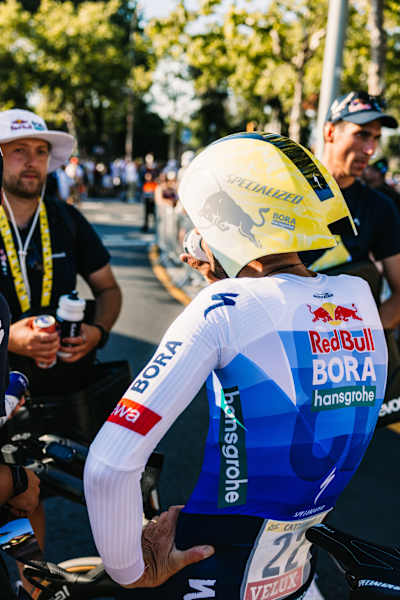
Mattia Cattaneo takes on some much-needed hydration and nutrients
© Maximilian Fries/Red Bull Content Pool
One of the key pillars of recovery is nutrition, with rehydrating, refuelling and rebuilding through food and drink a vital part of the post-stage routine.
As team chef Justine Baileul explains in the video below, each Red Bull - BORA - hansgrohe rider will have a personalised plan that kicks in as soon as they cross a stage’s finish line. Tailored by team nutritionist Stephen Smith to their weight and daily requirements, it can vary depending on how hard they’ve worked, the conditions they’ve ridden in and how far into a Grand Tour they are – with stomach fatigue because of constant consumption of mountains of carbohydrates becoming an issue deep into the third week.
The first thing shoved into their hand by a member of the support team will be a bottle of water and a cherry shot supplement from nutrition partner MNSTRY. The water is to start the rehydration process, while tart cherry juice is shown to help reduce inflammation and promote muscle repair; riders will have another dose before bed to help keep the recovery process ticking over while they’re sleeping.
Next will be a carb-rich recovery shake that will be drunk within 60 minutes of crossing the line to replenish the body’s glycogen stores, which will have been depleted during the stage despite constant topping up with energy gels and carb-rich snacks like rice cakes.
Finally, riders will have a carb and protein-heavy dinner like rice and lean meat with plenty of colourful vegetables for their antioxidants as their evening meal, while fat intake is minimised with it not contributing to the recovery process and taking up valuable calories that could be diverted to carbohydrates and protein. If there’s a particularly long transfer between the finish line and hotel, riders might have a slightly smaller meal on the team bus too as shown in this video with Remco Evenepoel having a post-ride meal of chicken and pasta.
02
Performance preservation
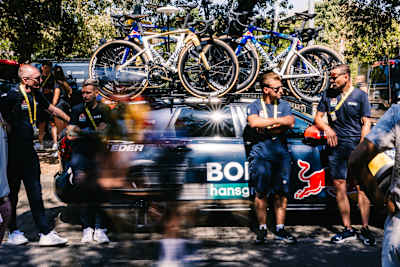
The hard work doesn't stop for the Red Bull - BORA - hansgrohe support team
© Maximilian Fries/Red Bull Content Pool
A post-stage massage from a team soigneur is a daily ritual for a professional cyclist, but teams are now employing a lot more tactics to help reduce muscle inflammation and minimise peak performance losses over the course of a three-week Grand Tour.
Despite racing for up to five hours over some of France’s most testing terrain, one of the first things riders will do when they get back to the team bus post-stage is jump back on their bike to perform a cool-down ride on a turbo trainer – as shown by Jai Hindley in this video. Ridden at a much lower intensity than anything they will have encountered during the day’s racing and limited to 15-20 minutes, the idea is to try and flush lactate from muscles, preventing fatigue-based issues like delayed onset muscle soreness.
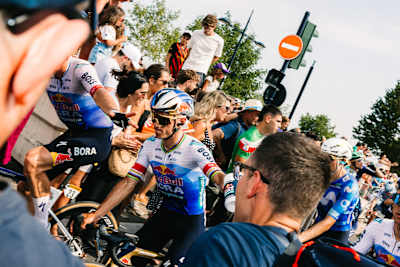
Soigneurs will hand out bottles and musettes mid-stage
© Maximilian Fries/Red Bull Content Pool
This process continues during the transfer to the team hotel via compression boots like the Hyperice Normatec, which use air compression to increase blood circulation before the soigneur has had a chance to do their magic. Translated as 'one who provides care' in French – a soigneur is a support staff member who provides daily massages for the riders, but is also on call to hand out bottles and musettes from the roadside mid-stage, offer logistical support like loading team cars, wash kit, and act as a confidant for the athletes.
While not used every day, on particularly hot stages like those seen at this year’s Tour de France, riders will plunge themselves into ice baths at the stage finish to reduce their core temperatures (as shown by Tim Van Dijke in this video), while WorldTour team Decathlon CMA CGM has even used a portable cryotherapy unit that is set at -120°C to speed up the process.


03
The ultimate recovery tool
Despite all of the advancements in training and nutrition in recent years, sleep remains the ultimate recovery tool for riders between stages, with them aiming for eight to nine hours every night (and even more on rest days).
But teams have still looked to optimise the amount and quality of each athlete’s shut eye, using smart devices and sleep coaches to squeeze every bit of recovery possible from catching some Zs.
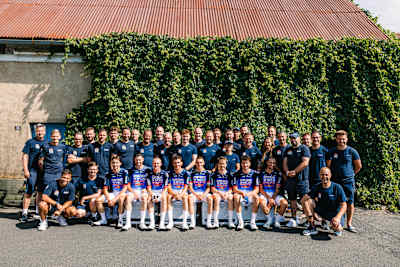
Specialist sleep coaches are just part of the wider team
© Maximilian Fries/Red Bull Content Pool
Competing across 21 days of racing means staying in 21 different hotels over a three-week Grand Tour. The hotels aren’t chosen by the teams either. To ensure a degree of fairness in the peloton, the Tour de France organiser ASO books around 1,850 hotel beds for each stage to prevent the wealthier teams from block booking the best hotels; but the accommodation can end up as a bit of a lottery, particularly in remote parts of the country. As riders aren’t always guaranteed a five-star set-up, Red Bull - BORA - hansgrohe look to minimise this variability in quality by providing each rider with a personal mattress and set of pillows, which are moved between hotels by a specific crew of support staff to guarantee the same bed every night, as we saw in the video at the top of the page. The crew is also on hand to provide air-conditioning units and ensure every room is comfortable for a good night’s rest
Tadej Pogacar’s UAE Team Emirates XRG have taken this one step further, partnering with a smart mattress temperature control device called Eight Sleep, which is able to cool or heat the mattress to a desired temperature, while also tracking health metrics like heart rate and sleep phases.
It’s not just overnight when riders look to get some shut eye too, with riders aiming to have a short, post-stage nap to kick start the recovery process and squeeze in as much rest as possible.
About the author
Part of this story


