
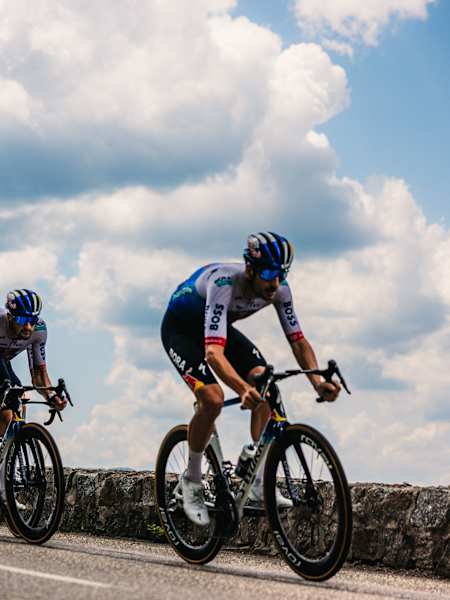
Cycling
Discover the route for the 2026 Vuelta a España
The 81st edition of the Vuelta a España begins in August, and this year's route features a team time trial start, seven summit finishes and a brutal final week in the race for the red jersey.
Just weeks after the Tour de France crowned its latest champion on the streets of Paris, cycling's attention turns to the season's final Grand Tour. The 2026 Vuelta a España gets underway with a time trial in Monaco on Saturday, August 22, before finishing three weeks and 21 stages later in Granada on Sunday, September 13.
Red Bull – BORA – hansgrohe will be seeking to build on a strong showing at the Tour de France and will hope their riders, especially four-time Vuelta winner Primož Roglič, will be in contention for the iconic red jersey at the end of the 3,275-kilometre route.
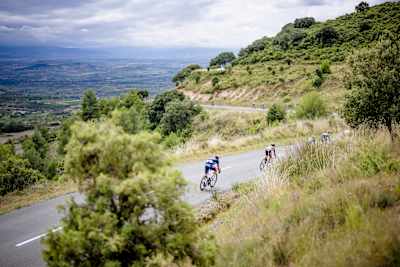
This will be the 81st edition of La Vuelta
© Kristof Ramon/Red Bull Content Pool
01
Stage 1 – Monaco → Monaco
In Monaco, we’re more used to seeing Formula One cars than bikes. Yet the 2026 Vuelta a España begins in the Principality. It’s a time trial that will require the riders to be as precise and sharp as a knife’s edge. Whilst you don’t lose a Tour on the opening stage, you can still fall behind depending on your result. Monaco isn’t exactly known for being perfectly flat, so watch out for mistakes that could lead to a slip-up.
02
Stage 2: Monaco → Manosque
At 215.2km, this is the longest stage of the 2026 Vuelta, and it gets off to a flying start: heading for Provence on a route classified as hilly, which leaves the Principality to plunge into the hinterland. Following the technical time trial in Monaco the day before, this stage immediately puts the riders’ bodies to the test with its distance and undulating terrain, which can take its toll on the legs. This is the sort of stage where a breakaway has every chance of making its move, whilst the sprinters’ and leaders’ teams carefully manage this long marathon before tackling the real challenges of the Pyrenees the very next day.

Primož Roglič is a four-time winner of the Vuelta a España
© Getty Images/Red Bull Content Pool
03
Stage 3: Gruissan - Aude → Font-Romeu
After just three days, this medium-mountain stage takes the peloton into significantly tougher terrain. The high-altitude finish at Font-Romeu, via the Col de Mont-Louis, could already catch the less well-prepared riders off guard. The favourites will need to start controlling the race, whilst some climbers will attempt a breakaway to gain a lead ahead of the tough days to come. It marks a real break between the classic profiles of the early stages and the more demanding challenges that follow shortly afterwards in Andorra.
04
Stage 4: Andorra la Vella → Andorra la Vella
With four consecutive mountain passes over a deliberately short distance of 104.9km, this stage, set entirely in Andorra, is a concentrated dose of high-altitude mountain cycling. The formidable Port d’Envalira, at an altitude of over 2,400m and covering 28km at an average gradient of five percent imposes a gruelling pace right from the start, leaving little respite for support riders to protect their leaders. The high altitude, the cumulative elevation gain and the varied gradients make this potentially one of the most decisive days of the entire Vuelta, right from the first week of racing.
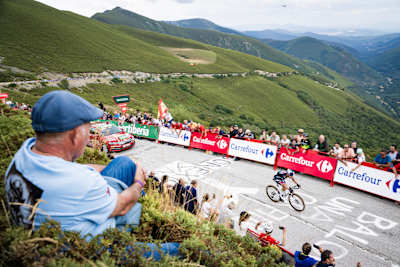
La Vuelta is the final Grand Tour race of the year
© Kristof Ramon/Red Bull Content Pool
05
Stage 5: Falset, Costa Daurada → Roquetes, Terres de l’Ebre
A rugged 171.1km route, Falset Costa Daurada – Roquetes Terres de l’Ebre crosses the Priorat, a wine-growing region in southern Catalonia known for its rugged terrain and winding roads nestled amongst terraced vineyards. Although it does not feature a true summit finish, the route’s undulating profile takes its toll and could lead to unexpected gaps if a team decides to attack on one of the many false flats that dot the course. This is typically the sort of day when breakaway specialists try their luck, whilst the main peloton manages the effort before reaching the Mediterranean coast at Roquetes.
06
Stage 6: Alcossebre → Castelló
Classified as a medium-mountain stage over 176.8km, the sixth day introduces a real novelty to the 2026 route: an uphill gravel section of around three kilometres, a first for this Vuelta, which is set to unsettle the general classification teams. The route runs along part of the Costa del Azahar before veering inland, with terrain varied enough to tire the peloton without presenting any extreme difficulties. The uncertainty created by the gravel section could potentially lead to crashes or punctures at a crucial moment, making the stage more treacherous than it appears on paper.
07
Stage 7: Vall d’Alba → Aramón Valdelinares
This 149.9km high-mountain stage takes the peloton to the Aramón Valdelinares ski resort in the mountains of Teruel. The relatively short distance does not detract from the difficulty: a mountain finish of this kind, in a region characterised by long, steady climbs, generally favours pure climbers capable of maintaining a sustained pace over distance rather than breakaway specialists. This first summit finish of the 2026 Vuelta will provide a true insight into the general classification standings ahead of the Valencia leg.
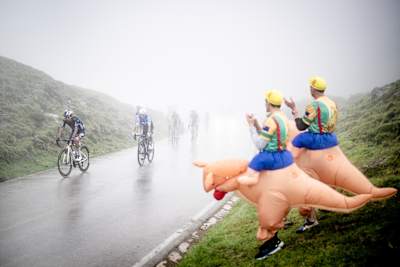
Fans will also brave the elements up in the mountains to show their support
© Kristof Ramon/Red Bull Content Pool
08
Stage 8: Puçol → Xeraco
This flat, 176.4km-long section of the Vuelta is tailor-made for sprinters. It runs along the Valencian coast between Puçol and Xeraco. After a week already marked by several mountain stages, this stage offers a welcome respite for the peloton and a golden opportunity for the teams with sprinters who have not yet had a chance to shine. The wind that sometimes blows along this Mediterranean coastline remains the main source of uncertainty, capable of splitting the peloton into echelons if the organisers decide to push the pace along the coast.
09
Stage 9: La Vila Joiosa → Alto de Aitana, Costa Blanca
This stage brings the first week of racing to a close on one of the Vuelta’s most iconic summits: the Alto de Aitana. A long climb exposed to the wind and heat, it boasts a cumulative elevation gain of nearly 5,000 metres over the full 187.5km – a figure that makes your head spin even before you tackle the final ascent. The general classification could see significant changes here, and this stage presents a major opportunity for the climbers to launch a decisive attack just before the first rest day.


10
Stage 10: Alcaraz → Elche de la Sierra
Following the rest day, the ride from Alcaraz to Elche de la Sierra will see the riders tackle 184.5km classified as hilly, crossing the arid landscapes of Castile-La Mancha before descending into the province of Albacete. Whilst there are no hors catégorie climbs, the undulating terrain and the heat that typically sets in at this time of year in inland Spain can take their toll on riders fresh off a rest day. It is often during these transitional phases that an early breakaway is granted a little more leeway by a peloton that is still sluggish.
11
Stage 11: Cartagena → Lorca
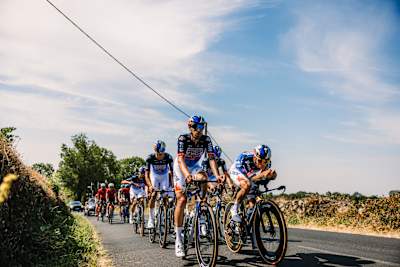
Red Bull – BORA – hansgrohe riders on a recovery ride
© Maximilian Fries/Red Bull Content Pool
Stage 11 is a 156.1km flat stage between Cartagena and Lorca, in the heart of the Murcia region. It offers another opportunity for the sprinters on a route without any major obstacles, in one of Spain’s hottest and driest regions. The moderate distance by Grand Tour standards suggests a fairly quiet race until the final kilometres, when the sprint teams will gradually take control of proceedings.
12
Stage 12: Vera → Calar Alto
Calar Alto is a 22km high-altitude climb that demands as much raw power as it does pure endurance. Taking place right in the middle of the second week, just as fatigue is really starting to set in, this 166.5km stage also takes place in the Almería region, renowned for its often sweltering conditions. The high-altitude finish will allow the best climbers to break away from their direct rivals and launch a decisive attack in the final kilometres.


13
Stage 13: Almuñécar → Loja
On the programme: 193.2km of medium-mountain terrain, forming a transition between the Mediterranean coast at Almuñécar and the inland areas of Granada, heading towards Loja. The undulating route, whilst not extremely difficult, forms part of an already gruelling sequence of stages in the second week, sandwiched between the preceding Calar Alto and the subsequent Sierra de la Pandera. This transition could hold some surprises if the riders start to feel the effects of accumulated fatigue.
14
Stage 14: Jaén → Sierra de la Pandera
The climb to the Sierra de la Pandera is a classic known for its irregular gradients and sudden changes in slope that completely disrupt the riders’ rhythm. With 13.5 km at an average gradient of 7.3 per cent, this climb demands precise pacing. It comes at a crucial point in the race, as the final week approaches, when gaps in the general classification tend to widen significantly.
15
Stage 15: Palma del Río → Córdoba
An 181.2 km medium-mountain stage that crosses the Andalusian countryside along the Guadalquivir valley, passing through olive groves and sunflower fields, before reaching Córdoba. The final stage before the second rest day, this undulating route, with no hors catégorie climbs, could be contested by a breakaway of the day, as the teams of the leaders generally prefer to conserve their energy as the break approaches.
16
Stage 16: Cortegana → La Rábida, Palos de la Frontera
Following the second rest day, this flat 186km stage takes the peloton to La Rábida, the historic site from which Christopher Columbus set sail for the Americas in 1492. A stage tailor-made for sprinters, who usually take advantage of this type of day to make up ground in the points classification, following a second week largely dominated by the climbers.
17
Stage 17: Dos Hermanas → Seville
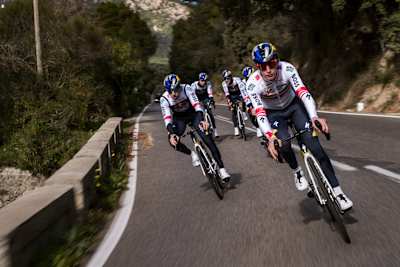
Red Bull BORA-hansgrohe team training in Mallorca
© Sebastian Marko/Red Bull Content Pool
Another flat stage, covering 189.2km. The peloton will head to Seville for a sprint finish in one of Andalusia’s most beautiful cities. On this sort of route with no major climbs, the outcome is almost always decided in a mass sprint, with lead-out teams taking control of the race in the final kilometres.
18
Stage 18: El Puerto de Santa María → Jerez de la Frontera
The 18th day of competition is a long 32.5km individual time trial between El Puerto de Santa María and Jerez de la Frontera, right in the heart of sherry country. On a largely flat course, this solo time trial could seriously shake up the general classification ahead of the final mountain stage, offering pure time-trialists the chance to make up precious time on the climbers.
19
Stage 19: Vélez-Málaga → Peñas Blancas, Estepona
Covering more than 200km (205.1 km to be precise) and finishing at the summit, this undulating stage could prove decisive for the race’s final outcome. Peñas Blancas is a formidable climb, made even more dangerous by the succession of hills leading up to it, which will have methodically sapped the peloton’s strength throughout the day.
20
Stage 20: La Calahorra → Collado del Alguacil
The penultimate stage will undoubtedly be the toughest of the entire 2026 Vuelta. The Collado del Alguacil features gradients of over 20 percent, on already very mountainous terrain after 206.7km of racing, with the added challenge of a gravel section at the summit of the final climb. The gaps could widen dramatically, even amongst the main favourites, and the red jersey could literally be lost here on the eve of the finish in Granada.
21
Stage 21: Carrefour Granada → Granada
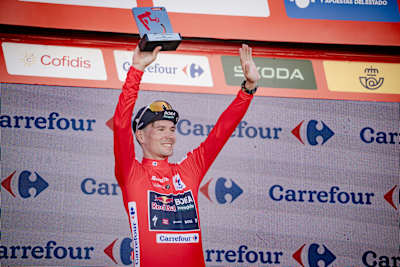
Roglič celebrates a record-equalling fourth Vuelta victory
© Kristof Ramon/Red Bull Content Pool
For the first time in its history, the Vuelta does not finish in Madrid but in Granada, at the foot of the Alhambra, on a short, flat 99.4km route. This unprecedented finish underlines the organisers’ desire to revamp the race’s traditional format and to showcase an iconic city rather than the historic capital. As is customary in the final stages of a Grand Tour, this stage is likely to remain largely ceremonial until the final sprint.


