



Fitness
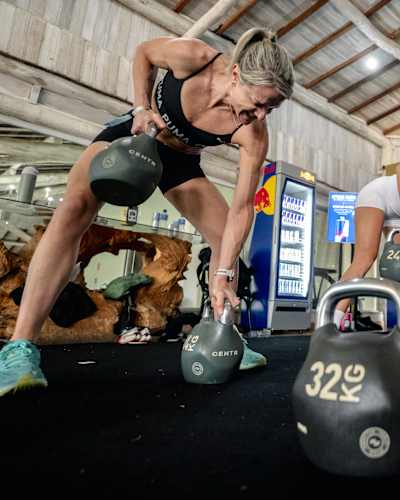
Fitness Training
HYROX training explained: Why getting stronger isn't always better
HYROX training involves endurance, strength and specific station work. A world-class coach explains what matters most – and why getting stronger isn't always better.
Jack Birch knows what it takes to perform at the highest level. As a strength and conditioning coach at the Red Bull Athlete Performance Center, he works with some of the world's best HYROX athletes, including Elite 15 starsJake Dearden and Lucy Procter. He's also helped winter and summer Olympians recover from injury and reach peak performance. With more than 12 years of experience across elite sport, Birch has worked with athletes in everything from surfing and skateboarding to football and motorsport.
So, what does it really take to prepare for HYROX? We caught up with Birch to break down the essentials of effective HYROX training, from building endurance and strength to balancing running with functional workout stations. He also explains why aspiring athletes shouldn't simply copy the training routines of the pros – and how to build a programme that works for them.
01
How does an elite coach approach HYROX training?
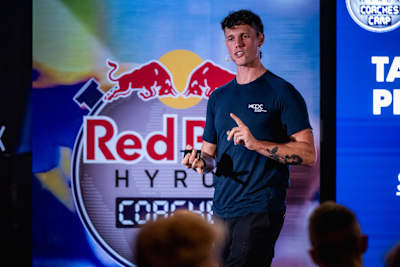
Jack Birch trains elite athletes at the Red Bull Athlete Performance Center
© Marcelo Maragni/Red Bull Content Pool
What does a pro do in training that an amateur should copy tomorrow?
Go into every session with an intention and have a clear outcome. So, if you're going into your session, and you're trying to develop maximal force production around the knee and the hip, and you want to get some very high-intensity intervals at the end of it, go in with that intention. Don't add extra time from an aerobic endurance standpoint, at the end of it, to really tire yourself out and probably not get the adaptations from the original part of the session. So just really be specific about the intention that you're going into the session with. That's done well at a high level, and should be something that should be kind of adopted by the amateurs as well.
One thing that an amateur maybe shouldn't copy from the pros?
Trying to replicate their training volume as a whole. This has been built up over years of training, and a really heavy body of work, so they've got really big foundations to then push the overall volume. Whereas someone getting into the sport, like a beginner or an amateur, they haven't got this history of training. So going in and trying to replicate their volumes, they might be able to do it, and they might suffer through for weeks or months, but eventually something's gonna go, and they're gonna break somehow. So definitely try and avoid that.

Jack Birch at work with HYROX pro Jake Dearden
© Markus Rohrbacher/Red Bull Content Pool
What do beginners spend way too much time doing?
Beginners probably don't spend enough time doing things that they're not very good at, and they spend probably too much time doing things that they're really good at. So, if you come from a running background, definitely keep the running volume high, but you can try and focus on developing proficiency in other stations.
Or if you come from a rowing background, then don't spend all your time rowing, because that's only a very small part of the event. So I'd say, based on your background and your proficiencies, use some of the data and systems out there to figure out what you're good at and do a little bit less of that. (Unless it's running, then do a tonne of that.)
What’s one thing you wish people would stop doing before their next HYROX?
People can do whatever they want. I don't have any strong feelings towards that. But I think it's really important to have a target and something to shoot for. Even if it's ambitious, that's cool. At worst, you're not going to hit that, but you're gonna be able to reflect and see the gap between where you want to be and where you are now.
02
How do I put that HYROX training advice into practice?
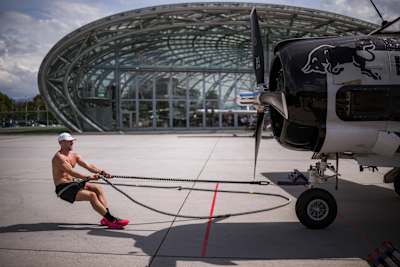
You don't need to emulate Jake Dearden's training volume
© Sebastian Marko/Red Bull Content Pool
While beginners shouldn't simply copy professional training volumes, Birch's four-day plan offers a useful framework for structuring HYROX training, with insights into what to focus on each day.
Day one:
“Day one, I'd do a whole-body strength session with a shift in dominance towards the legs. And then I would probably hit some station-specific conditioning after it.”
- Birch advises that HYROX is leg-dominant, so think in terms of the muscle groups used for running: glutes, hamstrings, calves and quads. And don’t skimp on strengthening joints like the ankles, knees, and hips. A competitive HYROX athlete is heavier than a typical runner, meaning more stress and strain on injury-prone areas.
Day two:
“Day two, I would do a low-intensity aerobic session and a long run."
- With this session you’re banking some time-on-feet. Keep the heart rate low, but log some time on the rower, SkiErg, or even a bike, then bank some miles running. This is something you can build on over time - don’t try to replicate the training volume of the pros. Choose a time and distance that already fits into your training, and increase each week.
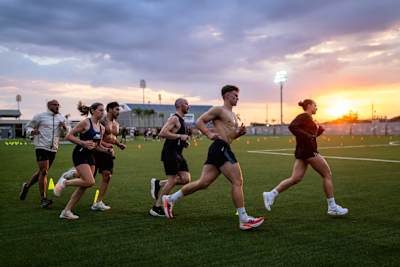
Running is a key part of HYROX
© Marcelo Maragni/Red Bull Content Pool
Day three:
“Day three, I'd do another whole-body strength session and then add some station-specific intervals, getting used to the stations and getting good efficiency and economy with those."
- Birch advises athletes to pay special attention to training the soleus. “As running speed increases, there's greater grand-reaction forces, and a lot of those forces are gonna be soaked up by the soleus,” he says. Things like a bent-knee calf-raise or some isolated movement to strengthen the soleus is the one of the exercises that people can try and include in their programmes.
Day four:
“Day four, I would do some kind of HYROX [simulation] session, but it doesn't necessarily have to be at HYROX intensity - just to make sure you get enough running volume, and also make sure you get efficient at stations.”
- Birch cautions athletes to avoid running simulations more often than this. “Technically, you'll get better at moving,” he says, “so you'll be able to feel out the stations, and the efficiency with running.” But he suggests trying instead to focus on weaknesses within the overall race, and spend time developing those.
03
Top five key takeaways

Station-specific workouts build efficiency
© Marcelo Maragni/Red Bull Content Pool
- Separate harder, high-intensity sessions, so you can really attack those and put a lot of energy and focus into them.
- Go into every session with an intention and a clear outcome. Avoid changing a workout or a stimulus midway through. Stick to the plan you set out for yourself.
- Be cautious of replicating the training volume of the professionals right off the bat. Volume is something you can add over time, as your body adjusts to the demands you’re putting it through.
- Focus on weaknesses. Use data and systems out there to figure out what you're good at and do a little bit less of that in training.
- Have a target and something to shoot for, even if it’s ambitious. At worst, you're not going to hit that, but you're going to be able to reflect and see the gap between where you want to be and where you are now.
More expert guidance for your HYROX journey
04
Sharing knowledge at the Red Bull HYROX Coaches Camp
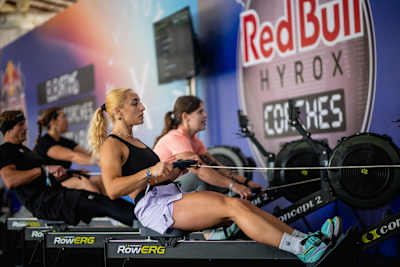
Coaches from around the world gather at Red Bull HYROX Coaches Camp
© Marcelo Maragni/Red Bull Content Pool
Jack Birch has also shared his knowledge with HYROX coaches from around the world at the Red Bull HYROX Coaches Camp. Together with HYROX and experts from the Red Bull Athlete Performance Center, he helped coaches get hands-on with the latest training methods, performance insights and practical ways to get athletes race-ready.
About the author
