







Gaming
esports
Meet CHRS4LFE, America’s king of Dance Dance Revolution
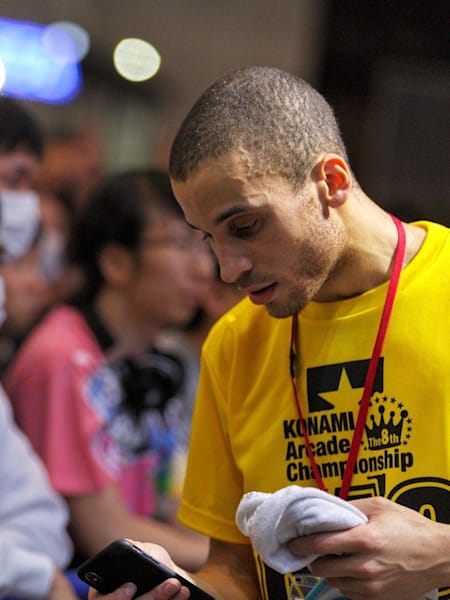
Chris ‘CHRS4LFE’ Chike became the first Western Dance Dance Revolution champion in 2017, breaking into an Asian dominated scene. We speak to him and find out how he broke records as an outsider.
In 2017, Konami finally allowed American competitors to enter the annual Konami Arcade Championship, the most prestigious event in the competitive Dance Dance Revolution competitive calendar. While you might knock DDR as a mid-noughties fad, the game is now over 20 years old, and along with numerous refreshes and new updates since, the game still has a devoted fanbase – and an incredibly dedicated competitive scene.
Beginning in 2011, the KAC is a competitive event for players of Konami's arcade rhythm games, the most well-known internationally of which is Dance Dance Revolution. Killer timing, ridiculous reactions and – of course – a sense of rhythm is needed to rise to the top of DDR, making it an intensely difficult game to master. Yet, these three American DDR players won the right to compete in the event, held in Chiba, Japan, with one of the competitors, Chris 'CHRS4LFE' Chike, taking the top prize that year, while he would place second in 2018 and 2019. Konami opening the gates was the opportunity he was waiting for.
“It was 2005, I was 13 years old, my brother got it for me for Christmas,” Chike explains. “I had played it at my neighbour's house one time and I thought it was really cool. My brother asked what I wanted to get for Christmas and I said the DDR set for PlayStation 2.” Enthused by the game as is, Chike dedicated himself to getting as good as he could before eventually discovering the online community. Players were sharing their best scores with each other, and suddenly his hobby being something of an obsession. “I always wanted to do better than the next person out there,” he says. “I wasn't even competing in tournaments for the first bit of it, it was mostly just comparing my scores to people online.”
Rhythm hero
That's not to say he wasn't competing at all, just not in DDR. Around the same time, the Guitar Hero franchise was dominating gaming as a whole, and from 2006 through 2009. Chike was himself a guitar hero, becoming a national champion in '08 and '09. A rhythm game aficionado, Dance Dance Revolution would become his main focus when the rock-based peripheral boon died out, despite little publisher support from Konami – there wasn’t even official scoreboards back then. “There was never anything official,” Chike tells us. “It was more just people on forums just sharing their scores.”
Those people kept the scene alive enough to warrant Konami officially supporting the game as the Arcade Championships grew. In 2016, the publisher rolled out both Dance Dance Revolution A, the first version with online connectivity to be released in America, and the power for international players to submit scores for possible entry into the DDR world tournament. Rather than hosting qualifying events, which would require sourcing machines and gathering the disparate players from around the globe, they ran a global remote qualifier whereby players could submit a score made on any Dance Dance Revolution A cabinet in the country. Chike scored the top spot, while his friend Jeff 'Fungah' Lloyd, another San Francisco resident, has consistently secured the second place, with the pair traveling together to Japan all three years.
King of the dancemat
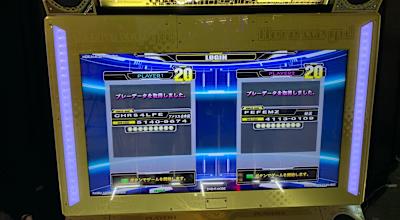
CHRS4LFE and FEFEMZ logged on a gold 20th anniversary gold DDR machine
© Chris Chike
Although the audience elsewhere for the game is niche compared to Asian countries, where the dancing genre has a much greater hold culturally, Chike was not daunted by the Asian players. “I for sure thought I could win it,” he tells us. “I've been either the best, or among the best, at DDR for the past few years, so I knew I was capable of doing it. I just had to do it.” His confidence wasn't misplaced, getting gold in 2017 and silver the two times after. He's met the same opponent in the finals all three times, too, with South Korea's Yoon Sang Yeon, aka FEFEMZ, proving to be his nemesis. Sang Yeon is a Dance Dance legend in the scene, having been the first to conquer some of the most difficult stages – a top-level rival if ever there was one.
The tournament format is a pair of semi-finals before a head-to-head bracket between six finalists. Four of the six compete for one spot in the finals while another two play for the other seeded spot. Both players in each match select a song for the two to play, with the total of one's combined scores deciding the winner. The differences are minuscule, where rounds are won and lost by getting a 'Great' instead of 'Perfect' on a combo.
Though Chike is one of the best in the world, his reasons for sticking with it are more personal. “Some of the best friends in my life are friends that I made through this game,” he says. “We play the game together all the time.” The DDR community is small and dedicated, not unlike other fandoms you see who are devoted to their favourite games. Their main Facebook group only has 5,000 members and play-throughs on Chike’s YouTube channel generally attract around 10,000 views. But those that are present are diehard and dedicated, and have a keen understanding of the way the game works that – and Chike feels that this community could do much more if Konami would let them. “It'd be cool if users could submit their own [dance] charts to play,” he muses. “That used to be a thing, it was called 'Edit Data'. You brought a USB to the arcade and could plug it in and play your own charts to the songs that are in the game. That would just make the opportunities endless.”
Changing the charts
The directional sequences Konami release aren't always up to scratch, sometimes seeming rushed and not quite matching the song. As a meticulous fan of the genre, Chike has homemade charts that follow the instrumentation exactly, creating a much more pleasurable experience. “I listen to the exact rhythms of the song and I map out arrows exactly to what's going on. There's not as much attention to detail in most of the charts in DDR.”
Even more basic than that, there's still no leaderboard for players to quickly see how well they rank. There's the global best and area best, but new players still have to record their score and check online if they want to see where they're currently ranking. “It's silly why it's not a thing yet,” Chike says flatly.
Considering the heights Dance Dance Revolution could reach on a global scale, these little grievances add up. The genre is easy to grasp and machines have maintained popularity despite arcades flowing in-and-out of fashion over the last two decades. Chike feels the only thing stopping Konami from pushing DDR further into the zeitgeist is themselves. “It can be as big as Konami wants. They just need to make the machines more accessible to people, now they're kinda few far and in-between,” says Chike. “If they just put more machines out there then more people would start playing them. They just announced a new mix and a new machine.
“There's always room to grow.”
