



Wintersports
Ice Skating
Figure skating vocabulary: Know the moves like a pro
Discover essential figure skating terms, including Axel, loop, jumps and spins in this easy-to-follow beginner’s guide to help you learn and enjoy the sport.
Figure skating is a beautiful sport that's full of graceful moves, impressive jumps, and a lot of technical skating skills, but it also comes with a lot of figure skating terminology that might sound confusing to beginners at first.
Words like axel, top loop and camel spin are often heard at the rink or during figure skating competitions, but they’re not always easy to understand without a little explanation. Understanding these figure skating terms and definitions makes it easier to enjoy the sport, recognize popular skating moves and follow along with what’s happening on the ice.
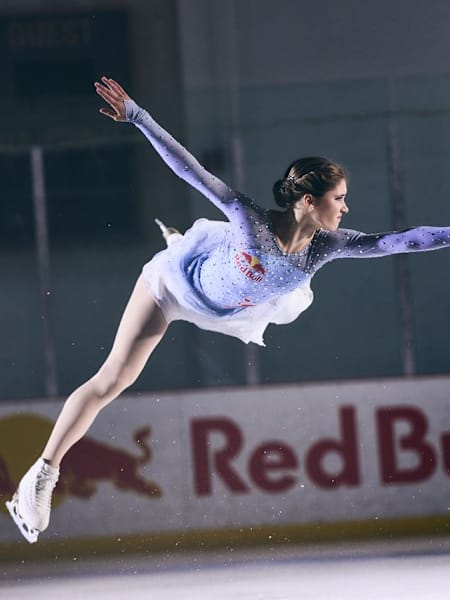
Whether you’re watching rising stars like the expressive Isabeau Levito on the ice or lacing up your own skates, this beginner’s guide to figure skating can help break down some common and easy-to-understand figure skating words from jumps, spins and footwork and basic movements. While it doesn’t cover every single term in the sport, it’s a great place to start learning the lingo for basic figure skating skills.
01
Jumps:
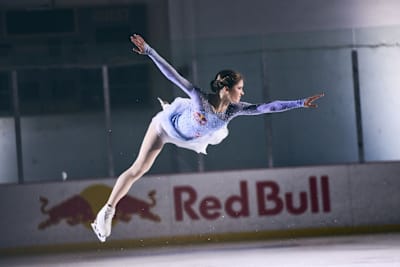
Isabeau Levito
© Koury Angelo
Axel
The Axel jump is one of the most challenging and well-known figure skating jumps. Taking off from a forward outside edge, it’s a forward takeoff jump with one and a half rotations in the air. (The Axel jump is named after Axel Paulsen, a Norwegian figure skater.)
Double
A double jump is two full rotations in the air before landing.
Edge
An edge jump refers to the inside or outside edge of the skate blade being used to take off or land.
Flip
A flip jump takes off from the back inside edge of one foot and uses the toe pick of the opposite foot to help lift off the ice.
Loop
A loop jump is an edge jump that takes off from the back outside edge of one foot and lands on the same foot.
Lutz
A lutz jump is a toe jump that takes off from the back outside edge with help from the opposite toe pick.
Salchow
A salchow jump is an edge jump that starts from the back inside edge of one foot and lands on the opposite foot’s back outside edge.
Single
A single jump is one full rotation in the air before landing on the ice.
Side-by-side
In pair skating, side-by-side jumps are when both skaters perform the same jump at the same time, next to each other.
Toe loop
A toe loop is a toe-assisted jump that takes off from the back outside edge of one foot, with the help of the toe pick of the other foot to push off.
Triple
A triple jump includes three full rotations in the air before landing.
Waltz
A waltz jump is a half rotation in the air, taking off from a forward edge and landing backward on the outside edge of the opposite foot.
02
Spins:
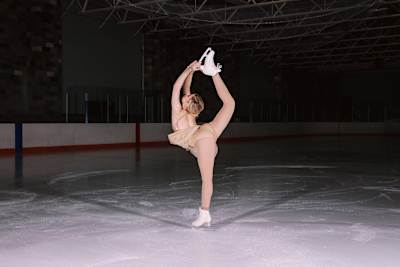
Perfect figure skating form
© Brinson+Banks, Stockland Martel/Red Bull Content Pool
Biellmann
The Biellmann spin is an advanced figure skating spin where the skater grabs the blade of their free leg and pulls it over their head while spinning. (This was named after Denise Biellmann, a Swiss figure skater.)
Camel
A camel spin is performed on one foot with the upper body and free leg extended out horizontally, forming a “T” shape.
Combination
A combination spin includes two or more spin positions and skaters may also switch feet during the spin.
Layback
The layback spin has a skating arching their back and leaning their head and shoulders backward while spinning upright.
Sit
A sit spin is a low-position spin where the skater bends the skating leg into a squat position while spinning. The other leg is extended forward and the skater stays close to the ice.
03
Footwork and skating moves:
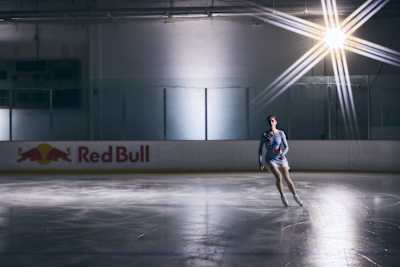
Isabeau Levito skating at Lakewood Ice in Lakewood, CA
© Koury Angelo / Red Bull Content Pool
Choreographic sequence
This is a freestyle sequence that focuses more on creativity and expression rather than specific technical elements.
Crossovers
To gain speed or change direction while skating in a curve or circle, the skater crosses one foot over the other while gliding in a circle. This helps skaters with momentum.
Edge
The blade of a skate has two edges: inside (closest to the inner side of the foot) and outside (closest to the outer side). Skaters use different edges to help them move, turn and jump.
Free skate
Free skate is when skaters perform a longer routine with more freedom in choreography. It’s also called the free program or long program.
Lift
In pair skating or ice dance, a lift is when one partner raises the other partner off the ice, above the head, while skating.
Mohawk
A turn that changes direction and edge, involving a switch of feet
Step sequence
A series of steps and turns done across the ice in a specific pattern. This shows a skater’s control, balance and connection to the music.
Twizzle
A twizzle is a fast and continuous series of turns done on one foot, where the skater rotates multiple times while gliding across the ice.
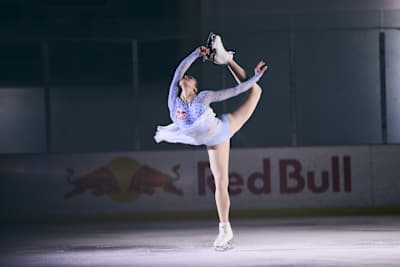
Isabeau Levito is America's new skating star. She has her jumps dialled
© Koury Angelo/Red Bull Content Pool
Lace up for the ice rink
Learning the language of figure skating can make watching or participating in the sport even more fun and engaging. Now that you hopefully have a better understanding of these common terms, you’ll be able to recognize the moves, follow along during competitions and appreciate the skill behind each beautiful performance.
So if you’re a new fan or just curious about the sport, knowing the lingo brings you closer to the artistry and athleticism on ice. And who knows? The next time you watch a skater land a clean double axel or execute a graceful spiral, you’ll not only know what it’s called, but also just know how impressive it truly is.
