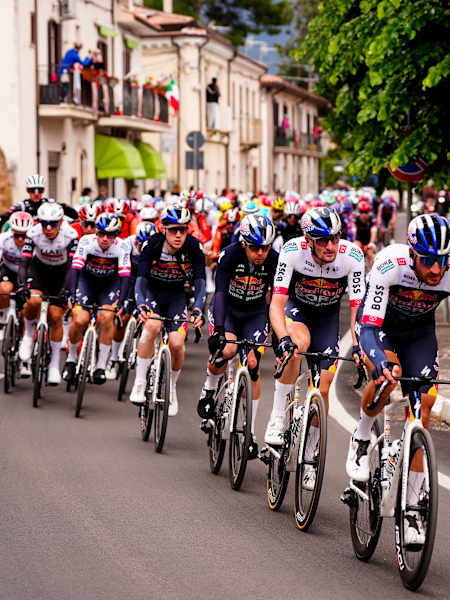
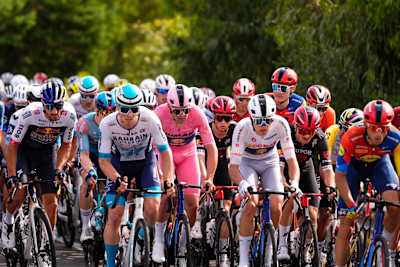
The first of this year’s Grand Tours, the Giro d’Italia, is back for its 109th edition between May 8 to 31. Starting in Bulgaria for the first time, in the coastal city of Nessebar, the three-week race will spend three days in the Balkans before working its way from south to north up Italy’s mainland – stage 16’s Swiss sojourn the only other time it steps outside the Italian borders – before finishing with the ceremonial, criterium-style course in Rome.
The world’s best riders will have to tackle the small matter of 3,468km between the Black Sea start and the Italian capital’s finale circuit, while there will be 48,764m of climbing as they inch their way up iconic ascents in the Apennines, Aosta Valley, Alps and Dolomites.
From a stereotypically tough course to a fierce battle for the general classification featuring a realistic home hope, here’s everything you need to know ahead of the 2026 Giro d’Italia.
The Giro d'Italia 2026 route: something old, something new
While overseas starts for Grand Tours have become commonplace in recent times, 2026 is the first time that the Giro d’Italia has had back-to-back Grande Partenze – Bulgaria becoming the 11th country to host the Giro’s start, following on from Albania last year.
From there, the course lacks the same amount of elevation gain as last year (down just over 3,500m), but it retains the difficulty that the Giro has become renowned for – most notably stage 7’s 14km ascent to Blockhaus (the setting for Eddy Merckx’s first Giro stage win in 1967), a monster 42km Tuscan individual time trial on stage 10, stage 14’s sawtooth profile featuring five of the Aosta Valley’s categorised climbs in 133km of racing, and the Dolomites’ knockout blows of stage 19 and 20.
The Giro d'Italia is renowned for its difficult ascents
Take a look at the full overview of the 21 individual Giro d'Italia stages below:
Date
Stage
Route
Distance
Altitude gain
Friday, May 8
1
Nessebar - Burgas
147km
876m
Saturday, May 9
2
Burgas - Veliko Tarnovo
221km
2411m
Sunday, May 10
3
Plovdiv - Sofia
175km
1577m
Monday, May 11
Rest Day
Tuesday, May 12
4
Catanzaro – Cosenza
138km
1681m
Wednesday, May 13
5
Praia a Mare - Potenza
203km
3740m
Thursday, May 14
6
Paestum - Naples
141km
684m
Friday, May 15
7
Formia - Blockhaus
244km
4472m
Saturday, May 16
8
Chieti - Fermo
156km
1872m
Sunday, May 17
9
Cervia - Corno alle Scale
184km
2352m
Monday, May 18
Rest Day
Tuesday, May 19
10
Viareggio - Massa ITT
42km
98m
Wednesday, May 20
11
Porcari (Paper District) - Chiavari
195km
2550m
Thursday, May 21
12
Imperia - Novi Ligure
175km
2165m
Friday, May 22
13
Alessandria - Verbania
189km
1398m
Saturday, May 23
14
Aosta - Pila (Gressan)
133km
4202m
Sunday, May 24
15
Voghera - Milan
157km
630m
Monday, May 25
Rest Day
Tuesday, May 26
16
Bellinzona - Carì
113km
2961m
Wednesday, May 27
17
Cassano d'Adda - Andalo
202km
3216m
Thursday, May 28
18
Fai della Paganella - Pieve di Soligo
171km
1889m
Friday, May 29
19
Feltre - Alleghe (Piani di Pezzè)
151km
4834m
Saturday, May 30
20
Gemona del Friuli - Piancavallo
200km
3827m
Sunday, May 31
21
Rome - Rome
131km
1329m
02
Bulgaria beckons
The Balkans country will provide the backdrop to the first three days of action, but the relatively tame terrain on offer means that all are likely to be contested by the sprinters or breakaways, meaning that we might have some surprise faces in the maglia rosa at the race’s first rest day.
After the first rest day on May 11 to allow the peloton to depart Bulgaria and head to Italy’s south coast, expect a sprint-favoured showdown on stages 4 and 6 with a rolling day of riding in between. Stage 7’s mammoth 244km route from Formia to Blockhaus is the first true test for the general classification favourites, and is guaranteed to shuffle the overall standings after six days of skirmishes – the 14km ascent to the summit finish at Blockhaus likely to see a number of GC bids wilt.
If stage 7 doesn’t end in fireworks, then stage 9 and the finale of the first week surely will; the 184km course packs most of its 2,352m of climbing into the last 30km, and with a rest day to follow, riders can afford to push beyond their limits.
04
Week 2: Mammoth time trial, Monument-inspired spin and steep Saturday
After the second rest day, Stage 10 is one for the time trial specialists and features a flat, 42km course along the Tuscan coast from Viareggio to Massa; although there’s still plenty of challenges to come – its sheer length means that any mistakes for a GC contender will be severely punished. The following day is on the lumpy side, but it's stage 12 that will pique the interest of any Classics riders in the peloton – the route an almost reversal of the Milan-San Remo Monument’s course.
Spectators cheer on the riders at the 2025 Giro d'Italia
A transfer day follows towards the Alps and acts as a warm-up for what’s to come on the race’s third Saturday. Cramming 4,202m of elevation gain into just 133km of racing, stage 14 starts as it means to go on with the category one ascent to Saint-Barthélemy. Once riders have caught their breath on the descent, things start to kick up again with three back-to-back categorised climbs before the final, 16.5km summit finish in Pila – a climb with an average gradient of 7 per cent and one firmly for the climbing goats. Week two finishes with a sprint-focused stage into Milan, but this will be the last opportunity for the fast men until the following Sunday’s finale.
05
Week 3: Climbs, climbs and more climbs
After the final rest day comes a short, sharp Swiss excursion – the 113km stage including a circuit that takes in the climbs of Torre and Leontica twice before ending with a summit finish up the 11.6km and 8 per cent average gradient road to the ski resort of Carì in the Italian-speaking canton Ticino. Two transitional stages follow before the gauntlet is thrown down on stage 19 – the 2026 Giro’s Queen stage. Featuring six climbs, almost 5,000m of elevation gain and the hors categorie and Cima Coppi (the edition’s highest point) Passo Giau (9.7km at 9.4 per cent average), expect fireworks in the GC battle or consolidation of the maglia rosa in the Dolomites.
If stage 19 hasn’t decided things, then stage 20 certainly will. Although rolling terrain for the most part, its double ascent to Piancavallo could be where the race is ultimately won or lost. Finally, after three weeks in the saddle, the various jersey winners will be crowned on a ceremonial ride into Rome, but with it guaranteed to end in a sprint finish, it could still prove crucial in deciding the points contest.
06
The Giro d'Italia 2026 contenders
The Giro d’Italia is set to be a fierce contest between some of cycling’s most exciting talents, and its startlist is packed with riders who already have Grand Tour-winning credentials and those with ambitions to write their name into the sport’s history.
It could be a tight battle for the pink jersey this year
Two-times Tour de France winner and 2025 La Vuelta champion Jonas Vingegaard will be attempting to become only the eighth rider in history to win all three Grand Tours, and with no Tadej Pogačar to contend with, the Dane starts as the clear favourite.
His prospects received a boost when his most likely competitor for the maglia rosa, João Almeida, was ruled out through illness, meaning that UAE Team Emirates are likely to back Adam Yates or Jay Vine in the GC instead. But Vingegaard’s coronation is no forgone conclusion.
Egan Bernal, Richard Caparaz and Red Bull – BORA – hansgrohe’s Jai Hindley have all won the Corsa Rosa previously, while Hindley’s teammate Giulio Pellizzari had a breakout home Grand Tour in 2025, becoming the team’s focus after previous team-leader Primož Roglič withdrew on stage 16 and finishing sixth.
Finally, outsiders who could profit from any slip-ups from Vingegaard include Austrian rider Felix Gall and Jayco AlUla’s Ben O’Connor.
07
The teams: Red Bull - BORA - hansgrohe packed with Italian talent
The 2026 Giro d'Italia retains the 23 teams that were introduced during the 2025 edition, meaning that 184 riders will line up once more in Bulgaria. In addition to the 18 WorldTour teams, wildcard entries have been given to Italian outfits Bardiana CF 7 Saber, Team Polti VisitMalta, Swiss teams Tudor Pro Cycling and Pinarello Q36.5 Pro Cycling, and French Pro Continental squad Unibet Rose Rockets.
Team Red Bull - BORA - hansgrohe in action during the 2025 edition
Among the 18 WorldTour teams competing in the Giro d'Italia 2026, Red Bull - BORA - hansgrohe is fielding a top-level line-up and has the luxury of making a two-prong attack on the general classification with Giulio Pellizzari and Jai Hindley. The pair will be supported in the mountains by domestiques Aleksandr Vlasov and Ben Zwiehoff, while Nico Denz and Gianni Moscon will be on hand to protect them on the flat and rolling terrain of Bel Paese.
Giro d'Italia jerseys and classifications: what you need to know
As is tradition, the Giro d'Italia 2026 will award four distinctive jerseys to the leaders of the different classifications at the end of each day's racing. They are:
Maglia Rosa (pink) – The iconic jersey of the Giro d'Italia, it's awarded to the leader of the general classification by time.
Maglia Ciclamino (purple) – Assigned to the leader of the points classification, usually a sprinter.
Maglia Azzurra (blue) – Worn by the leader of the mountain classification rewarding the race's best climbers.
Maglia Bianca (white) – Reserved for the best rider under 25 years of age in the general classification.
At the end of each stage, bonuses of 10, six and four seconds are awarded to the first three finishers, as well as three, two and one seconds in the intermediate sprints, making each stage decisive for the general classification.