



Bike

BMX
This is what happens when you give a BMXer a blank canvas
Watch BMX rider Murray Loubser transported from a lecture room into a BMX scenescape, then take a behind-the-scenes look at the creative team that brought this project to life.
Freestyle BMX rider Murray Loubser has been photographed many a time in his career by fellow South African Wayne Reiche. Over time both became intrigued about the interplay between the shapes, shadows and architecture that appeared in images Reiche shot of Loubser.
From this the idea, Shapes in the City was born. To produce a photo-led project that would capture the architecture and the geometric patterns that you find occurring in any city and showcase the way a BMX can be seen in these surroundings. Naturally for the two South Africans, Cape Town and its surrounds was the perfect canvas for this.
Watch how Loubser, Reiche and the creative team behind them (BMX riders, all) brought the Shapes project to life in the documentary film in video player above.
Related
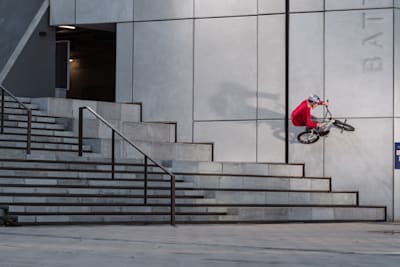
Murray Loubser on location for Shapes in the City
© Wayne Reiche/Red Bull Content Pool
The project morphed into something so much more than 'just' a stills project and eventually the cityscapes provided a blank canvas on which was painted a tight action edit and the accompanying Shapes in the City film documentary that you can watch above.
Press play in the video below to see Loubser transported from a lecture room into a dreamlike BMX scenescape in the action edit.

4 min
Shapes in the City – Murray Loubser
Shapes in the City sees freestyle BMX rider Murray Loubser ride the most iconic locations of Cape Town.
“It [the project] came about by just sort of seeing a pattern that was developing between us – we were shooting a lot of things together,” Loubser explains.
A shot of a yellow rectangle at Cape Town train station involving Loubser sparked the idea of Shapes in their minds. Reiche, a BMXer himself and a dirt jumping building pioneer in South Africa, focuses on strong lines and shapes in his photography.
"The shadows, geometry and light changes really intrigued me in some spots. This project is the culmination all of that put together," he says. “I go for more of a simple, minimalist approach and with that it's often a two-dimensional composition I choose.”
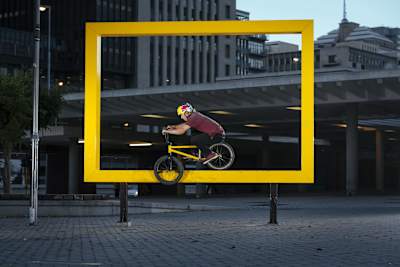
The train station shot that sparked the project from back in 2016
© Wayne Reiche/Red Bull Content Pool
The documentary also outlines Murray’s rise from the small town of Gansbaai on South Africa’s Southern Cape coast to being one of South Africa’s top riders.
Read on for more insight into the project from Loubser and how he approached the riding aspects of it in the following Q&A.
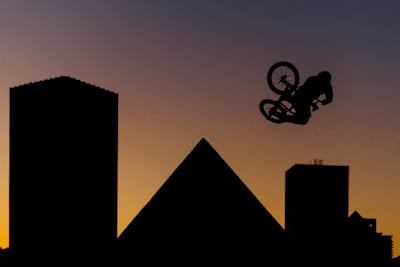
Silhouettes of Loubser and the Castle of Good Hope
© Wayne Reiche/Red Bull Content Pool
Firstly, it's always tricky combining a stills and video project into one, right? Do you approach a line or obstacle differently if you’re shooting for the one or the other?
As the project morphed from photos-only into video as well, I was a bit concerned about the clash between the stills and moving images. As rider you definitely do different tricks for stills than you would for video, in general. Some tricks are just way more pleasing to the eye for a photo and then don't work for video.
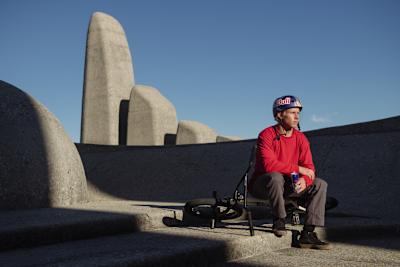
Murray is thankful to Reiche for mentoring him in his pro career
© Wayne Reiche/Red Bull Content Pool
For example, if I’m filming a line, I’m doing a whole variety of tricks down a corridor to put together a flowing (moving) image. But, if you want to take a still photo of that, it won’t work – you have to set up that one image aesthetically and nail that moment. That's why the still images were so important in this project because you can lock off an angle and really hone in on a shape and make it stand out.
Talk to us a bit about scouting spots? What were you looking for?
Yeah, the process of looking for spots was really fun. I spent a lot of time driving roads I wouldn’t normally have, just looking for interesting architecture that had a cool shape to it, but was also rideable. Or if it was late evening a cool shadow being cast. It definitely wasn't a walk in the park, more of an urban treasure hunt of sorts!
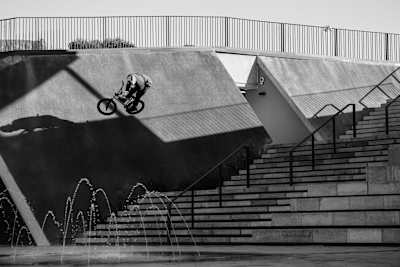
Shapes (and the shadows) in the city
© Wayne Reiche/Red Bull Content Pool
How do you go about deciding on what trick or line to run on a certain obstacle?
For this project I kind of stuck to tricks that weren't 'that' hard because we had to get things done quickly – we were on a tight schedule at each location and had to film the action lines, get the still photos locked in and then shoot more video for the behind-the-scenes documentary. Days were packed!
There were certain tricks that were more scary and some that required me to be more zoned, otherwise the consequences would have been very real.
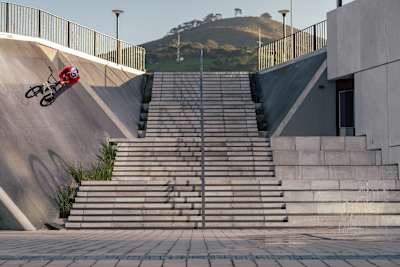
Cape Town showing off
© Wayne Reiche/Red Bull Content Pool
For those 'more zoned-in' situations, you're big on visualisation as part of your mental preparation, right?
For sure, usually I have a video tape playing in my mind. It's kind of in slow-mo and I see the line or trick happening, over and over – where the body must be and where the bike must move – so I know what to do when I’m in the moment. It's really powerful I find and you can use it to 'do' almost anything that you haven’t done before. For this project, when I knew a new spot was coming up – one we'd recced, but not ridden – I would start visualising things long before we got there, days before event. That just gave me so much confidence going in.
There were certain tricks that were more scary and some that required me to be more zoned, otherwise the consequences would have been very real
How important was it to work with such a dialled-in BMX crew?
I couldn’t be more stoked with the crew – Wayne Reiche, Kevin Schnider, Jason Prins and Tyrone Bradley. It was so important that they were all BMX riders. They all understood what I was doing when I was talking. When I said I was doing a ‘Smith nose bar’ it wasn't gibberish and they knew exactly what that meant and what angles would suit the shoot (both video and stills) best. Plus, we're all really good friends and ride together all the time – they're all such talented riders for who I have heaps of respect – that helped a lot too.

In the gold of light
© Wayne Reiche/Red Bull Content Pool

And, on to the next spot
© Tyrone Bradley/Red Bull Content Pool

This place is usually off limits
© Wayne Reiche/Red Bull Content Pool

On location at the Afrikaans Language Monument in Paarl
© Wayne Reiche/Red Bull Content Pool
Of all the locations, which was your favourite?
The Castle of Good Hope in Cape Town! There was this big triangle made out of cement and rocks, it's just so unique and to get permission to ride that was just really cool. I had a lot of fun on that one.
