


Gaming
Games
How to improve reaction time for gaming: Best tips & drills to react faster
Reaction time is trainable. This guide covers the best exercises for reaction time, hand-eye coordination drills, and mental prep gamers use to react faster and outplay the competition.
Reaction time in gaming can be a massive advantage at the highest levels of competition.
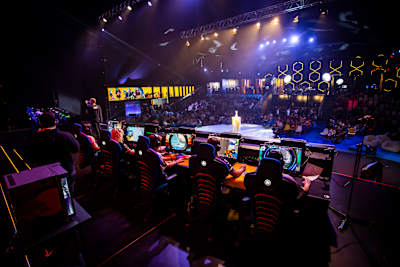
Red Bull Campus Clutch World Finals 2022 in Sao Paulo, Brazil
© Fabio Piva / Red Bull Content Pool
In this article, we will explain the factors that determine your reaction time, give you some tips to increase your reaction time for gaming, and then identify common mistakes you might not realize you are making that could be slowing your response time down.
01
Understanding reaction time
In a video game, reaction time is the amount of time that elapses between an event and the gamer’s response. It's a critical component of gaming, especially in fast-paced action games like first-person shooter (FPS) games, racing games, and fighting games.
For example, the faster you react in an FPS game, the better you’ll perform in competition when dodging attacks or shooting an enemy.
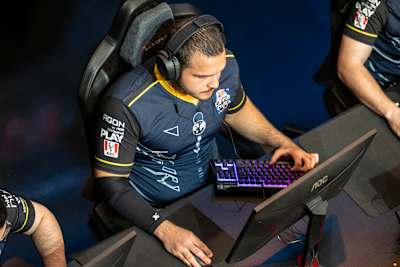
Participant during Red Bull Campus Clutch Turkey Final in Istanbul 2022
© Mahmut Cinci / Red Bull Content Pool
Factors that can affect reaction time in gaming include:
- Age: Reaction times tend to slow down as we age. Without taking steps to maintain or advance your reaction time, science shows it can begin to drop off around age 24.
- Genetics: Some individuals simply have a naturally faster reaction time than others. (Fortunately, it’s a trainable skill that anyone can improve, as we discuss below.)
- Gaming experience: As players spend more time playing a particular game or genre, they become more familiar with gameplay mechanics, which leads to reduced strain on the mind and frees up mental resources to react faster.
02
How to increase reaction time: Tips for gamers
Preparing the body and mind can go a long way to increase your reaction time. Add a few specific gaming techniques into the mix, and you could see a huge improvement in your performance.
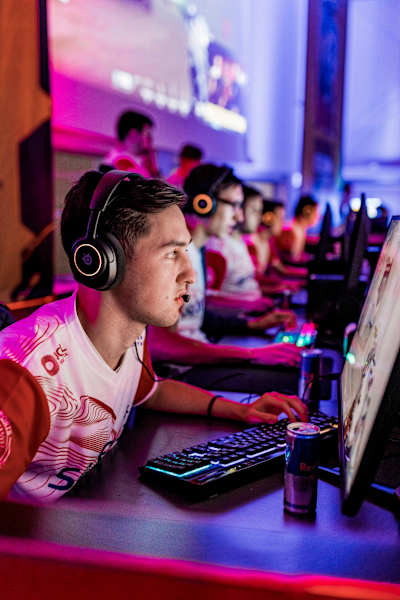
Team UCLL during the finale of Red Bull Campus Clutch 2022 Belgium
© KREW Collective / Red Bull Content Pool
Physical preparation
Improving general health and fitness: A strong foundation in overall health and fitness plays a crucial role in improving reaction time for gaming. Your body and brain work together, and better physical health leads to faster reflexes, sharper focus, and sustained endurance during long gaming sessions.
- Cardiovascular Exercise – Activities like running, cycling, and swimming improve blood flow to the brain, enhancing cognitive speed and reaction time.
- Strength Training – Lifting weights or bodyweight exercises (push-ups, squats, deadlifts) improve muscle activation, which helps with quicker movements.
- Hydration – Dehydration slows down brain function, so drink plenty of water throughout the day.
- Healthy Diet – Foods rich in omega-3s (salmon, flaxseeds), antioxidants (berries, nuts), and protein support brain function and muscle coordination.
- Consistent Sleep Schedule – Poor sleep leads to slower reaction times; aim for 7-9 hours of sleep each night.
Do exercises that enhance your reflexes: As part of your gaming routine, incorporating exercises that improve your reflexes can be beneficial for improving reaction time. Examples include throwing and catching a tennis ball against a wall, practicing ball drop drills, and playing other faster-paced games that require hand-eye coordination such as table tennis.
Train your eyes to track fast-moving objects: Training your eyes to track fast-moving objects can help improve your reaction time. Playing fast-paced video games or using eye-tracking exercises for gaming or reading can help strengthen the eye muscles and lead to a performance boost.
03
Training reaction speeds: Reaction time practice drills
Reaction time is trainable, and with the right reaction time practice, you can significantly improve your reflexes. Here are some reaction-speed training techniques:
- Hand-Eye Coordination Drills – Use reaction-based games like Aim Lab or Kovaak’s FPS Trainer to enhance response time.
- Visual Tracking Exercises – Follow fast-moving objects with your eyes, like watching a bouncing ball or using eye-tracking software.
- Reflex-Based Apps – Use apps like Reaction Time Tester or Human Benchmark to practice quick responses.
- Fast Decision-Making Games – Playing first-person shooters (FPS), fighting games, or racing games on high difficulty trains reaction speeds.
- Delayed Stimulus Training – Have a friend randomly call out instructions (like “jump” or “dodge”) while playing to simulate unexpected in-game events.
04
How to improve hand-eye coordination: Best games and drills
Hand-eye coordination is the specific link between what you see and how fast your hands respond - and it's trainable separately from raw reaction time. A short mix of digital and physical work goes furthest:
- Best hand-eye coordination games: Aim Lab and Kovaak's FPS Trainer for aim-tracking; table tennis or Beat Saber-style rhythm games for whole-body coordination.
- Best hand eye coordination drills: the tennis ball wall-catch, a partner-dropped ball catch ("ruler catch" works too — catch a ruler dropped by a partner before it hits the floor), and juggling with two balls for a few minutes a day.
- Consistency beats intensity here — 10 minutes of daily drilling compounds faster than one long weekly session.
05
Best physical exercises to improve reaction time
Physical training enhances your neuromuscular coordination, making it easier for your brain and body to react faster. These best exercises for reaction time specifically boost reflexes and reaction times:
- Sprint & Stop Drills – Sprint forward for 5-10 yards, then react quickly to a cue (whistle, clap, or visual signal) to stop or change direction.
- Tennis Ball Drop – Have a partner drop a ball from shoulder height, and try to catch it before it hits the ground. This improves hand-eye coordination and reaction speed.
- Ladder Drills – Use an agility ladder to perform quick footwork patterns (high knees, lateral shuffles) to speed up reactions.
- Box Jumps – Explosive movements like jumping onto a box train your muscles to react quickly and efficiently.
- Reaction-Based Sparring – Sports like table tennis, boxing, or even VR reaction training can help sharpen your reflexes.
Incorporating these physical reaction drills into your routine will sharpen your reflexes, helping you react faster in gaming and real-life situations.
06
How can you train your brain to react faster?
Improving your reaction time in gaming isn’t just about reflexes—it also involves training your brain to process information faster. Here are some brain exercises that can help:
- Memory Games: Playing memory-based games like Lumosity or Dual N-Back enhances cognitive processing speed.
- Visual Tracking Drills: Training your eyes to follow moving objects, such as bouncing balls or fast-moving lights, helps improve hand-eye coordination.
- Reaction Time Apps: Tools like Aim Lab and Reflex Training Games simulate in-game reaction scenarios to boost decision-making speed.
- Puzzles & Strategy Games: Games like chess, Sudoku, or real-time strategy (RTS) games improve cognitive flexibility and critical thinking under pressure.
- Meditation & Focus Exercises: Short mindfulness exercises improve concentration, reducing distractions that slow down reaction time.
Reduce stress and anxiety levels: Studies show that high levels of stress and anxiety can slow down your reaction time. To lower stress, gamers should use relaxation techniques, such as box breathing (such as a deep inhale to a four count, followed by a long exhale for four) or meditation. These relaxation techniques can be done before or while they play.
Get enough sleep and rest: Research has shown that getting enough sleep is essential for all types of cognitive function, including reaction time. Current research shows adults should aim for seven to nine hours of sleep per night — gamers under 18 should get at least eight — and avoid caffeine or stimulating activities at least six hours before bedtime.
- Aim for 7-9 hours of sleep per night for optimal cognitive function.
- Stick to a regular sleep schedule to improve consistency in reaction times.
- Avoid screens before bed to reduce blue light exposure, which disrupts melatonin production.
- Incorporate power naps (20-30 minutes) to refresh the brain and enhance performance.
- Stay away from caffeine or stimulants at least six hours before bedtime to ensure deep sleep.
Getting enough sleep allows your brain to process and retain new gaming techniques, leading to better muscle memory and reaction speeds.
Stay focused and alert during gaming sessions: Staying focused and alert during gaming sessions is essential for improving reaction time. Avoiding distractions, such as checking your phone or talking to friends, keeps your mental resources focused on the task at hand, which speeds up your reaction time.
07
How can you improve your reaction time while gaming?

© Pedro Lemos / Red Bull Content Pool
- Regularly practice games that require fast reaction times: Even if your primary game isn’t one that requires incredibly quick reflexes, such as an FPS or race car driving game, try mixing those types of games into your routine once in a while. Alternatively, you could try playing those games on harder modes or against harder competition online and specifically focus on speed while you practice.
- Practice with reaction time training tools: There are dozens of reaction time games and apps available online—some are free while others cost money—that can be helpful for improving your reaction speed. Paid versions of these tools often come with a tracker so you can see how much progress you make and identify areas for improvement.
- Use peripherals and equipment that enhance reaction time: Switching to high-performance equipment that requires faster reaction times, such as a high-speed monitor or a gaming mouse, can help enhance your reaction time. This equipment also offers the benefit of more precise controls. Hand warmers, which keep blood circulating in the hands, are also a popular way to maintain or improve hand-eye coordination and speed.
08
Common mistakes to avoid
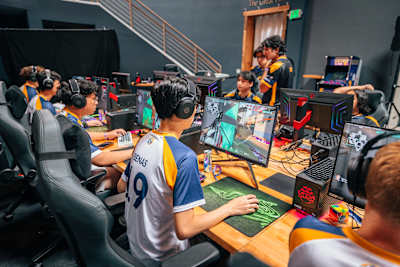
Red Bull Campus Clutch NW Regional Qualifier 2022 in San Jose, CA
© Miguel Ozuna / Red Bull Content Pool
Increasing (or even maintaining) your reaction time in gaming could also be a matter of eradicating bad gaming habits or simply avoiding common mistakes. Here are some things to consider as you build your training approach to speed up your reflexes.
- Lack of consistency: Reaction time improvement requires consistent practice and repetition. Failing to practice regularly can slow down progress and hinder improvement.
- Lack of focus: Avoid multitasking during training sessions at all costs. Otherwise, you’ll waste valuable mental energy that could be used to develop your skills.
- Not challenging yourself: If you don't challenge yourself during training, your reaction time improvement is likely to plateau. When you practice, consider applying the concept of “deliberate practice,” a term coined by the renowned sport psychologist K. Anders Ericsson. Basically, you want to identify your weaknesses and attack them deliberately in training instead of just generally practicing all required skills with no focus.
- Neglecting general health and well-being: Poor physical health, lack of sleep, and unhealthy habits such as poor diet and lack of exercise will negatively affect reaction time improvement.
09
Staying alert and focused
Staying sharp and mentally engaged during gaming sessions can make a significant difference in your reaction time. Here’s how to keep your focus at peak levels:
- Eliminate Distractions: Turn off notifications, minimize background noise, and create a gaming setup that promotes focus.
- Hydrate Properly: Dehydration slows down brain function, so drink water consistently during gaming sessions.
- Use the 20-20-20 Rule: Every 20 minutes, look at something 20 feet away for 20 seconds to reduce eye strain and maintain alertness.
- Take Short Breaks: Playing for extended periods without breaks leads to mental fatigue. A quick 5-minute walk or stretch can refresh your focus.
- Eat Brain-Boosting Foods: Foods rich in omega-3s (salmon, walnuts), antioxidants (blueberries), and complex carbs (whole grains) help maintain mental energy.
Reaction time in gaming can be a massive advantage at the highest levels of competition. Even though some may be more genetically gifted than others, it’s a mental skill that anyone can train. In fact, if you’re older than 24, science says you should probably focus on it to offset any age-related degeneration that may occur.
Adding some brain hacks for gaming to your routine probably wouldn’t hurt. Making a point of staying fit while gaming as you work to develop your skills is also a good idea.

*WHILE SUPPLIES LAST. Ends 9/30/26. US; 18+. To redeem, click SPIN and START above to complete quiz, and provide req’d info. Std. data rates apply. Access to game and Ubisoft acct. req’d to redeem. Limit: 1 item/person. Add’l info: redbull.com/assassinscreed. Sponsor: Red Bull North America, Inc., 1740 Stewart St., Santa Monica, CA 90404.
Assassin's Creed Black Flag Resynced
For the leap of faith.
How well do you know the Credo? Take the quiz, test your knowledge, and a unique in-game reward* awaits those who complete the challenge.

