
Hockey
'It is a team game' - Thati Zulu
In Episode 2 of What We Know, Proteas hockey player Thati Zulu explains why a team that pays its own way can't afford to be strangers.


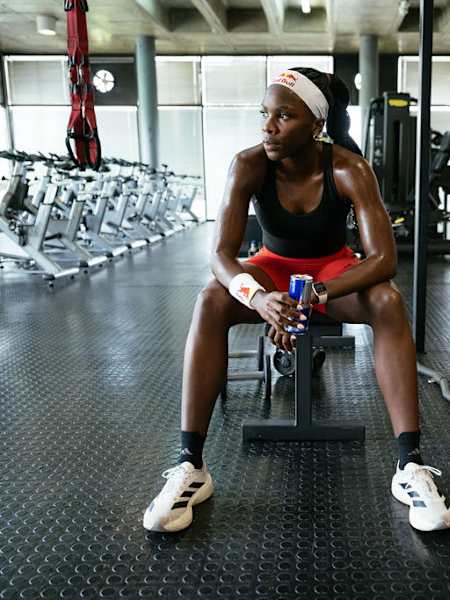
Some mornings it was still dark when Thati Zulu got to the gym. Cold, too. Then class. Then hockey in the evening. Then all of it again the next day, and the day after that.
People assume that's the easy part, she says. “A lot of people think just waking up and going to the gym is quite easy, but to be doing it consistently, I think is a lot.” When you ask her what actually got her out of bed, the answer isn't medals or the national team, although both come up eventually. It's the other alarms going off across Pretoria.
“My other teammates were waking up, you know, early in the morning, so I had no excuse.”
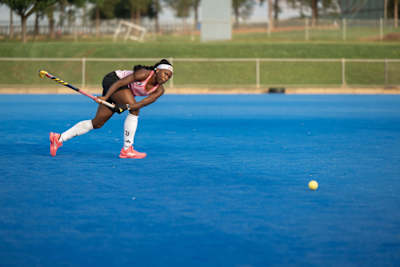
Thati Zulu
© Wayne Reiche / Red Bull Content Pool
It's a small line, but it contains most of Thati. Episode 2 of What We Know is built around community, and she leads its Pretoria segment. The community she describes isn't a warm backdrop. It works more like a playing system. The women beside her are the reason she shows up, and knowing exactly why each of them shows up is, in her telling, the reason the team works at all.


She could have gone another way. She was good in the pool as a kid. Hockey won because it wasn't something she'd have to carry alone.
“I focused on hockey because it was a team sport,” she says. “There were other people experiencing the same things as me and were going through the same things as me, so I had people to relate to as well.”
Relating to each other is at the centre of how she talks about the Proteas women's team. When you ask about the bond in the squad, she doesn't reach for the usual team talk. She talks about stories.
More about Thati Zulu


“It's been beautiful to see the different stories that my teammates have shared with me,” she says, “and not only me sharing my story, but knowing that they're working as hard as me and they come from similar backgrounds as me.”
To see why that matters so much, you need to know what those stories contain. Women's hockey in South Africa is an amateur sport in the most literal sense. “We don't get paid a single cent at all,” Thati says. “I've never gotten paid for playing for my country.” Most of the squad hold down 9 to 5 jobs. Players have had to cough up 40,000 rand before a tournament just to get there. They pay for their own kit. They write letters to people in their communities asking for donations, and they split whatever is still owed on the team group chat. On a tour of Belgium before the Paris Olympics, the budget was so tight that they packed their own oats and dry food so they'd have breakfast before playing one of Europe's top sides.
So when a teammate tells you her story, she's also telling you what her family gave up, who chipped in, and what she's juggling at work to be on the pitch next to you. Thati doesn't separate the player from the people behind her.
“I'm playing for passion, I'm playing for the teammate alongside me and the people who are supporting her as well, who support me as well.”
This is where the sisterhood the episode talks about stops being sentimental and becomes practical. The top nations build their combinations over a full year of games against each other. A team with no preparation budget doesn't get that. What it can build is trust, and Thati's argument is that trust starts off the field.
“You can't play with people you don't know,” she says, “how they are or their patterns.” Then comes the line at the centre of everything she says in the interview: “I think it would be different if I was playing where people didn't know my story, or I didn't know theirs. I think it would just be playing for the sake of playing.”
That line is worth sitting with. Plenty of athletes in well funded setups play for the sake of playing, and there's nothing wrong with that. Their contracts are paid, their flights are booked, and breakfast is waiting at the hotel. Thati knows her team doesn't get that option, and she's clear about how it shapes them.
“I don't think if you ask a first world country field hockey player about why they go out there and why they play and what they struggle with,” she says, “it would definitely be different to what we experience.”
“Our why is definitely different to any other country.”
It isn't a complaint, and it isn't a boast. It's an honest account of what holds the team together when the usual support isn't there. Administrators and sponsors have left gaps, and the players have filled them with each other.
When you ask what makes representing the country worth it, she doesn't start with herself. “For me the biggest thing is the sacrifices that the people who have been with me on this journey have made.”
That is community in Thati's sense. It isn't a crowd in the stands. It's a small, specific group of people who know what each of the others is carrying, down to the rand. In a sport that pays them nothing, knowing each other's stories is the one resource nobody has to fundraise for.
It's also why, for this team, playing for the sake of playing was never really an option.
Watch Thati Zulu in What We Know, Episode 2: Community.