
Soccer (Football)
Who invented football and where?
Who invented football and where? Everyone knows the sport today, but it took centuries to develop. So where are the origins of football as we know it today?

Paris FC was founded in 1972, and although that was more than fifty years ago, the club is relatively young in the history of football. After all, the most popular sport in the world, at least in its modern form as we know it today, was created over 150 years ago! And if we are talking about the simple game with the ball on the foot, then the history goes back even further. But from all these years of existence: where was football really born and, above all, who is the creator of this ingenious sport?
01
The origin of football in ancient times
Far removed from today's football, traces of similar games can be found in ancient civilisations.
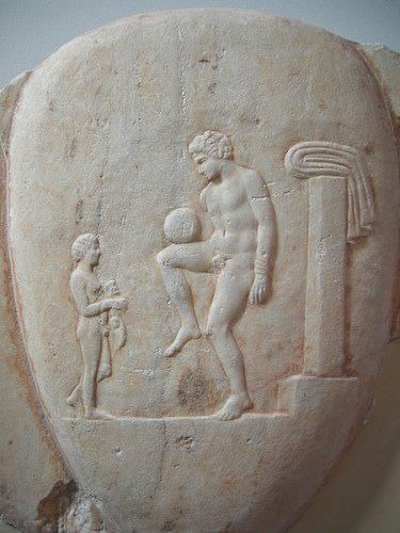
Football in antiquity
© Musée national archéologique d'Athènes
For example, in ancient Greece in the 9th century BC with a ball game called episkyros, which was played in teams of 12 to 14 players. Episkyros tournaments were organised in the city of Sparta, among other places, making it one of the earliest known organised football competitions. However, this game allowed the use of hands. A few years later, episkyros spread beyond the country's borders when the Romans adopted it in their own way and called their version harpastum. Harpastum was very popular with the legionaries and spread throughout Europe after the conquests of the Roman Empire.


It can also be referred to as cuju, one of the oldest forms of football, at least that is how Joseph Blatter, the former FIFA President, described it. Cuju, which originated in China, was a training game played by soldiers by passing and juggling with the ball. This game originated between the 2nd and 3rd centuries BC and was used for the physical training of the military.
02
The soule, the forerunner of football in the Middle Ages
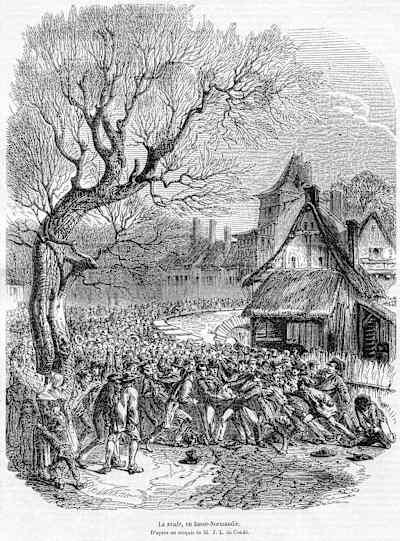
The soule, the forerunner of medieval football
© Frederic Humbert
The first written mention of the soule, a ball game played with feet and hands in teams, was found in France in 1147. The rules of the game varied depending on the region. However, it is known that the teams had to get the ball into a goal in order to win. This sport was also played in England, where the first written evidence dates back to 1174. Soule, which was often played very roughly, was banned several times by order of local authorities or even the king.
Incidentally, the first documented use of the word "football" can be found in a decree issued by Nicholas de Farndone, Lord Mayor of London, in 1314, which banned "football" due to the unrest caused by the sport.
The soule is referred to by English-speaking sports historians as "folk football" to distinguish it from modern football. The sport was particularly popular with the "common people", which is emphasised in the book Reminiscences of Eton (Eton is an English boarding school) from 1831. This work documents the presence of folk football in English schools.
03
The birth of modern football

The birth of modern football in England
© .
In 1863, an Englishman named Ebenezer Cobb Morley, then captain of the Mortlake club, suggested in the British newspaper Bell's Life that rules for football be created based on cricket. At that time, the rules still differed depending on the sports club and school.
This led to a meeting in a London pub on 26 October 1863 with representatives from twelve London clubs. Eleven of them agreed to found the Football Association (FA). The aim was simple: to standardise the rules of the sport nationally and internationally.
Here are the eleven clubs that founded the FA:
- Barnes
- Blackheath
- Blackheath Proprietary School
- Civil Service Football Club
- Crusaders
- Crystal Palace (not to be confused with Crystal Palace Football Club, which was founded in 1905)
- Kensington School
- Forest Football Club (Leytonstone) (which later became Wanderers Football Club)
- No Names Club (or N.N. Kilburn)
- Percival House (Blackhealth)
- Surbiton
Ebenezer Cobb Morley was the first secretary of the English Football Federation (1863-1866) and its second president (1867-1874). He wrote the first draft of the Laws of the Game, a set of rules which, among other things, prohibited the carrying of the ball with the hand and thus definitively distinguished football from rugby. This codification marked the actual beginning of football as we know it today, also known as "association football" or "soccer" (abbreviation of "association").
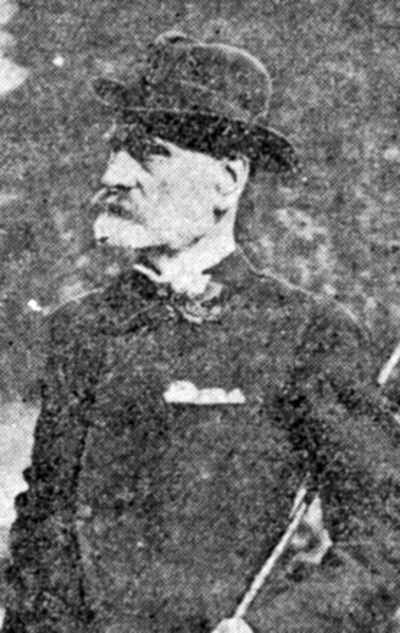
Ebenezer Cobb Morley
© .
Football became officially professional in England in 1885, after years of tension between working-class clubs in the north and amateur elites in the south. This made it possible for players to be paid and led to the founding of the Football League, the first regular professional league, in 1888.
Organised football quickly found favour outside England too: it spread throughout Europe and later worldwide through sailors, railwaymen, workers and British colonists. Clubs were founded, competitions emerged (such as the FA Cup from 1871) and national associations were established until FIFA was founded in Paris in 1904. Football thus became a worldwide, codified and organised phenomenon.
04
How football became what it is today
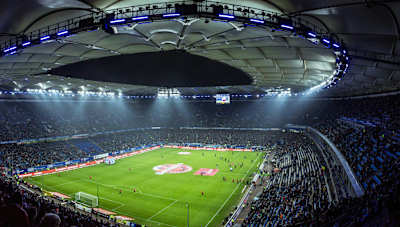
Today's football has little in common with that of 1863
© UNSPLASH
Football's current phase began in the late 1990s with major changes that brought the sport into the age of globalisation, business and new technologies. In 1992, the creation of the Premier League in England marked a turning point: for the first time, a league was conceived as an attractive audiovisual product, supported by extensive television rights signed with the private broadcaster Sky Sports.
In 1995, the Bosman ruling paved the way for the complete liberalisation of the player market in Europe: players were allowed to change clubs freely at the end of their contract and nationality quotas within the European Union were abolished.
In the following years, football witnessed the influx of large foreign investors, the development of club marketing, the extensive use of technology (VAR, data analysis, GPS, etc.), explosive increases in salaries and transfer fees. Football has thus entered a new era in which show, profitability and global visibility take centre stage. A good example of this is the new version of the FIFA Club World Cup 2025: a global, highly profitable event with international sponsors, worldwide broadcasters and maximum exposure. At the same time, this tournament is heavily criticised by players, coaches and fans.
Football has changed dramatically and has nothing in common with its previous "versions", not even the one created by the FA in 1863. Over the years, football has become the number one sport in terms of popularity and revenue. FIFA says there are around 265 million active players worldwide and the European market grew by 8% to a record €38 billion in 2023/24. Some clubs were even founded by companies, such as RasenBallsport (RB) Leipzig, which was created after the takeover of the amateur club SSV Markranstädt, which now plays in the Bundesliga. This century-long history, from Episkyros to the founding of the FA, has made football what it is today.

The RB Leipzig players celebrate their victory
© RB Leipzig

