












Red Bull Motorsports
F1
Revised F1 rules 2026: New updates revealed in Miami
After a forced five-week break, Formula One resumed in Miami with a host of new rules. There are the most important rule changes to help you keep up with changes.
Part of this story
In 2026, Formula One saw the largest updates to regulations the sport has seen for a very long time in its 70-year history. Some of these changes haven’t been well received – garnering criticism from fans as well as drivers. Now, a few of the rules were updated during a break in racing in April. This is what's changed.
01
The problem
The 2026 F1 cars haven’t received a warm welcome. Whereas the previous generation of ground-effect F1 cars struggled to follow and overtake, this season we have the opposite: too many overtaking manoeuvres.
The criticism is not unfounded. What is a position worth if you barely have to fight for it? In 2026, racing in F1 seems like a game of leapfrog to some. Boost and Overtake create huge speed differences between cars, making overtaking a piece of cake. The electric aids are more powerful than the former DRS . The defending driver is defenseless – until he can go on the attack himself, and the game starts all over again.
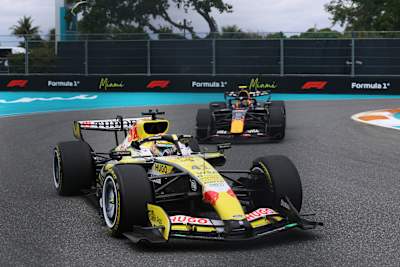
Overtaking manoeuvres needed to be smoothed out
© Getty Images / Red Bull Content Pool
The new F1 engines are the source of the problem. Electric power accounts for about half of the total engine power. The energy for this has to come from somewhere. F1 teams have devised all sorts of clever ways to store as much electricity as possible while driving. But not everyone is happy about that.
The phenomenon of 'superclipping', in particular, has rubbed some fans the wrong way. They’re used to seeing F1 cars race at full speed towards the braking zone. As the engine speed rises higher and higher, the sound only gets louder. To see cars slow down so much on the straight, just to recharge the battery, seems like sacrilege.

Verstappen was often critical of the rules in 2026
© Getty Images / Red Bull Content Pool
It’s also unsafe. Because charging happens automatically and abruptly, the speed difference with the attacking driver behind can sometimes be 30+kph. If they don’t anticipate in time, it can lead to a major accident. We saw this in Suzuka, when Franco Colapinto and Ollie Bearman made contact.
Formula One therefore moved to intervene.
02
The solution
Due to the outbreak of the war in the Middle East, the Bahrain and Saudi Arabian GPs were cancelled. Unexpectedly, there was a five-week gap in the calendar – and a golden opportunity for everyone to put their heads together and work out a solution.
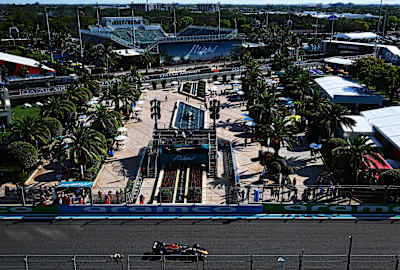
Ahead of the Miami GP, F1 introduced revamped rules
© Getty Images / Red Bull Content Pool
On April 20, the FIA confirmed that stakeholders (including F1 teams, drivers, car manufacturers, engine suppliers, and the Formula One organisation) had devised a package of measures to change the rules, with the ultimate goal of making the sport more attractive and safer.
The changes to the 2026 F1 rules focus on four components:
- Qualifying
- The race
- Start of the race
- Rain and wet conditions
03
Qualifying
Qualifying is where F1 cars should perform at the top of their game, pushing to the absolute limit for maximum lap time. However, the new cars sometimes lost a lot of speed, especially towards the end of the straight or in long corners. The rule changes highlight this by:
- Have cars 'harvest' less energy (7MJ instead of 8MJ), so they can drive at full throttle for longer. From now on, superclipping will only occur for 2-4 seconds per lap.
- Allow cars to charge with more power (350kW instead of 250kW). This way, charging takes less time and drivers need to manage the battery less – even during the race.
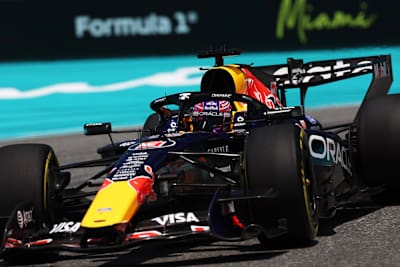
In qualifying, F1 drivers want to give the maximum to get best position
© Getty Images / Red Bull Content Pool
04
The race
For the race, the primary goal is to improve safety by making the deployment and harvesting of electrical energy more predictable. This reduces speed differences without hindering overtaking. F1 attempts to achieve this by:
- Reducing the power of the Boost button, to prevent sudden speed changes.
- Reducing the maximum electric power of the MGU-K to 250kW. In key acceleration zones, this remains 350kW.
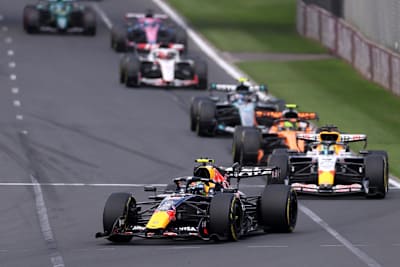
The new rules aim to improve safety on the track
© Getty Images / Red Bull Content Pool
05
Start of the race
The start of the race has already often caused problems this year. Some cars accelerate very quickly, while others barely move. Therefore, F1 is introducing additional safety measures for race starts, namely:
- A detection system for cars that accelerate abnormally slowly.
- Fitting cars with flashing lights that activate as soon as a car experiences a problem during the start procedure, to warn other drivers.
- Electric power at the right moment and in the right place. Due to their position on the track, this previously sometimes went wrong for certain cars.
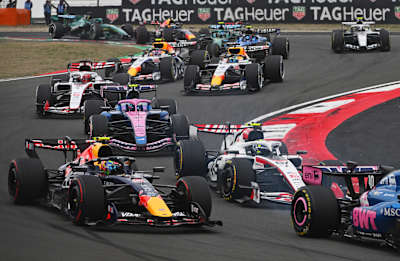
Race starts will always be always crowded
© Getty Images / Red Bull Content Pool
06
Rain and wet conditions
Racing in the rain is dangerous enough as it is. That is why Formula One is introducing a number of new measures to further improve safety and visibility, such as:
- The temperature of tyre warmers for intermediates is being raised so that drivers don’t lack grip as soon as they take to the track on fresh tyres.
- The electric power is being reduced to give drivers more control.
- The tail lights have been modified to be clearer and more visible in poor visibility.
Part of this story


