






Bike
MTB
The making of Asa Vermette, downhill racing's rising star
Meet Asa Vermette, the American downhill sensation who won the 2026 UCI Downhill World Cup overall title in his debut Elite season and made Red Bull Hardline history.
Part of this story
Colorado native and up-and-coming downhill racer Asa Vermette is both a pretty chill guy and a unique talent.
A quick rundown of his recent achievements: He’s smashed the 2024 UCI Junior World Championship title, bagged a Red Bull Hardline victory in Wales in 2025 (the subject of a documentary, Asa Vermette’s Ascent), and delivered a standout performance at the Mont-Sainte-Anne UCI Downhill MTB World Cup in October 2025.
The Mont-Sainte-Anne win wasn’t just a victory, he cruised it by 4.7s, achieving the fastest time of the day, even above Elite men's winner, Jackson Goldstone. “The bike was feeling really good, and I just was having fun on the track. I wasn’t worried,” Vermette says of his historic win in his final Junior season. “I have my best runs where I'm just chill and don't think about it too much.”
He carried this laissez-faire attitude with him into his first Elite Men’s season, making history in early 2026 by winning his debut at the opening round of the UCI Downhill Cup in South Korea – all before he was legally an adult in his home country.
And that was just the beginning. Vermette went on to claim two Elite World Cup race victories on his way to securing the 2026 overall title in his debut season. He also continued his remarkable Red Bull Hardline winning streak, adding victories in Tasmania and British Columbia to his 2025 triumph in Wales.
Vermette features in the new Sound of Speed video, in which he tears up Bikepark Schladming during a downhill training camp (watch it above if you haven't already), and don't miss his first Just Ride interview with bike legends Rob Warner and Eliot Jackson.
From the bike, to mindset and body, this is how he’s building a new, professional approach to winning in 2026, and beyond.
01
Growing up in Colorado’s mountain-bike capital
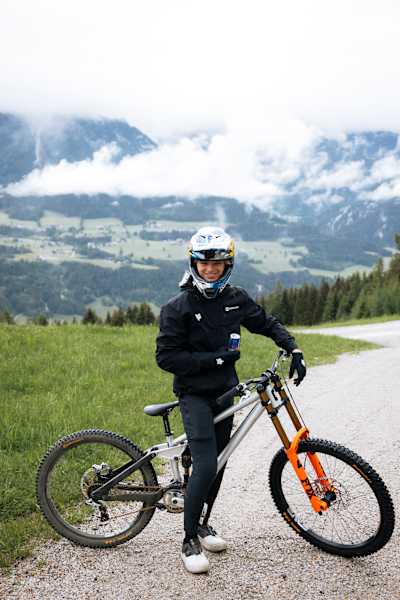
Asa Vermette has been riding bikes since he was three
© Theo Acworth/Red Bull Content Pool
Born and raised in the shadow of Purgatory Mountain in Durango, Colorado, USA, mountain bike riding was in the air. He says his first bike was a rough and tumble Strider, gifted to him at the age of three, although his memories of it are scant.
“The first real pedal bike I got was a Scott,” he remembers. “It was like the little kid bike.”
He loved it from day one, taking to the streets and trails around his family home, flanked by a gang of neighbourhood kids. “There were always a bunch of kids around biking,” he says. “In Durango, it’s just a town thing to get the kids on bikes.”
It wasn’t just all of the kids from school, but also Vermette’s parents who accompanied him, heading out on camping trips and taking their bikes with them.
Purg is a sick mountain. I rode there basically every weekend growing up
Friday nights, though, were for BMX racing. “I did that from age seven to 12 or 13, probably,” Vermette says.
In fact, so enmeshed in daily life was riding his bike that Vermette has no memory of deciding this was something he wanted to do. It was always just something he did and loved without too much thought.
The 1990 World Champs on Purgatory Mountain in his hometown undoubtedly played a role. Vermette wasn’t born at the time, but it set a precedent for Durango as a national destination for downhill riders.
“Purg is a sick mountain,” Vermette enthuses. “I rode there basically every weekend growing up.”
From the age of 12, he remembers being fully hooked and riding every day.
The rest is history.
02
From local races to Junior World Champion
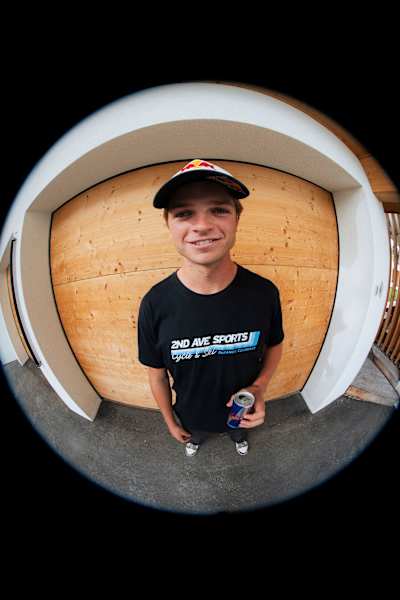
At first, riding was just about 'fun with friends' for Vermette
© Theo Acworth/Red Bull Content Pool
At first, Vermette was just having fun, riding his BMX, mountain bike and getting into motocross. “I knew there were good riders around like Eli and John Tomac, but I was never focused on the racing part,” Vermette says. “I was just going out on my bike and having fun with friends.”
But, at age 13, he decided to enter a local series at Purgatory. “I really started loving it after that,” he says of his first downhill race – and win. With his family as his support crew, Vermette made plans to travel the local area that winter and the following summer, taking on races where they could find them.
The same year, 2020, Vermette made it to his first national champs in Winter Park and ended up winning. “After that, we just wanted to keep doing national races,” he explains. After taking on every race in the US, he found himself at the US Open in 2023, racing against the “top dogs,” where he ended up beating some of the fastest racers in the world.
That performance so impressed DH legend Neko Mulally, he offered Vermette a spot on his team, Frameworks. More touring and competition wins followed until, in 2024, Vermette bagged the UCI Junior World Championship title, becoming Junior world champion.
“It was super fulfilling,” he says now. “Since I’d started racing nationals and world cups, seeing people like Jackson Goldstone – he just seemed to represent the top of what you could do in the sport. I was always dreaming of getting to that level, so to achieve it was unreal.”
In other words, Vermette was making a huge name for himself right out of the start pen. But, looking back, he recognises how the enthusiasm of youth – that ‘go, go, go’ mentality – didn’t always serve him well.
“My first Junior year, Neko had to limit the amount of practice race runs I did because I would go until race day, and then I would feel so bad because everything was so tired,” he laughs, recounting the story for his Just Ride interview. “The second year, I mellowed out more and just did the amount of runs I needed to do!”
03
Carrying the torch of American downhill with Aaron Gwin
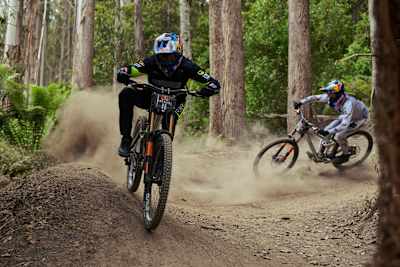
Aaron Gwin and Asa Vermette get some practice in
© Brett Hemmings/Red Bull Content Pool
It’s clear that, as one of the US downhill stars to watch, Vermette is flying the flag for American racing. Not that he thinks of it that way. “I just love riding my bike, and I'm glad that people like watching me ride my bike, and glad that I can inspire little rippers to try it,” he says.
As for the pressure to perform for sponsors and fans, the typically chill Vermette says he does think about it, but getting too in his head doesn’t help his performance on the bike. “I try to think about what I have to do and just go have fun riding my bike,” he says. “If I get too caught up in thinking I have to prove myself, I usually don't do good because I'm not thinking about what I have to get done.”
One thing that has slightly blown his mind is becoming team-mates with the legend Aaron Gwin, whom Vermette calls “The best American and arguably the best period.”
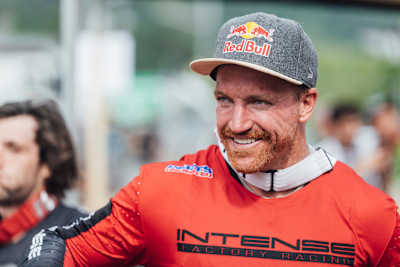
Aaron Gwin – A bona fide downhill mountain bike racing legend
© Bartek Wolinski/Red Bull Content Pool
“My first time meeting him was 2020, and he's super nice,” Vermette says. “He’s always been stoked on me. Being on a team with him is just insane. He’s my biggest idol for sure. It’s super cool just to talk to him, and people like Loïc Bruni and Greg Minnaar.”
In fact, it was hearing Gwin commentating on one of Vermette’s races that actually changed his approach to the sport. “I remember, my first World Cup, I was riding, I won it, and he said, ‘This guy doesn't have to push this hard, he can chill and still have a good run.’ That was eye-opening.”
The advice continues to this day. With Korea ‘26 a fresh track for all involved, Vermette says that Gwin actually helped calm him down, and focus himself for the race ahead, by taking time to talk to the route together. “We walked the track and he was pointing out lines,” Vermette says. “He was finding lines I wouldn’t even have noticed. It was super cool, it’s crazy how good he is.”
Vermette continues: “I was super nervous before Korea and Aaron was like, ‘Dude, your goal on the track is to win every single time you're on it.’ That just helped me a lot, remembering ‘That's the only thing I gotta do.’"
04
Part of a new North-American wave
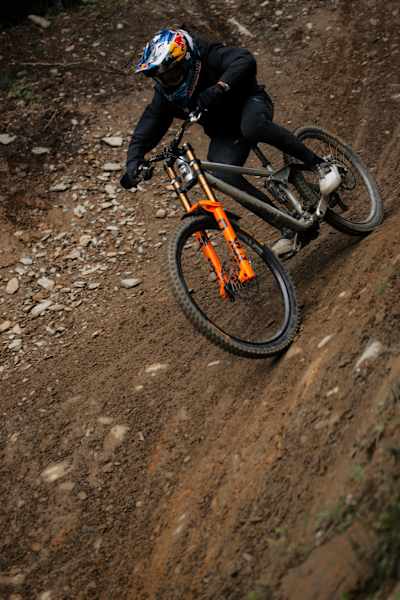
Asa Vermette just loves riding bikes
© Theo Acworth/Red Bull Content Pool
Talking to Vermette, you get the sense that he takes genuine pride in being part of the future of downhill racing at the vanguard of a new crop of North American downhill racers.
“Coming up through downhill racing, there were just three or four race series, now there’s a bunch of them. It's sick; all the kids coming up have so many options. A couple of years ago, you’d have to drive to different sides of the country just to race, so it’s cool to have more races across the US because it costs a lot of money to travel so much.”
Vermette says the scene is definitely going “in the right direction,” but it would help to have one-off events not overlap with World Cups so that “more of us could come race, and bring more people out.”
“I do think that the level of American riders has gone up,” Vermette says in his Just Ride interview. “Even recently, we proved it again with like, six Americans in the top 20. I think once you see somebody can do it, you believe in yourself more, too. The races back home are just so cool right now.”
It’s cool that kids can watch people like Jackson [Goldstone] on social media and just get hyped and just go ride
He points again to the likes of Goldstone as evidence of a strong scene with real talent. “It’s cool that kids can watch people like Jackson on social media and just get hyped and just go ride,” he says.
More and more, he’s asked for downhill racing tips from beginners in his DMs. “It’s a hard one because you don’t know their skill level,” he says, “but the simple advice is just go out and ride your bike. Don’t focus too much on one race or trying to get good at one thing. Growing up, I just went out and had fun on my bike. Doing that, you naturally progress day to day.”
05
Red Bull Hardline, enduro and the rise of a downhill racer
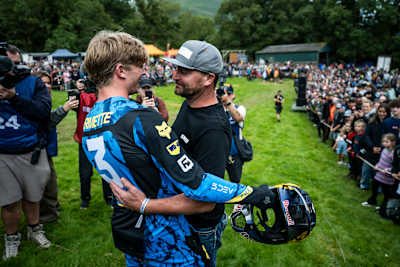
Asa Vermette celebrates his Red Bull Hardline Wales victory with his dad
© Nathan Hughes/Red Bull Content Pool
Of course, any conversation with Vermette would be remiss not to mention his barn-storming victory at Red Bull Hardline in 2025. “It’s insane,” he says of Hardline. “It’s like the full circle of biking. Huge jumps, super gnarly, Rampage-type shoots and features, and racing against the clock. It’s a cool mix of freeriders that do it, and it brings them all together. I wanted to do it since I was a kid.”
Hardline in Wales in 2025 was Vermette's “first real time” dropping last in a big race. “That was a learning experience that helped me,” he says. “Winning there was super gnarly,” he says.
Vermette continued his winning ways in 2026, taking victory at Red Bull Hardline Tasmania before making history at the event's British Columbia debut in October. Racing at Cypress Mountain, he clocked a winning time of 3m 30.061s to become the first rider to win at all three Red Bull Hardline venues – Wales, Tasmania and British Columbia.
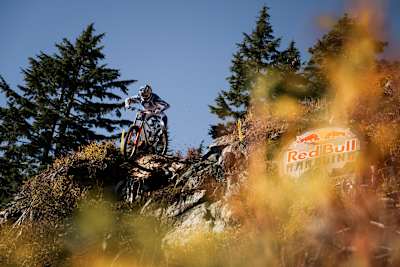
Asa Vermette charges down the Cypress Mountain course
© Bartek Wolinski/Red Bull Content Pool
He’s super-stoked on the rise of freeracing. “It’s cool because the only thing you’re focused on is racing and the one run,” he says, although he does add that only focusing on freeracing might lead to burnout because “you’re only focused on one thing. I have more fun going out and hitting jumps and doing flip and tricks with my friends than just focusing on racing,” he says.
In other words, more fun again, and a focus on broader events is what Vermette is looking for. Which brings us to Enduro.
“Oh, man, it's not going the best,” he says. “It’s too bad, because Enduro is super fun. It's basically just people who want to go out all day and ride their bikes. Enduro is what I did before downhill. So it’s too bad that it seems to be going away because I really enjoy it. Any downhill racer trains on enduro bikes because you can’t always ride downhill.”
06
Mindset, training regime and diet
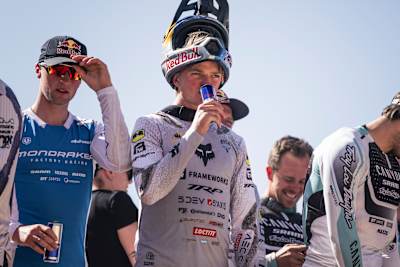
Asa Vermette says his Korea win was "for the doubters"
© Bartek Woliński/Red Bull Content Pool
The Korea win is an especially big deal. Racing along a dusty course at the MONA YongPyong Ski Resort, Vermette smashed a roster full of seasoned veterans, bagging the fastest times in both qualifying and finals, marking his transition to the Elite Men’s podium.
It proved to be the start of a remarkable debut Elite campaign. With two race victories to his name, Vermette went on to secure the 2026 UCI Downhill World Cup overall title, establishing himself among the sport's leading riders.
“I was just doing it for the doubters,” Vermette says of his UCI Downhill World Cup victory. “It was the biggest dream, but I thought ‘there's no way it's ever gonna happen’ so I tried my best. His approach, he says is to “ride what’s in front of you,” and not think about it too much. “I was nervous, but right when I went into the trailer, all of that just went away,” he says.
The results were spectacular. “Watching video footage of Korea afterwards, there were sections where it was ripping, [but at the time] it felt like I was like just like cruising,” Vermette says. “It was my first time really experiencing this flow state where you just focus on what’s ahead.”
He’s been able to build on this mental approach by ensuring his body, bike, and mind are at their peak. Which is sort of new. As for training, don’t tell his sponsors, but it’s a relatively recent thing for him. He admits in his Just Ride interview that he never really used to spend much time in the gym. “I never really liked it that much, it’s always been boring,” he says.
Biking uses your whole body, so you have to focus on it all
Now, though, he’ll spend every other day of the off-season in the gym, not only training for injury prevention, but stamina, too. “I only started gym training two years ago,” he says. The routine is “a bunch” of leg press, dumbbell bench press, barbell press, sit-ups and some bike intervals with planks, and pull-ups. “Biking uses your whole body, so you have to focus on it all,” he says.
“You can get the bike better, and you can get yourself better. It’s crazy to get to the end of a World Cup run and not be sore, and to be able to now push every second,” he adds. It’s these minute advantages that add up to big wins. “I’ve noticed a big difference,” he admits.
Unfortunately, Vermette has already endured a brutal reminder of why it’s so important to look after his body. Last year, he suffered a compression fracture in his T6 thoracic vertebra after an accident. “If I were to hit it again, I could have paralysed myself,” he says. “It was pretty serious for sure. In terms of recovery, I had to chill in a back brace, but I’m back to normal now, and it wasn’t too painful or anything.”
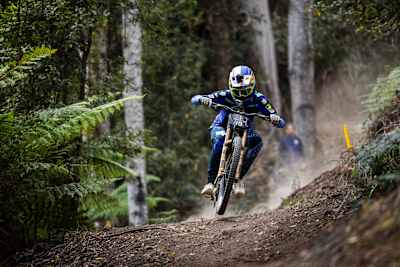
Recovering from injury has impacted Asa Vermette's approach to riding
© Graeme Murray/Red Bull Content Pool
So does an injury like this play into his mental state when he’s racing? “Before I broke my back, I would think through my run, not really thinking about the consequences,” he says. “Now I’m realising that it’s not hard to have a silly crash on a corner, so I have to think about that before a race, which is probably not the best for me, but I think it’s good to get it out of my mind. Then I try to visualise the track and all the practice runs I’ve done.”
As for music, Vermette sticks his headphones on shuffle. Madonna’s Like a Prayer has become a lucky song after he listened to it randomly before his World Champs win. Away from the trails, golf is a big love, with Neko even promising him a new set of clubs if he won in Korea. “After the race, I’d completely forgotten about it!” he laughs.
As for diet, his mum does all the cooking. Asked what his favourite food is, Vermette asks his mum. “Breakfast,” they decide together. “Four to five eggs, bacon, potatoes, avocado.”
07
The set-up
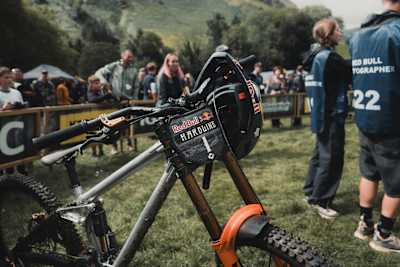
Asa Vermette's Red Bull Hardline bike set-up
© Marcus Cole/Red Bull Content Pool
Despite the new golf clubs, bikes remain his first sporting love – even if he hasn’t always known so much about how they were put together. “I didn’t really care about the set-up,” he laughs. That first year riding Juniors, as Vermette describes it, he would more or less turn up to a race, be handed a complete set-up and he would go and ride it without asking too many questions. “I knew Neko had got me a good set-up. I didn’t really know what I wanted and [my team] probably knew better than me, so that was super helpful,” he says.
Speaking in 2025, he recounted his rig as something like this: “I ride a Frameworks racing downhill bike, Fox suspension, ENVE wheels, Continental tyres. I don't know all my compression and rebound clicks and the shock and fork, but I run 94psi in the fork. Usually, I have 24psi in the front tyre, 29 to 30 in the rear. It's like a seven-speed transmission. It's pretty standard on a downhill bike, but TRP brakes, pre-dialled.” It helps for both the simple tricks, and the massive jumps he best enjoys.
In his first year in the Elite Men’s category, that changed. Vermette’s still rocking the same sponsors, but he’s started to delve into the myriad possibilities of bike set-up, realising that he prefers tyres that aren’t super stiff, or super soft. “I like to have support to pump, but where it can also hold you in big compressions,” he says.
It’s a sign that he’s growing as a rider, and willing to put in the work and learn not just in training, but in the technical aspects of his sport, too. This is what marks out the very best from the competition. “Having had more input in the bike, it really helps me a lot,” he says. “I feel more confident riding it now.”
It’s a constantly evolving process, especially with regard to pressures. “You need to adapt as you grow,” he says, adding that the set-up is tested almost every weekend, with off weeks in particular a time to work on the bike. It changes with terrain, too, of course. “On a steeper track, we’ll lower the psi and the back shock so it sits lower, and then on a flatter track, you'll raise it so you can push it around more,” he says. “It changes a lot.”
08
What's next for Asa Vermette?
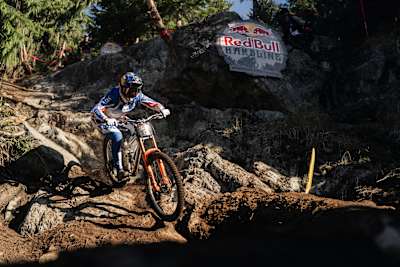
Asa focused on his run
© Bartek Wolinski / Red Bull Content Pool
It’s clear that Vermette is happiest on a bike. “Racing was always my dream,” he says. “I just want to perform as best I can at every race and try not to think about the outcome of it too much.”
He’s currently more focused on the here and now instead of a lasting legacy. “I’m just enjoying the sport right now,” he says. “Whatever I think about the stuff coming up, I get too nervous, so I just have to stay in the moment and try to keep going.”
Now that he's made history to become the first rider to win at all three Red Bull Hardline venues, he may even have a go at winning Red Bull Rampage one day. “We do big drops in Hardline, but I feel like the consequences of doing that out in the mountains are so much more gnarly,” he says. “I wouldn't go to try to win, but I’d love to go and have fun.”
Back on solid ground, his long-term dream among the World Cup Elites is a straightforward one: “to be the fastest man in the world someday.” There’s presumably a lot of pressure in such a lofty goal, yet Vermette says he feels more comfortable and confident than ever in his abilities. “Really, I just try to do the best I can,” he says.
Long may it continue.
About the author
Part of this story
