




Gaming
Esports
Why 2026 is the perfect time to get into League of Legends esports
League of Legends esports has transitioned into a new era defined by unpredictable storylines, dramatic drafts and electrifying battles. Here’s why it's the perfect time for newcomers to get involved.
Sometimes dubbed the ‘Superbowl of Esports’, the League of Legends World Championships are arguably much bigger than most conventional sports events. The grand finale of the League of Legends esports season draws in viewers from all around the world in their millions.
The biggest league in esports continues to climb to new heights year on year, with 2025 breaking records for the highest viewership peak, as 3.27 million fans tuned in to watch T1 defeat Anyone’s Legend in the quarters. This year’s competition promises to be even bigger as the competition lands in the USA, with the grand final set to pack out New York’s Barclays Centre. Will long-time champions T1 finally be dethroned?
For a spectator, League of Legends provides one of the most dynamic viewing experiences in esports – something like a chess match meets an anime fight scene. The fusion of strategy and explosive visual action is a potent combination. If you’re a newbie looking to break into the scene, read on for everything you need to know.
01
What is League Of Legends?

League of Legends' map with its lanes and jungle
© Riot Games
League of Legends – commonly known as LoL – is a multiplayer strategy game of magic and manoeuvring that sees two teams of five attempt to destroy each other's base. A free game at the point of download for pros and amateurs alike, major and minor leagues are played across different continents, culminating in a month-long, season-defining World Championship for the most elite teams.
02
How is it played?

League of Legends isn't the easiest game to pick up, but is well worth it
© KREW Collective/Red Bull Content Pool
Two teams of five – a blue team and a red team – battle across a map known as Summoner's Rift. Much of the action takes place across three lanes known as ‘top', 'mid' and 'bottom', as well as in the bases themselves. Anywhere on the map that isn't occupied by lanes or bases is known as jungle and it's here that 'junglers' rely on killing neutral monsters to win gold and XP.
Players strengthen their champions (characters) by earning gold to spend on items that allow them to cast better spells and cause extra damage. Winning XP, meanwhile, will help players level up. Each team can call upon an army of minions (not those ones) to help them take down the enemy base.
The first team to destroy a structure known as the Nexus, lying at the back of each team's base, wins the match. Though this might sound as simple as two basketball sides dunking on each other's net until a backboard shatters, it’s not. For as long as all three of its Inhibitors, or at least one of the Turrets on the base are still standing, the Nexus is undamageable.
Turrets play a critical part in match play, causing damage to enemies and also allowing a team to better control the battlefield. Teams will often call upon minions, a non-player controlled army spawned by the Nexus, to help topple some turrets.
03
What happens when a character dies?
They respawn. What's more, players must also wait for a certain amount of time before their champion is allowed to re-enter the game, increasing the enemy's chances of destroying a base or controlling a lane. "After a character dies, they respawn on the same spot, just behind the Nexus in their base, says player-turned-caster Dan 'Aux' Harrison. "This leads to some very clutch moments, as those players come back just in time to defend their Nexus."
04
How are characters picked?
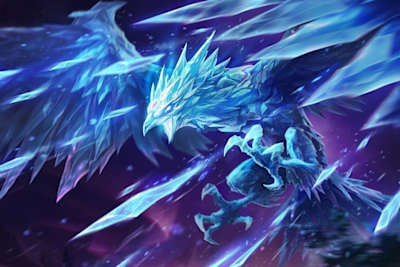
Players can choose from 171 different champions in League of Legends
© Riot Games
One crucial aspect of LoL events is the Draft Pick, a player versus player game mode giving teams a chance to take turns picking their champions from the pool of 172 playable heroes. It’s a game within a game – a meta game, if you will.
One of the biggest changes that has shaken up the world of LoL in recent years is the introduction of the Fearless Draft system. With this new system, champions used by a team cannot be picked again later in the same series. This adds a new level of strategy to best-of-three and best-of-five matches, with teams having to carefully consider when they deploy certain champions for maximum impact. This avoids repetitive champion picks and makes even the pre-game stages of the competition dynamic and thrilling.
New for 2026 is the First Selection draft system, separating map side from first pick. Teams now have to pick between side advantage and draft priority, continuing to build on the layers of tactics in the pre-match stage.
"Certain characters could be very strong early in the match, but become weak towards the end of the game and vice versa,” explains Aux. “You'll find a lot of strategies involved to counter a team's tactics. Even at the highest level, we've seen surprise draft picks and plenty of shocks."
05
What are the positions?
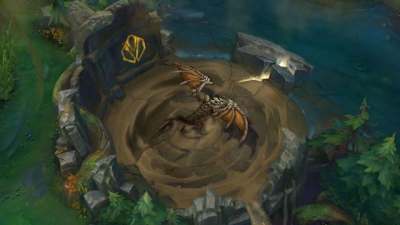
Junglers tackle neutral objectives, such as dragons
© Riot Games
Top: Sits in the top lane and often goes 1v1 against their opposite number. Every top-laner has a spell to teleport, allowing them to jump to the opposite side of the map in a few seconds.
Jungler: Unlike their team-mates, who level up by killing minions, these steely competitors sift through the jungle that lies between the lanes, clearing it out for gold and XP. Often seen jumping into other lanes to help turn a 1v1 into a two-on-one.
Mid: Generally stick to the middle lane, which allows them to move around the map easily, mid-laners tend to play as strong champions, like Aatrox, and are known for a heavy damage playing style.
ADC: Attack Damage Carry is a role traditionally filled by long range, consistent-damage characters such as a Marksman with a bow. This character will look to get stronger throughout the game and in the later stages can often be the key player.
Support: A utility player who moves around the map helping others to become stronger, the support often picks champions with 'crowd control' abilities to stop or stun the enemy at vital moments.
06
How do the lanes differ?
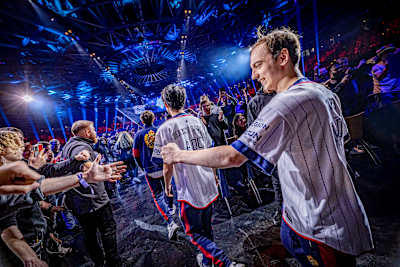
Rasmus ‘Caps’ Winther is a mid-laner with an astonishing number of titles
© Stephanie Lindgren/Red Bull Content Pool
All three lanes have their own advantages and drawbacks in League of Legends, meaning no game is ever really the same. Arching around the north-west of the map, the top lane is normally exclusively occupied by the two team's opposing top-laners, who tend to take on sturdy champions with survivable traits such as Tanks or Fighters, because of their restricted habitat.
Meanwhile, down in the bottom (bot) lane, teams tend to find more advantage here for kills early on than in other lanes (it's also a closer proximity for bagging some dragons). Keep your eyes glued on the bot lane, as you're bound to see some big plays.
Controlling a lane is key to dominating a map and you'll struggle to find a more eagerly contested piece of real estate on Summoner's Rift than the mid lane. The shortest direct path to the Nexus, it's arguably the most important lane and, as a result, not exactly short of action itself.
07
What do players do with gold?
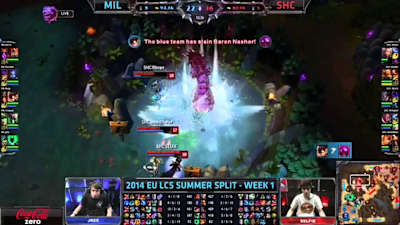
Teams can hunt down Baron Nashor to boost gold and buffs
© Dinobot96
Players who win gold on the map can use it to buy items from a shop located at the fountain. Items include everything from armour to magic resistance, attack damage to speed and ability power. Players can carry six items at a time. Often what separates a good player from a great player is being smart with which items they select.
08
Is there talk between teams?
The teams use All Chat, which players can use to type messages to their opponents.,” explains Aux. "This can be frustrating for players and many of them mute their rivals. Stress is a huge factor when you're on stage, with thousands watching and millions of dollars on the line, teams can just crumble."
If you're looking to adopt a team in LoL, G2 are certainly one of the most entertaining out there. One of the most historically successful teams in Europe, the team's most recent achievements include winning the League of Legends European Championship and going on to compete in the World Championship. The tournament was eventually won by T1, the South Korean team widely considered to be the best in the world, who boast the legendary Lee 'Faker' Sang-hyeok.
Catch up on their story in T1 Rose Together:

1 h 21 min
T1 Rose Together
Follow legendary Korean esports team's emotional journey from LoL World Finals loss to triumphant victory.
09
Does the gameplay change?
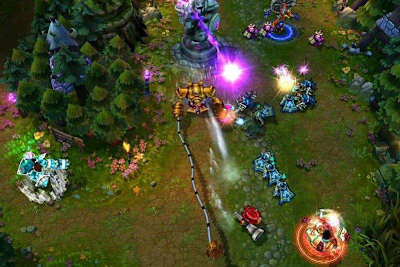
The League of Legends gameplay is often fast and frantic
© Riot Games
Every two weeks or so the game's developers, Riot, release a patch to tweak both champions and items to shake up the map. What might look like a minor addition can occasionally have knock-on effects for the entire season. "New patches can even change how long the game takes by five or 10 minutes," says Aux.
10
Are there fan favourites?

If you don't enjoy watching Faker play, LoL may not be for you
© Kihun Park/Red Bull Content Pool
Supporters typically enjoy watching characters that require a higher level of skill and are harder to pilot, like the Assassin subclass, according to Aux. "These champions tend to be quite squishy, which means they lack defensive stats and HP [health], but they have high damage output. Zed [AKA Master of the Shadows] has always been a very strong pick in this regard."
The biggest star League of Legends has produced is the ‘unkillable demon king’, Faker. In his home country of South Korea, Faker has reached levels of fame usually reserved for the highest-achieving athletes and pop stars. Since his debut in 2013, this brilliant botlaner has been the driving force behind T1’s six Worlds wins, racking up countless pentakills in the process.
Elsewhere, in Gen.G, Jeong "Chovy" Ji-hoon has built a dedicated fanbase due to his mechanical mid-lane play. Although his rivalry with Faker is the most talked-about aspect of his career, the impact he’s had on the later generations of League stars cannot be understated. As a constantly evolving esports league, new players are emerging all the time to challenge the time-tested legends. With so much new talent on the rise, 2026 could be the year that newcomers like Tsai “HongQ” Ming-Hong, Choi “Zeus” Woo-je, and Ryu “Keira” Min-seok finally surpass their forebears.
11
Any other things to watch out for?
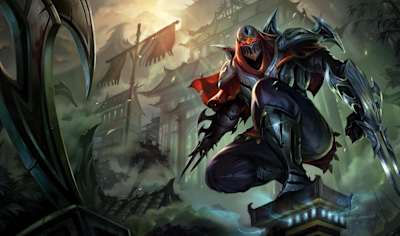
Zed is a popular champion of the assassin subclass
© Riot
Minions. These guys are a non-player-controlled army spawned by the Nexus and a major part of matchplay. The enemy can kill them to win gold and experience, while the allied side can use them to help destroy their opponent's base. "The towers will constantly hit champions if they walk up to them," reveals Aux. "So, you'll see players getting minions to absorb this damage."
Other non-playable characters you may see teams hunting down are dragons and Barons – both major XP boosts when slayed. "If a team kills a Baron, then every player gets gold," adds Aux. "It's also helpful for a team if they're pushing down a tower, as their minions become a lot tougher with the Baron buff."
Similarly, when a team kills a dragon they'll be rewarded with all kinds of buffs for attack damage and ability power. Kill four dragons for your team and you'll get a buff so powerful it can be a game-changer."
12
Are there rivalries?
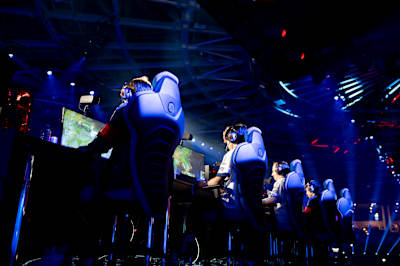
G2 have a pretty intense rivalry with T1
© Marcel Lämmerhirt/Red Bull Content Pool
"There's a lot of international pride at tournaments, so even if their teams are no longer at the event, fans will lend their support to other teams from that region," says Aux. China and South Korea are in constant contest as the top regions in the esport, and there's plenty of trash talk between Europe and North America, too.
The ongoing rivalry between China and South Korea rolls on into 2026, with LPL teams like Bilibili Gaming tipped to be the most dangerous team to challenge T1’s dominance. There’s also intense competition within the LCK, with Hanwha Life Esports boasting two former T1 players – Zeus and Gumayusi – among its roster.
13
How are characters categorised?
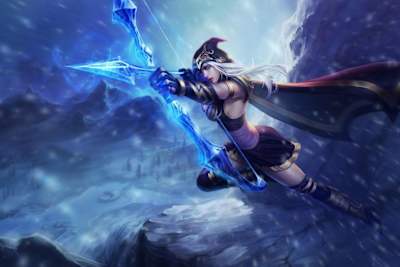
Ashe is a great choice for attack power
© Riot Games
Each champion is assigned a class, ranging from Controller to Fighter to Mage, Marksman to Slayer, Tank to Specialist. These categories will often highlight patterns in the character's behaviour and dictate their place on a battlefield.
At Worlds 2016, Pray, of team ROX, demonstrated the capabilities of Ashe, a frost archer, in stunning fashion: as ROX looked to close a game out against SXT, the enemy's top-laner headed to teleport back to base and save his game. Spotting this, Pray fired a crystal arrow across the entire map, eventually reaching his rival mid-teleport to stun him, cancel the teleport and cement victory. It still ranks as arguably the single greatest play in LoL history.
14
Are there upsets?
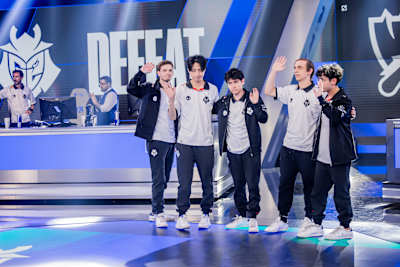
G2 suffered an early exit in 2024, but are holding their own this time
© Riot Games
In LoL, nothing is certain. At Worlds 2016, a lesser-known team from the Russian leagues called Albus Nox Luna managed to beat Korea's ROX Tigers back when the Korean teams were completely on top. Miraculously, they made it through to the knockout stage of the World Championships.
"It was insane," remembers Aux. "Previously, most teams just copied the Koreans' tactics, but Albus played their own style and caught their opponent off guard. Before that series, teams from minor regions were disregarded as fluff at Worlds, but since then we've seen smaller teams getting more hits on the bigger regions."
Last year, the biggest upset came by way of the American third-seeded 100 Thieves, who defied the odds to dismantle China’s top-seeded Bilibili Gaming in the Swiss Stage. Western teams aren’t expected to make a big impact at Worlds, let alone a team that few even expected to qualify.
But a decisive performance allowed them to control the game and knock out one of the favourites for the final, proving that anything can happen at Worlds. This year, G2 Esports is the Western team with the best shot of disrupting the tournament. Can Caps and his European teammates finally take home the trophy?
15
How long do matches last?
"Games typically average around 30 minutes," says Aux. "The format we typically see at the start of the World Championship or league play is a BO1 [best-of-one] round robin, but when you get to the playoffs and knockout stages, it will switch to a BO3. Typically, when you get to the end of the finals it's BO5, which itself is intriguing from a strategic point of view, as teams have longer to respond to a rival's playing style."
This year’s competition began with the Swiss Stage, following the changes to the format introduced last year. The upcoming semi-finals and Grand Final are played in a best-of-five format, giving you even more action to enjoy.
16
Are there pundits and commentators?
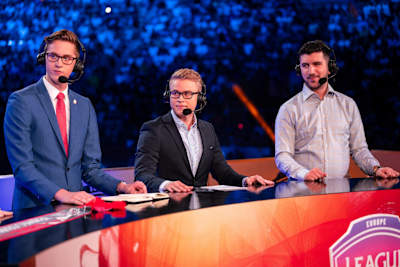
Ender and the EU LCS broadcast team
© Riot Games
At most elite events the set-up will include a panel of pundits covering the game live, a play-by-play commentator and analyst to provide detail during the game. There are also people with a microphone on the floor, soaking up the atmosphere.
17
What's the best way to follow the action?
Over on Riot's official LoL Esports website you’ll find schedules and livestreams for all worldwide leagues and majors. You can watch LoL Esports tournaments on YouTube or via co-streams, which have become an increasingly popular way to view the action. Most co-streamers broadcast via Twitch and include former pros and fandom personalities. The biggest name is Caedrel, who adds his unique analysis in a way that is both entertaining and accessible.
18
Are there leagues?
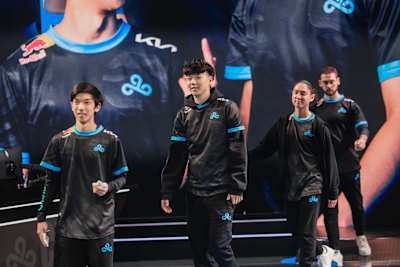
Cloud9 compete in the LCS
© LCS
Unlike the majority of esports, which tend to have major after major, it's mostly league-based throughout the year, meaning there's only a handful of events where teams can compete on an international level. The biggest events are the Mid-Season Invitational (MSI) and the World Championships. In 2026, Riot introduced First Stand – the first international tournament, held early in March. Here’s a breakdown of the LoL annual timeline:
- Jan-March – Regional split 1
- March – First Stand
- Spring – Regional split 2
- Summer – MSI
- Summer-Autumn – Final regional split
- Oct-Nov – Worlds
Many national leagues feed into regional leagues, with the major ones being LEC (EMEA), LPL (China), LCS (North America), LCK (South Korea) and LCP (Asia-Pacific). Match formats now vary widely by region, but most regions use Bo3 or Bo5.
19
How are teams are selected for the World Championship?
Much like how UEFA awards places for the Champions League in football depending on the strength of a region's league, the organisers of the LoL World Championship award do exactly that. More slots can be earned through strong performances at international competitions like MSI.
20
Glossary
AD/AP – Both are stats. Attack Damage (AD) is how much health is lost directly from an attack, while Ability Power (AP) is the effectiveness of a champion's abilities.
Babysit – When a player asks another team-mate to hold their lane.
Bot – Bot lane. The bottom of the map, where ADC and Support players roam.
Buff – Any type of boost given to a champion or minion.
Carry – Character who starts off weak, but gradually becomes more powerful as the game progresses.
Champion Pool – The selection of champions that a player can confidently use
Clutch – When a champion performs a well-timed move under pressure.
Cooldown – The timeout period before an ability or item can be used again by a champion after activation.
Creep - Basic unit in the game, which are non-playable unless a spell or item takes control of them. Creep Score (CS) is how many minions players can get the last hit on.
Crowd control – Actions that stun or impair the enemy.
Dive – A continued attack on an enemy or opponent's towers.
Draft – A game mode where players choose their champions and banning certain characters from facing them.
Farming – Harvesting and gaining gold and XP for yourself.
Fearless Draft – A competitive format where each champion can only be used once per team per series.
First Selection – The new draft system where teams choose between side selection or first pick
Flex pick – A champion that can be played in multiple roles
Ganking – A sneak attack on an enemy player usually involving the help of one or two team-mates.
Inhibitor – The three glowing structures behind the towers in a base.
Juke – To dodge or evade an incoming ability.
Jungling – When a player concentrates on killing non-playable creeps for gold and experience (jungles are found between the lanes).
Laning phase – Killing non-playable creeps for gold and XP between the lanes.
Meta – The current most popular tactic or strategy to win a game.
Off-meta – Any offbeat plays or strategies that don't conform to popular matchplay, such as playing a champion in a lane they're not known for.
Nerf – When something weakens a champion. The opposite of a buff.
Peeling – To use crowd control on the enemy to stop a team-mate from being attacked.
Roaming – When you move between lanes, typically done during the early stages of a game.
Rotating – When you change position because the objective changes. For example, a team will rotate towards a dragon.
Side Selection – The choice between blue or red side, now separated from first pick
Snowball – When a champion or team gains an early advantage and quickly grows more powerful.
Squishy – Champion who lacks defensive stats and HP.
Tanking – To take high amounts of damage.
Tempo – The pace at which a team controls the game
Trading – The exchange of damage between opposing champions.
XP – Experience Points.
Zoning – Preventing an enemy from gaining gold or experience.
21
What are the international events?
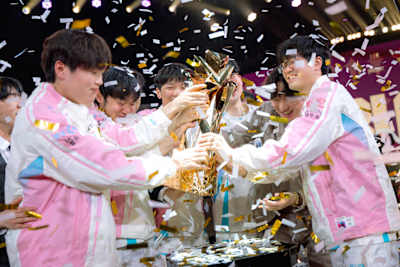
Bilibili Gaming lift the trophy at First Stand 2026
© Bruno Alvares/Riot Games
First Stand [March]
New for 2026, First Stand is the first international tournament of the year, held at the conclusion of the first three splits. It gives teams and fans an early opportunity to see how competition between regions is shaping up, after rosters have been refreshed for the new year. At this tournament, new rivalries are formed, and teams can begin formulating strategies for MSI.
This year, G2 Esports shocked the world by making it to the final, representing Europe in the final against China’s Bilibili Gaming. BLG managed to take the win – their first international title, beating top teams from every major region and confirming that LPL teams would be a major force over the coming year.
- Prize pool: $1m USD
- 1st place: $250,000 USD
Mid-Season Invitational [May]
The second most prestigious event in the calendar welcomes the champions of each of the 13 professional leagues for a genuine LoL-fest. This year, MSI will be held in Daejeon, South Korea. Tune in from June 28 to catch all the action live!
The structure of the tournament has changed in recent years, moving from a BO1 double round-robin to a Swiss format, before a Bo5 knockout stage. This means fewer matches but higher-stakes clashes.
- Prize pool: $2m USD (2025)
- 1st place: $500,000 USD (2025)
World Championship [Oct–Nov]
As glitzy as it is prestigious, nothing comes close to the League of Legends World Championship – a month-long final giving teams a chance to finish the season as the best on Earth. In 2025, the prize pool increased to a jaw-dropping $5m USD, putting even more of a fortune on the line for the elite teams competing.
Consistently packed with pulsating plays and eyebrow-raising storylines, Worlds invites the top 24 teams from the top 13 professional leagues do battle. South Korea's T1 holds the highest number of wins, with six championships.
- Prize pool: $5m USD (2025)
- 1st place: $1m USD
About the author
