
Music
What Makes Hip Hop Dance Moves Iconic? 14 Moves You Should Know
Step into the rhythm with 14 legendary hip hop dance moves! Explore old-school classics and modern favorites. With a little practice, you’ll groove like a pro in no time.
The cultural impact, versatility, and popularity of the most iconic hip hop dance moves can’t be overstated. These moves are hypnotic for a reason: they’re the perfect liaison for connecting music and rhythm, and for bringing a song to life.
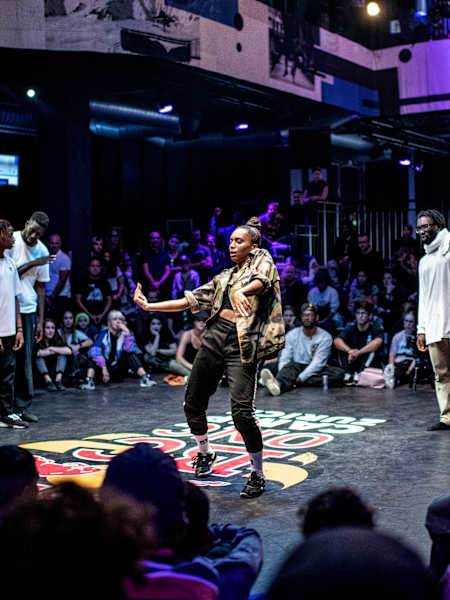
One of the most unique aspects of hip hop is how natural and second-nature these dance moves appear when done right. Swiss Red Bull dancer Poppin’C puts it best.
“I practice almost always. It’s become a way of life for me,” he says. “I’ve been doing it for so long that it doesn’t feel like I have a routine.”

Whether hip hop is your “way of life” or you’re just getting started, this guide has all of the must-know moves for your next routine. Keep reading to learn more about the culture and choreography that makes this style of dance so iconic.
01
A brief overview of the history of hip hop dance
Many modern hip hop dance moves were born from street dances in 1970s, with some going as far back as the 1960s.
Countless hip hop moves were inspired by African dance movements, with tap, swing, and modern dance in the mix. Fad dances were a part of the scene, like choreographer Don Campbell’s locking. Others, like the robot, were popularized by the one and only King of Pop, Michael Jackson. Breaking, one of the most iconic of all hip hop dance movements, traces its roots to the 1970s and James Brown’s on-stage dances.
Music videos pushed many hip hop dances into the mainstream. It wasn’t uncommon to see a street dance dominate international dance floors after its feature in a video. In the 1990s, artists began to create dances specifically for the songs they released, starting with MC Hammer’s Hammer Dance in his video for “U Can’t Touch This.” This trend continues today: other famous examples include Terror Squad, Remy Ma, and Fat Joe’s “Lean Back” (2004) and the fusion of the Whip and the Nae Nae by Silentó (2015).
While the medium may have changed, the momentum behind the explosive growth of hip hop dance moves certainly hasn’t. Trending dances have always been an influence, but social media platforms like TikTok, Instagram, and YouTube take them to a new level of virality.
15 iconic hip hop dance moves everyone should know
These moves all originate from different types of hip hop dance, and still hold a place:
- The two step: While not exclusively a hip hop move, the two-step is an integral part of countless dance styles — including hip hop. As its name suggests, the two-step is a combo of two moves. To do the two-step, stand with your feet together before stepping one foot out. Then, step that same foot back in, and repeat the cycle with the other foot. The result is a cohesive and simple dance step that’s adaptable for a variety of rhythms and tempos.
- The Moonwalk: While many believe that Michael Jackson invented the moonwalk, its origin story is a bit more unclear. The first recorded moves that resemble it — the “gravity-defying” sliding of one foot back at a time — are those of 50s dancer Bill Bailey. However, when Jackson performed his take on the moonwalk in 1983 at the taping of “Motown 25,” it quickly became a sensation. The secret for nailing the moonwalk? It’s all about arching your feet as you slide them back. As soon as you’ve moved one foot back, let that foot relax and quickly arch up your second foot and repeat the steps. The more practice you do, the quicker you’ll be able to switch from one foot to another, and the more seamless your moonwalk will look.
- The Dougie: Unlike the moonwalk, the Dougie has a very clear origin story. This dance was initially inspired by rapper Doug E. Fresh in the 1980s. It gained a whole new life in the 2000s, first through Lil’ Will’s 2007 song “My Dougie,” and then with “Teach Me How To Dougie” by Cali Swag District in 2009. There’s no one right way to pull off a dougie; countless hip hop dancers have made the move their own with extra steps and riffs. At its core, though, the Dougie involves a sideways swaying motion, with arms half-raised and pumping. To seal the deal, make your Dougie “Fresh” by pantomiming slicking the sides of your hair back with alternating hands.
- The crip walk: A dance originating from Los Angeles, the crip walk, or “C-Walk,” is hardly a new move. The crip walk was introduced by first-generation crip gang member Robert “Sugar Bear” Jackson, and quickly spread both inside and outside of the gang. Today, more than 50 years after its birth, it’s a go-to hip-hop dance move among dancers and rappers alike. As a historic dance move, there’s no surprise that the crip walk now takes countless forms. While the original move involved spelling out “C-R-I-P” with your feet, current C-walks take on several forms. No matter the maneuver, one thing’s for sure — they all involve intricate footwork and a reverence for rhythm.
- The running man: Popularized in the 1980s and true to its name, the running man requires the dancer to pantomime the act of running in place. Not only does it add energy to any song, but it doubles as a great cardio workout. But doing the running man isn’t as simple as running in place. It involves alternating legs, raising one knee to a 90-degree angle while straightening the other leg in a diagonal line behind you. While doing this alternating footwork, you pump your arms in and out, straight in front of you, to the beat. While it might be tricky to do all of these moves simultaneously, the result is a dance that can kick your routine up a notch.
- The Harlem shake: Another 1980s dance, this one originating from its namesake Harlem, New York, the Harlem shake is a move that requires serious coordination. Not only is the Harlem shake a freestanding step, but it’s often utilized in a variety of hip-hop combos. Dancer Al B, creator of the move, found inspiration in both the Egyptian “pharaoh” dance step, and the shakes that come with substance withdrawal. Today, the Harlem shake looks different from dancer to dancer. Some shakes are quicker and more convulsive, while others involve fluid movement in the arms and legs. Regardless of which style you want to attempt, make sure to keep your body loose and shimmy your shoulders and knees. The Harlem shake meme that went viral in 2013 differs from its eponymous roots. While the flailing component could very well be part of a Harlem Shake, it’s not a group dance, nor are any props required to enjoy this move.
- Popping: While its origins might be a bit fuzzy, historians have inferred that popping emerged somewhat organically in the Bay Area of California in the 1960s and ’70s. Like many other moves throughout hip hop culture, this street dance has taken many different shapes and forms over the decades. Simply put, popping is the rhythmic tensing and relaxation of your muscles to the beat of the music. You might choose to pop one part of your body in particular, like your chest or your shoulders, or you might engage your full body. Whatever you choose, just make sure you find a song that matches your energy!
- Locking: A fusion between hip hop and funk, locking came into play in the 1960s. Originally named Campbellocking after its inventor, Don Campbell, this simple but effective move involves freezing in place after a quick dance combo. Staying “locked” in place can emphasize certain beat drops, allow a pause for effect, and provide a transition into the next combo. The best part of locking? You can apply it to any dance, from freestyle to contemporary hip hop. Simply choose your position to “lock” in place, keep the beat, and get ready to resume at your original speed once done.
- The robot: Another multi-genre dance move, robot dancing gets its name from stiff movements and mechanical choreography. The robot continues to evolve since its introduction to the club scene in the 1960s, with fresh takes keeping this dance in relevance. Popular versions of the robot involve sharp pivots, wobbling, and body isolations. Like some other easy hip hop dance moves, there isn’t a wrong way to begin practicing the robot. Just keep your limbs straight, and play around with keeping your joints stationary while letting your limbs sway, like a door hanging onto its hinges. For an extra convincing effect, wobble your body after each pivot as if you were a stationary machine.
- The wave: This ‘70s-era dance is another California-grown move that often finds itself integrated into larger, more complex combos. And like many hip-hop dance moves, its origin doesn’t have a definitive, single source. Many credit Electric Boogaloos founder Boogaloo Sam, with his fluid-but-controlled arm movements, with putting this dance on the map. To best execute the wave, you’ll want to create the illusion that your two arms are connected to each other as one. Start by sticking them both straight out from your sides, and roll your shoulder forward, allowing the rest of your arm to follow suit. Finish off the effect by repeating the same steps with the other arm. Eventually, The Wave will work its way down your body.
- Krumping: Krumping is one of many hip hop dance moves that originated in 1990s South Central LA. An acronym for “Kingdom Radically Uplifted Mighty Praise,” a phrase that originated from a song lyric, this dance move began in faith-based circles before hitting the hip hop mainstream. Krumping involves many of the other classic moves in the hip hop cannon, from popping and locking to wobbles and shoulder rolls. The trick is to keep your movements sharp and aggressive — a signature of this style.
- The stanky leg: Another hip hop dance move that emerged from a song, the stanky leg was popularized by its namesake 2008 song “Stanky Leg” by GS Boyz. Since then, it’s had plenty of cameos in other iconic tracks, including the infamous “Crank That (Soulja Boy)” by Soulja Boy. To do the stanky leg, keep one of your legs stationary, while sliding your other leg to the side. Pivot your knee inward to the beat, all while keeping the stationary leg still with your foot flat on the ground.
- Jerkin': A street dance from Los Angeles that shares a name with a hip hop subgenre, jerkin’ as a dance originated in the late 2000s. When New Boyz and Audio Push released respective songs “You’re a Jerk” and “Teach Me How to Jerk,” the dance made its way to the east coast and even into Europe. To jerk, you’ll need to stand with your knees bent and feet shoulder-width apart. As you sway side to side, pivot your knees in and out and keep your arms level with your torso. The result is a fluid rocking movement that can be adapted to any hip hop routine.
- The shmoney dance: The shmoney dance was a team effort. This riff off the two-step came to be thanks to rapper Bobby Shmurda, who performed the dance in a music video in 2014 that went viral on Vine. (Shmurda originally appeared on “The Shmoney Dance” with Rowdy Rebbel, but it didn’t take off in the way this clip did.) Shortly after that viral moment, Jay-Z referenced the shmoney dance at a concert, and the rest is history. The shmoney dance has only gotten more complex over time. To pull off a simple version, cock out your hip and cross your arms over each other to make an X. Sway to the other side, and, keeping your elbows bent and arms upward, uncross. Riff on this new favorite as you please.
02
Tips for learning hip hop dance moves
The best way to dip your toes into this complex genre is by keeping it simple with foundational moves, like the two-step and running man. From there, you can add in elements of your style and make the dance practice your own.
Some find it easier to practice hip hop moves at home, following online tutorials, while others prefer to find a mentor or join a class. Whatever your preference is, just make sure to practice often, as repetition will help you develop rhythm and muscle memory.
03
Find your groove: embrace the energy of hip hop dance
If your hip hop dance journey is just beginning, let this guide provide you with some stepping stones to gain confidence and experiment with style. Between honoring the genre’s history, building fitness and finding a dance community, there are countless reasons to celebrate hip hop.
But don’t stop here — there are countless online instructional videos, classes, and challenges available to help you master even the trickiest of moves. So, what are you waiting for? Get to dancing.