
Skiing
Piste vs off-piste skiing: What's the difference?
Read ahead for a guide to piste vs off-piste skiing, including the differences and how to choose the right one for your next skiing adventure.
There’s more than one way to enjoy skiing. Namely, you can glide across the snow on either on-piste or off-piste terrain. Each environment requires certain skills to successfully navigate, but both styles offer unbeatable thrills.
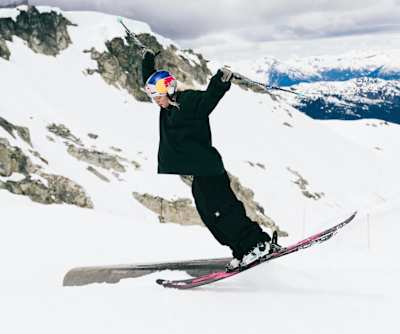
Bella Bacon is a rising star on the freeskiing scene
© Agnieszka Iwanicka
“From the moment I started skiing, I was in love with the sport more than anything else in the world,” Bacon tells Red Bull.


01
Piste skiing (on-piste)
On-piste skiing is on groomed trails where the snow has been evenly levelled for optimal skiing conditions. Piste skiers navigate marked ski trails graded by colour-coded flags that indicate beginner, intermediate and expert runs.
Even if you’ve graduated beyond the bunny slopes, getting fully comfortable with on-piste lines is usually a good idea before venturing off-trail. Wherever your preferences lie when it comes to downhill vs cross-country skiing, you’ll find on-piste options for both disciplines at ski resorts.
02
Off-piste skiing (backcountry)
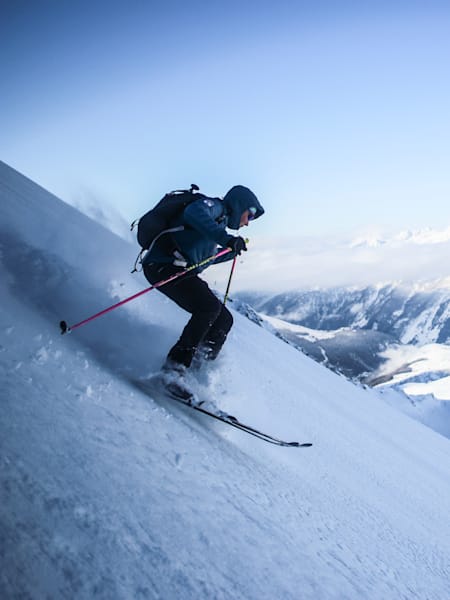
Off-piste skiing takes you off the beaten track. Also referred to by skiers and snowboarders as backcountry skiing, this style takes you through untouched terrain. It requires highly advanced skills since you’ll encounter varying ground conditions, from deep snow to steep off-piste slopes.
This is exactly why many winter sports enthusiasts call off-piste the purest form of skiing and snowboarding. To many skiers, there’s no better way to enjoy a natural winter wonderland than venturing across miles of untouched powder.
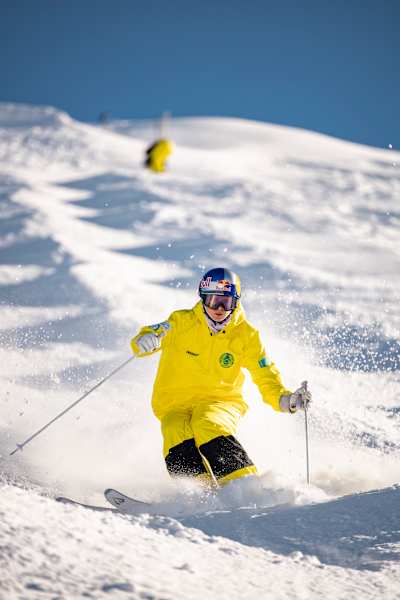
Yuliya Galisheva tearing up the Almaty mountains
© Victor Magdeyev/Red Bull Content Pool
03
Choosing the right terrain
Think about the environment
Heading to a resort for a weekend of on-piste skiing is a wonderful way to unwind. You’ll get incredible mountain scenery as you enjoy the perfectly packed powder. You might even make a few friends as you meet fellow skiers before or after your run. Just be mindful of right-of-way rules and practice good ski etiquette along the way.
If pristine natural scenery is your priority, though, off-piste skiing is one of the only ways you can explore certain landscapes. Off-piste terrain comes with unmatched natural views, not to mention a little extra peace and quiet. You’ll be far from the crowds, so you’ll hear only the sounds of birds chirping and snow crunching under your skis.
Consider your skill level
It takes a good deal of physical fitness to ski off-piste safely. You’ll go faster on the ungroomed snow, so impeccable control of your ski equipment and quick reaction time is a must. If you love the thrill of a challenge, though, off-piste skiing offers an incredible workout.
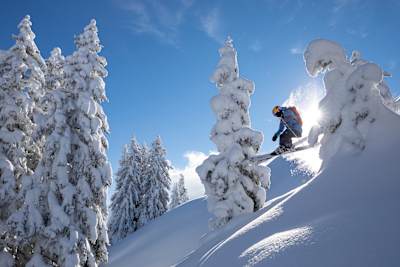
Arianna Tricomi enjoying fresh powder in Tyrol, Austria
© Tobias Zlu Haller/Red Bull Content Pool
Read more from the top skiers



Of course, if you don’t feel comfortable exploring unmarked lines just yet, on-piste skiing is still great exercise and a tried-and-true way to build endurance. And if you’d eventually like to explore off-piste terrain, downhill on-piste slopes are a great place to practice turning at high speeds.
04
Tips for an enjoyable skiing experience
Hone your technique
Whether you’re skiing on a piste or off-piste, proper form will improve your experience, as will understanding the subtle differences between piste and off-piste techniques. For instance, turning on a groomed trail requires putting your weight on your ski facing outward. If you’re going down an off-piste slope, you’ll sink into deep snow unless you evenly distribute your weight on both skis.
To boost your skills on or off-piste, seeking help from a professional is always a good idea – instructors can give you a much-needed outside perspective. They’ll tell you whether you’ve got proper posture and offer advice based on their years of experience.
Use proper ski equipment
Skis for on-piste runs are typically narrower and made for quick carving, while off-piste skis are wider for easy gliding. You’ll also find a difference in the amount of space between your skis and the ground.
Traditional on-piste skis emphasize a camber shape, giving you extra spring for sharp turns. Off-piste skis come in the “rocker” shape, sometimes called “reverse camber.” With these skis, the ends curve upward and away from the ground. This gives less direct contact with the trail, making it easier to experience that one-of-a-kind floating sensation that off-piste skiers love so much.
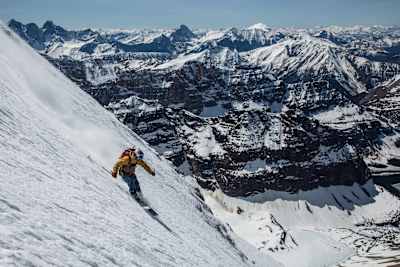
John Collinson taking on a steep run at Banff National Park
© Christian Pondella/Red Bull Content Pool
For the best skiing experience, use equipment sculpted for the exact terrain you’re traversing. This is true for your skis themselves as well as other equipment such as your ski poles and shoes. Your boots will need to be compatible with your skis so you’re locked in and secure before you start moving. Freeride ski poles are also key for smooth navigation off-piste. Last but certainly not least, always wear a helmet to enjoy all forms of skiing safely.
Safety tips
A helmet is far from the only safety gear you’ll need if you’re trekking through backcountry trails. Avalanche safety is a top priority when you’re off-piste, as is being prepared with an avalanche transceiver, snow shovel, probe, and avalanche airbag backpack. You’ll need training on how to use this gear, so an avalanche safety course is a vital prerequisite to off-piste skiing.
Bringing friends is especially important for staying safe when you’re off-piste in isolated areas. Skiing alone on piste, though, is still not recommended. Even if you’re around other skiers at a downhill or cross-country resort, a friendly face should be nearby in case of emergency.
You’ll also want to check the snow and weather conditions before you head out. This is especially important for off-piste terrain, where you should always expect the unexpected. Keep an eye out for increases in temperature after heavy snowfall – these conditions can lead to avalanches. The weather forecast will affect your on-piste skiing experience, too, so plan ahead as much as you can.
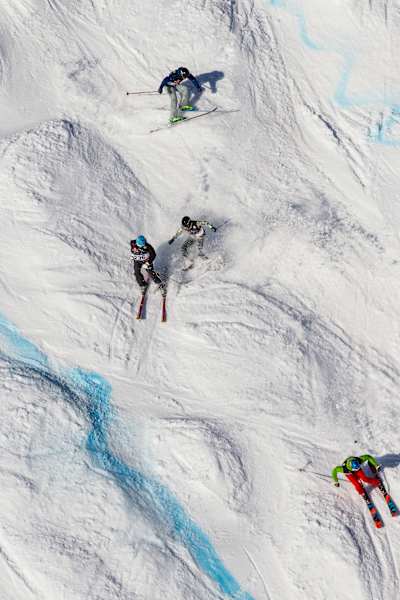
Skiers speed their way to the bottom at Red Bull Homerun
© Richard Ström/Red Bull Content Pool
Respect your surroundings
Spending time in the great outdoors is a lot like visiting someone’s home — you should leave it as nice and clean as when you arrived. This sentiment is paramount to off-piste skiing since the unspoiled nature is one of backcountry skiing’s greatest joys. Follow the seven Leave No Trace principles, such as proper waste disposal and being mindful of wildlife, on any backcountry ski trip.
On or off-piste skiing: the choice is yours
On and off-piste skiing each comes with its own set of thrills and challenges. When hitting the trails, figuring out which form of terrain works best for you is just a matter of figuring out. No matter which style you choose, you can expect an exciting outdoor experience like no other.


