





Gaming
Esports
How Red Bull Racing Esports raced to the podium a month after launch
In early 2019, the Red Bull Racing Esports team was born. Within a month, the team secured a podium finish. This is the story of that first month, from the two simracers involved.
Part of this story
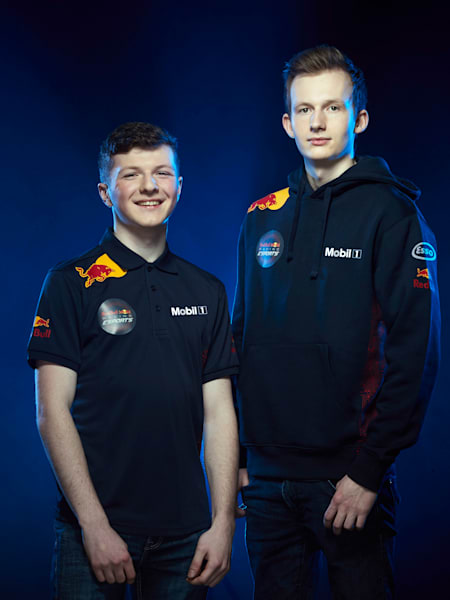
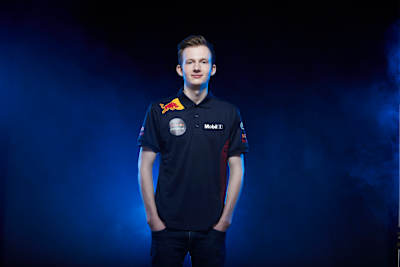
We spoke with the two drivers behind this remarkable feat, simracing duo Sebastian Job and Frede Rasmussen, for the inside track on how a team to be feared was built in under 30 days.
Job, just 20-years old, hails from a tiny town in England named East Grinstead – nestled within rolling countryside and replete with fire-warmed pubs and a retro railway, it very much feels like it could be a creation from a Rudyard Kipling novel. Job’s childhood, however, was a little more modern than those imagined by the author – taking up simracing when he was just 13-years old, having cut his teeth years earlier with F1 2006, which he unsurprisingly became hooked on.
“I played that game a huge amount, but wasn’t actually any good really, using all assists”, Job laughs. “I also played a lot of Gran Turismo 5 for a while, and eventually started getting reasonably decent for someone my age. Still very slow relative to others though!”
Meanwhile, a year younger and growing up in Slagelse, Denmark (famous for its truly badass Viking fort) Frede Rasmussen arrived to video games a little later, picking up the Gran Turismo series in 2013, before he ascended apace: “I moved to iRacing in mid-2014 and tried to get good,” he says. “I realised I was decent in 2015 and then by late 2016 I realised I was one of the top guys.”
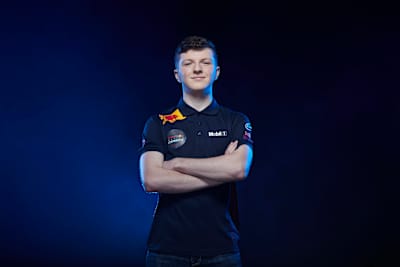
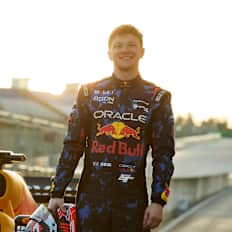
Sebastian Job talks growing up with esports
© Getty Images/Red Bull
Job, on the other hand, took the long road:
“It took me a very long time to realise there was something I was actually quite good at, where I was competing with the best in the world, my mind just couldn’t comprehend it at first! That was in late 2014 and early 2015 when I got my ‘world championship license’ on iRacing, and was racing against legends such as Greger Huttu. I never really thought I would be able to do it professionally like I am nowadays really, it just came in time as I got better and better.”
Revving up with iRacing
Get better they did, gaining a huge amount of experience with ace sim iRacing that would eventually lead to glittering esports careers – and that’s even before the incredible achievements with Red Bull Racing Esports in 2019.
For Job, it’s fair to say iRacing left an early impression: “Back in 2013, I remember watching lots of videos about iRacing, and everything seemed to point to it being the best in terms of realism, as well as the license systems they have in place. It looked like I could have lots of fun races against people of similar skill and everyone took it very seriously too, so the quality of racing was great.”
In 2014, Job tried to get his pro license, a must before getting a world championship license, and managed to do that at his first attempt at just 14 years old.
I never really thought I would be able to do it professionally, it just came in time as I got better and better
He continues: “I remember whenever there was a race that was being broadcasted, the commentators would always mention how young I was, and that was always a nice motivation to keep improving, knowing everyone else was more experienced. In 2016 I had my first world championship podium (Joni actually won that race), but the season went downhill after that and I took a break for a while. After I returned from a break, I gradually just kept improving every year, which led to better results all around, regularly competing for podiums and wins in the world championships.”
Rasmussen, meanwhile, has won consistently in a variety of competitions since first picking up iRacing in 2013. Driving alone until 2015, he then won the Blancpain GT World Championship with CoRe simracing in 2017, before finishing sixth in the first F1 esports series. Later, he claimed second place in the Constructors having joined Toro Rosso (now AlphaTauri).
With a growing number of incredible performances under their belts, it was no surprise to see Job and Rasmussen scale the heights of the esports pantheon, with Red Bull Racing Esports the next stop for the two hotshots.
Riding with Red Bull
While both racers’ introduction to Esports may have been very different, the beginning of their involvement with Red Bull Racing Esports was very much the same. The pair were part of a core group of drivers that moved around between a few teams, beginning with FA Racing G2, which eventually became G2 Esports.
Job explains, “It’s a bit blurry of how that then became Red Bull Racing Esports, but it was coming for a while, and was incredibly exciting for me. One of the best parts of this is that even before FA Racing G2, I was teammates with Frederik in our previous team ‘CoRe Simracing’ and we are still teammates years on, multiple teams later.”
While Rasmussen says his experience of racing with his peers meant the feeling post-move to Red Bull Racing Esports’ was a familiar one, he adds, “Of course it’s exciting to race with Red Bull Racing Esports and have the paint on your car.”
As for whether there were any jitters when joining the beginning of such a large project, Job confirms it was more excitement than nerves that he remembers most.
“I wouldn’t say I was hugely nervous, but it was definitely very cool to be a part of such a big project, and to see the way it was taking shape. It’s become a bit more common in the past few years for F1 teams to have simracing teams, but a few years ago I would never believe that I could get the chance to drive for Red Bull.”
From nothing to something
So, we know that after the seemingly seamless formation of Red Bull Racing Esports, a podium place was secured within a month at the iRacing VRS GT World Championship. But just how did these racers help this team go from nothing, to within arm’s reach of glory, in around 30 days?
The preparation, according to Job, is indicative of the newfound focus of the team, but also highlights the changing demands as esports continues to blossom. “I think we prepared quite a lot for that race compared to how we prepared for races in the past,” he explains. “Compared to now however, this was barely any practice. Since then, the levels of preparation have increased drastically. So at the time it felt like a lot of preparation, but now it wouldn’t be that crazy.”
Rasmussen, meanwhile, highlights the preparedness instilled within the Red Bull Racing Esports camp in helping him up his game: “Joining Red Bull Racing Esports has helped quite a lot with F1 esports, mainly because of the bootcamp before each event.”
My goal for the future is to win more races and championships
With preparation underway for the first tournament under the banner of Red Bull Racing Esports, we asked the racers whether the pressure was on. A typically focussed Rasmussen explained that he felt no additional pressure, adding, “It was just like any other race.” Of course, this was also helped by the fact that he was racing with Job, who he’d been racing with since 2017.
Job, meanwhile, illustrates the elite mentality prevalent in top racers: “I remember being very nervous for that race the day before and then the morning of the race. But then we joined the practice sessions just before the race and saw we were missing a couple of tenths. That removed all of the nerves, as we were just incredibly frustrated.”
Indeed, what’s extraordinary when discussing this incredible milestone is the prevailing attitude of frustration – of a missed opportunity – from two perfectionist racers. Job goes on:
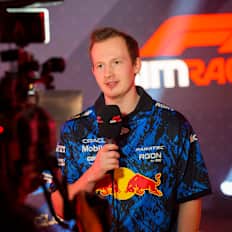
Frede Rasmussen aims for top spot
© Getty Images/Red Bull
“I was actually quite disappointed with the third in the VRS GT World Championship, as our lineup was very strong on paper. However, we never got to grips with the setup of the car and were always quite off pace, so that was a very frustrating season. Third in the Porsche Esports Supercup was quite a strong result, but it was still quite annoying for me as the team won the Forza World Championship and the F1 Esports World Championship. So it would have been great if we could also win on iRacing, but couldn’t quite manage it. Despite that it was still a solid season, but it’s something that needs to be improved!”
Rasmussen’s description of the result as “decent” certainly seems an understatement for those on the outside looking in at a nascent team’s first race. Job, however, is more explicit:
“I felt like we drove better than the result showed, but it also could have been much worse. Sometimes you need a bit of perspective and to remind yourself that you still beat 47 of the best teams in the world. Third out of 50 is not a terrible result when you look at it that way, but it definitely didn’t feel great.”
Dissatisfaction with even this impressive placement, however, bodes well for the future of Red Bull Racing Esports, and while it may not have been the result Job and Rasmussen hoped to achieve, this was only the start of the team’s journey.
Building blocks
So, just how has the team evolved since this first race? According to Job, preparation is now a lot more methodical and requires more hard work ahead of competitions.
He adds, “I think this was shown with the bootcamp that the F1 esports guys were having before every event. It’s awesome to see how much effort Red Bull put into the team to get something like that done, making sure we maximise the results in every competition. There’s been a couple of lineup changes, but the main core remains the same really, and I think that’s definitely a strong point of the team.”
I would love to be able to get back in a real car at some point, I think this would be super cool if it could happen with Red Bull
As for what Job and Rasmussen hope for in the future, it’s no surprise to see them on the same page. Job explains how, in the near future, he would love to win as many competitions as possible. “As for the long term,” he continues, “I would love to be able to get back in a real car at some point, I think this would be super cool if it could happen with Red Bull, or perhaps be able to help the Red Bull Racing F1 team with simulator work.”
Rasmussen, in a neat summation of the pair’s winning mentality, simply says: “My goal for the future is to win more races and championships.”
We certainly wouldn’t bet against them doing just that.
Part of this story
