
Soccer (Football)
Football: who is the best player in the world – and how do you decide?
Whether it's pace, technique, goalscoring instinct or the vision to unlock a defence, opinions on the world's best footballer are always divided. Here's how you can judge the debate for yourself.
Football has produced countless greats over the years. From Just Fontaine and Garrincha to Lionel Messi and Ousmane Dembélé, every generation has had players with unique strengths and different styles of play.
Unless someone produces truly extraordinary performances, there will never be complete agreement about who deserves to be called the world's best. Every football fan has had the debate – whether it's over the 2013 Ballon d'Or, Franck Ribéry's achievements or Kylian Mbappé's work rate off the ball.

While the answer will always be subjective to some extent, there are a number of key factors that can help you assess the world's best player more objectively.
01
What makes the world's best footballer?

Dominik Szoboszlai is a key player for Liverpool
© Shamil Tanna/Red Bull Content Pool
When assessing any player, certain qualities should stand out consistently. You don't need to be a scout or sporting director to recognise elite talent – careful observation tells you plenty.
Here are five of the most important qualities to consider:
- Technique – ball control, first touch and technical ability
- Positioning – movement and awareness in and out of possession
- Consistency – the ability to perform at a high level week after week
- Vision – reading the game and creating opportunities for teammates
- Influence – making a decisive impact on the team's performances.
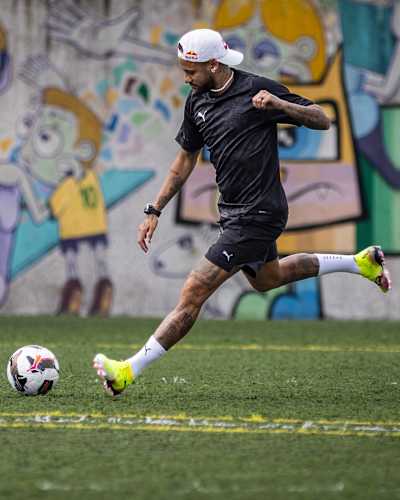
This isn't a definitive checklist, but it helps separate the very best from the rest. At his peak, Neymar Jr was among the favourites for the 2017 Ballon d'Or, while Dominik Szoboszlai has established himself as one of Liverpool's standout performers.
02
How much do club and international football matter?

Nico Williams assisted the winning goal in the 2026 FIFA World Cup Final
© Gianfranco Tripodo/Red Bull Content Pool
A player's club and international career both play an important role when judging whether they deserve to be considered the best in the world.
This isn't about dismissing players at smaller clubs. Rather, the world's best footballers are expected to prove themselves against the strongest opposition in the biggest competitions.
Competing at the highest level matters. Ademola Lookman's Europa League final hat-trick for Atalanta was unforgettable, but the world's leading players are generally expected to perform regularly in the UEFA Champions League and one of Europe's top five domestic leagues: You can't realistically compare a player tearing up their local amateur league with, say, Nico Williams, who's producing top-level performances in La Liga and for World Cup winners, Spain.
- Premier League (England)
- Bundesliga (Germany)
- Ligue 1 (France)
- Serie A (Italy)
- La Liga (Spain)
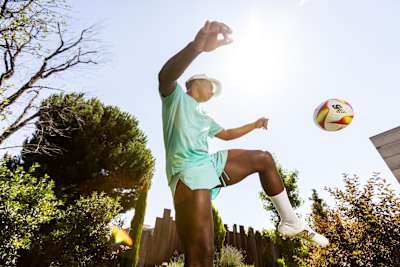
Endrick moved from Brazil to test himself in Europe
© Gines Diaz/Red Bull Content Pool
The Champions League remains the benchmark for elite club football. While continental competitions exist in North America, Asia and Africa, they do not yet carry the same level of prestige. Players such as Endrick have shown why earning the opportunity to compete in Europe's biggest competitions is such an important step in a career.
International football is slightly different. Representing France, for example, naturally provides more opportunities to compete for major honours than representing the United States. That's why international success should be considered when judging the world's best player, although it arguably carries less weight than club performances.
Riyad Mahrez's remarkable Premier League title with Leicester City in 2016 is a good example. He enjoyed an outstanding individual season, but his opportunities to shine in the biggest international tournaments with Algeria were more limited. Cristiano Ronaldo, meanwhile, combined Champions League success with Real Madrid and victory at UEFA Euro 2016 with Portugal, helping him secure that year's Ballon d'Or, while Mahrez finished seventh.
03
Does a player's position affect their chances?
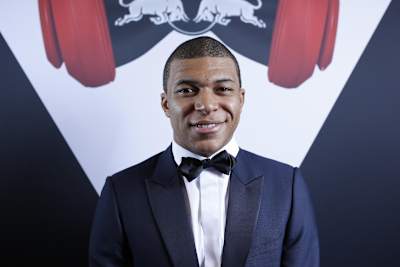
Kylian Mbappé has scored more goals at World Cup finals than anyone else
© Benjamin Cremel/Red Bull Content Pool
Forwards have traditionally received more attention than players in other positions, even at the biggest clubs. During Barcelona's golden era, for example, Lionel Messi inevitably attracted more headlines than Andrés Iniesta or Carles Puyol, despite all three playing pivotal roles in the team's success.
That doesn't mean midfielders, defenders and goalkeepers can't be considered the world's best. Football has produced countless iconic players in every position, from Manuel Neuer and Paolo Maldini to Zinedine Zidane and Luka Modrić. Every position in the starting XI has produced at least one Ballon d'Or winner.
The biggest challenge for defensive players is visibility. A centre-back such as Virgil van Dijk will almost always score fewer goals than an attacking player like Messi, making it harder to capture the same level of attention.
Ballon d’Or winners, by position
Goalkeepers – Lev Yashin remains the only goalkeeper to have won the Ballon d'Or, lifting the award in 1963. Others, including Gianluigi Buffon and Oliver Kahn, came close with podium finishes.
Defenders – Only two defenders have won the Ballon d'Or: Franz Beckenbauer (1972 and 1976) and Fabio Cannavaro (2006).
Midfielders – Sixteen midfielders have won the award, with Michel Platini famously claiming three consecutive Ballons d'Or between 1983 and 1985.
Forwards – Attackers have dominated the honour. Twenty-seven forwards have won the Ballon d'Or, with Messi's eight awards putting him ahead of Cristiano Ronaldo's five.
04
Why statistics and individual performances matter
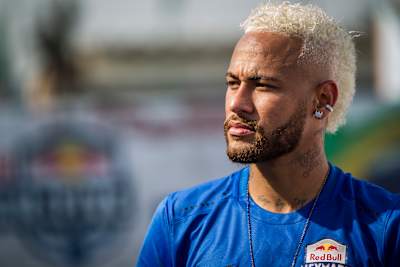
Neymar Jr is Brazil's all-time leading scorer
© Fabio Piva/Red Bull Content Pool
As former NFL player Santana Moss once said: "Great players produce great moments in big matches."
Individual performance is one of the strongest indicators of greatness.
The challenge is maintaining that level over time while delivering when the stakes are highest. Scoring twice against your former club is impressive, but producing a match-winning display at Anfield to send your team into the Champions League quarter-finals is the kind of performance that shapes reputations.
No two matches or seasons are the same, and no player can realistically be expected to score and provide an assist every time they step onto the pitch. But when someone consistently delivers decisive performances, debates about who deserves to be called the world's best become much easier to settle.
05
Why trophies still matter
Outstanding individual displays are important, but football is ultimately about winning. The world's best players are expected to help their teams compete for – and win – major trophies.
Not every title carries the same prestige. Winning the FIFA World Cup will always rank above lifting a domestic cup, while comparing the UEFA Champions League with the UEFA European Championship is far more subjective.
The 2024 Ballon d'Or offered a good example. Voters ultimately placed greater value on international success, with Rodri, who won the Euros with Spain and the Premier League with Manchester City, finishing ahead of Vinícius Júnior, despite the Brazilian having just won his third Champions League title.
06
And what about the women?

Trinity Rodman plays forward on the field
© Jared Martinez / Red Bull Content Pool
To decide who's the best female player in the world, you could simply choose a midfielder from FC Barcelona (or the London City Lionesses since Alexia Putellas's move). You'd almost certainly be backing a repeat Ballon d’Or winner.
Looking to pick a potential future winner? It's got to be almost time for the US to get back on top, with Trinity Rodman a rising star.
For those who prefer to make their own judgement, the criteria remain exactly the same. Although it receives less media attention, women’s football works in much the same way as the men’s game. The same competitions, the same statistics – but not the same salaries.
It's worth noting that the first Women’s Ballon d’Or was awarded to Ada Hegerberg (Lyon) in 2018. That came 62 years after the men’s award was first created.


07
Putting people first
Because, ultimately, football is still about people. Yes, we need criteria to decide who is the best player in the world, but that player must also create a connection with supporters. If football debates are never completely unanimous, it's because they are shaped by human emotion and personal experience, as well as the tribal allegiances that are part and parcel of supporting a club.
There will always be some level of bias, whether it's linked to a particular piece of skill, a club or a player’s story. Who wasn’t amazed when Messi gently sat Jerome Boateng down to help Barça on their way to an incredible comeback? Who didn’t celebrate when they saw James Rodriguez’s stunning volley against Uruguay? Who wasn’t moved by Zidane’s farewell to Real Madrid? Every football fan has their own idea of the world’s best player. For Paris Saint-Germain supporters, it was Ousmane Dembélé in 2025, while FC Barcelona fans may have chosen Lamine Yamal. There's no definitive answer – opinions change with time.
FAQs