



Fitness
Fitness Training
Master the pull-up: Proper form, variations & workout tips
Learn how to do a pull up with proper form, grip variations, assisted pull ups and beginner-to-advanced progressions to build strength.
It’s easy to see why the pull-up is a core exercise in everything from climbing gyms to obstacle course training. Red Bull Gaming athlete Ali “SypherPK” Hassan has regularly shared his commitment to strength training and healthy lifestyle habits alongside his gaming career. Exercises like pull-ups help build the upper-body strength, grip and control that form the foundation of a well-rounded fitness routine, whether you're competing outdoors, in the gym or behind the screen.
If you’re working toward your first rep or trying to clean up your technique, here’s what you need to know about how to do a pull up: proper form, muscles worked, grip variations including standard, chin-up and neutral, beginner progressions and structured workouts to help you master the pull up.
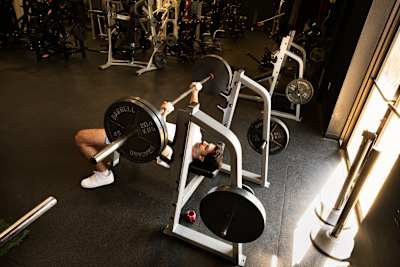
SypherPK can bench press up to 325 pounds.
© Pooneh Ghana
01
Anatomy of the pull-up and muscles worked
A pull-up might look like a simple arm exercise, but your back is doing a lot of the heavy lifting. Understanding the pull up muscles worked can also make it easier to clean up your technique and figure out where you need more strength.
Your lats are the main drivers of the movement. They help pull your upper arms down toward your body as you raise yourself toward the bar. Your biceps pitch in as well, especially when you're bending your elbows to finish the rep.

Pull-ups train the lats, biceps, grip and core together
© Ian Witlen / Red Bull Content Pool
Then there are the muscles keeping everything steady:
- Rear delts: Help control the shoulder and upper arm.
- Traps: Help stabilize your shoulder blades throughout the movement.
- Core: Keeps your torso from swinging around while you pull.
- Forearms and grip: Keep you connected to the bar and help control your body.
The “Packed Shoulders” cue
Before you pull, think about bringing your shoulders down and back. This is sometimes called a "packed shoulder" position.
You don't need to force your shoulders into an exaggerated position. The goal is to avoid starting the pull with your shoulders shrugged toward your ears. Set your shoulders, brace your core, then pull.
That small adjustment can make your pull up form feel much more controlled.
02
Why relative strength matters: Pull-ups for climbing, surfing & OCR
One of the best things about the pull-up is that it trains relative strength – how strong you are compared with your own bodyweight.
That's especially useful outside the gym. If you climb, surf or compete in obstacle course racing, you're constantly dealing with situations where you need to move, hold or pull your own body.
03
Climbing

Sasha DiGiulian relies on pulling strength for steep climbing
© Pablo Durana / Red Bull Content Pool
Pulling strength comes into play when you're reaching, mantling or controlling yourself on steep terrain. It also complements the grip strength and back strength needed for dead-hangs and contact-heavy rock climbing.
Surfing
Your lats and upper back contribute to the pulling action involved in paddling. The strength and coordination you develop through pulling exercises can also support the quick transition from lying on the board to standing during a pop-up.
Obstacle course racing
OCR is full of pulling movements. Rope climbs, monkey bars and wall traverses all require some combination of grip, back and arm strength.
A smart pull up workout can help build that foundation while giving you a measurable way to track your progress.
How do you do a pull-up? Proper pull-up form
If you're figuring out how to do a pull up, don't worry about cranking out a huge number of reps right away. Your first goal should be learning to control the movement from start to finish.
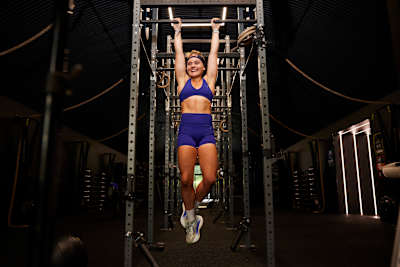
Set your shoulders before initiating the pull
© Jake Turney / Red Bull Content Pool
Step by step
- Grab the bar. Use an overhand grip with your hands around shoulder-width apart.
- Set your shoulders. Before pulling, bring your shoulders down and back instead of shrugging toward your ears.
- Brace your core. Keep your ribs and pelvis controlled and avoid letting your legs swing.
- Pull yourself up. Think about driving your elbows down toward your sides rather than simply pulling with your hands.
- Finish the rep. Continue upward until your chin clears the bar, while keeping the movement controlled.
- Lower slowly. Don't drop from the top. Extend your arms under control and return to your starting position.
Proper pull-up form: Simple cues that help
- Keep your wrists stacked and comfortable
- Think “elbows down” as you pull
- Keep your shoulders controlled rather than shrugged
- Brace your abs before starting the rep
- Keep your legs relatively quiet
- Use the range of motion you can control
04
What are the different pull-up variations?
Changing your grip can change how a pull-up feels and which muscles contribute most.
The three you'll encounter most often are the standard pull-up, chin-up and neutral-grip pull-up. They're all useful, and you don't have to stick with just one.
One thing stays the same across all three: keep your wrists in a comfortable, stacked position underneath the bar or handles. If the standard or chin-up grip bothers your wrists, a neutral grip may feel better.
Standard (Overhand) pull-up
This is the classic pull-up most people picture. Your palms face away from you, with your hands roughly shoulder-width apart.
Of the three main grips, the standard pull-up generally puts a strong emphasis on the lats, while your biceps still play a big role. It's also the version most commonly used as a benchmark for upper-body relative strength.
Chin-up (Underhand grip)
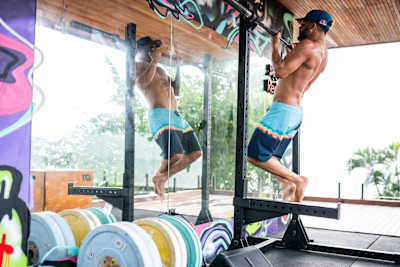
Chin-ups allow greater contribution from the biceps
© Marcelo Maragni / Red Bull Content Pool
Flip your hands around so your palms face you, and you've got a chin-up.
The underhand position typically allows your biceps to contribute more, which can make the movement feel easier for many beginners. If you're struggling to get your first pull-up, chin-ups can be a useful stepping stone.
Neutral-grip pull-up

The standard pull-up emphasizes lat engagement
© Ian Witlen / Red Bull Content Pool
With a neutral grip, your palms face each other. You'll need parallel handles or a pull-up station that offers this option.
This is often the most comfortable choice for your wrists. It still trains your lats while also bringing the brachialis (a muscle that sits between the biceps and forearm) more heavily into the movement.
05
Progressions to your first pull-up
Can't do a full pull-up yet? That's completely normal. You can still train the movement and build the strength you'll eventually need.
These exercises work as a pull up alternative while you're building toward your first unassisted rep.
Negatives (Eccentric pull-ups)
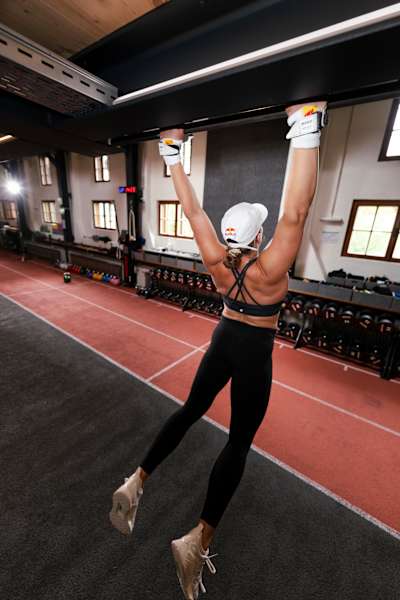
Negatives develop control through the lowering phase
© Leo Rosas / Red Bull Content Pool
Start at the top of the pull-up by jumping up or using a step. From there, slowly lower yourself.
Try to make each descent last around 3–5 seconds or longer when you can maintain control.
Negatives are especially useful because you can train the lowering portion of the pull-up even before you're strong enough to pull yourself all the way up.
Banded (assisted) pull-ups
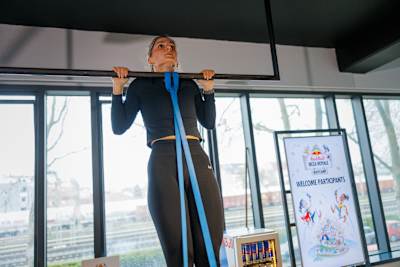
Band assistance helps build confidence and strength
© Tomislav Moze / Red Bull Content Pool
Loop a resistance band over the bar and place one foot or knee inside it. The band helps you get through the hardest part of the movement.
As you get stronger, move to a lighter band. Eventually, you'll need less assistance to complete the same movement.
Inverted rows
Inverted rows train your pulling muscles from a horizontal position and are easy to adjust to your current strength.
Make your body more upright to make the exercise easier. Move toward a more horizontal position to make it harder.
06
Structured pull-up workouts
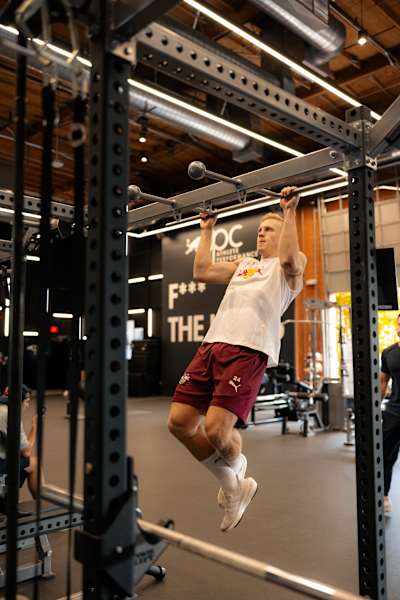
Consistent practice and smart progressions are the keys to pull-up success
© Devin L'Amoreaux / Red Bull Content Pool
Having a collection of exercises is useful. Having an actual pull up workout plan is better.
The two sessions below give you a starting point based on where you are now: working toward your first pull-up or building more reps once you already have one.
Beginner’s first pull-up
Start with:
- Negatives: Focus on slow, controlled lowering.
- Banded pull-ups: Practice the complete movement with assistance.
- Inverted rows: Build general pulling strength with an adjustable exercise.
You don't need to force a specific number of sets or reps. Start with an amount of work you can perform with good technique, then gradually build from there.
The goal is simple: stronger negatives, less band assistance and more control on every rep.
Volume density
Once you can perform at least one strict pull-up, your goal changes a little. Instead of testing your maximum every workout, focus on getting more quality reps throughout the session.
One simple approach is to choose a total number of pull-ups and spread those reps across several smaller sets. Keep each set manageable enough that your proper pull up form doesn't fall apart.
As your strength improves, you can gradually increase your total volume or complete the same amount of work in fewer sets.
Build your pull-up, one rep at a time
Getting your first pull-up doesn't happen overnight. It comes from building the right combination of back strength, arm strength, grip and body control.
Start with the variation that fits your current strength level. Clean up your pull up form, use assisted variations when you need them and build work toward more unassisted reps. Whether you're training for climbing, surfing, obstacle course racing or simply want to get stronger, the pull-up is one of the most useful bodyweight movements you can have in your routine.
