



Fitness
Fitness Training
How to do a squat: Proper form, variations, muscles & workouts
Learn how to do a squat with proper form, explore popular squat variations and build the strength, power and athleticism used by elite athletes.
There’s a reason squats show up in almost every kind of training. Whether you’re trying to get stronger, move faster on the field or simply make everyday movement feel easier, they’re hard to beat. A good squat builds strength through your legs and hips, but it also challenges your balance, stability and control along the way.
Below, we’ll break down proper squat form, the key variations worth knowing, which muscles they work and how to keep progressing as you get stronger.
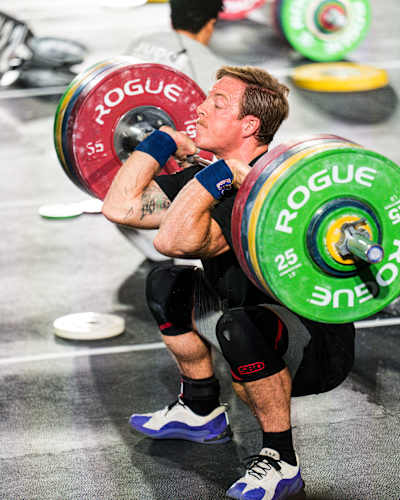
For elite athletes, squats are a foundational movement for building strength, power and durability. Cross functional training athlete Noah Ohlsen regularly incorporates squat variations into his training to develop the lower-body strength and explosiveness needed for everything from heavy lifts to high-intensity competition. Whether you're training for sport or simply looking to move better every day, learning how to squat well is a valuable skill.
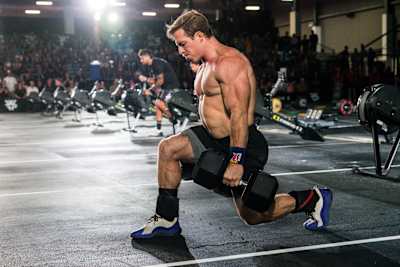
Noah Ohlsen has built a career on strength, endurance and athleticism
© Christian Pondella / Red Bull Content Pool
01
How do you do a squat? Proper form, step by step
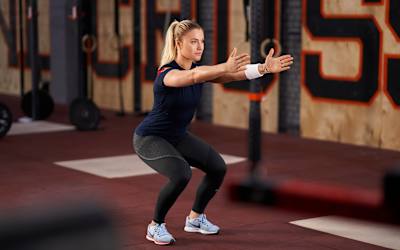
Proper squat form starts with a stable stance and controlled movement
© Roman Rudakov / Red Bull Content Pool
How to do a squat: Stand with your feet about shoulder-width apart, brace your core and sit your hips down and back as you bend your knees. Keep your feet planted and your knees tracking in line with your toes, then push through the floor to stand back up. That’s the basic movement, and it’s a good starting point for building proper squat form.
Squats don't need to be complicated, but your technique does matter. A good squat form keeps you balanced and in control from the moment you start lowering until you stand back up.
1. Set your stance
Stand with your feet about shoulder-width apart and toes slightly turned out. Keep your entire foot planted on the floor.
2. Hinge at your hips
Brace your core and push your hips back as you bend your knees. Keep your back neutral and your chest controlled as you lower.
3. Find your depth
Lower until your thighs are around parallel to the floor, or as deep as you can go while staying balanced and in control. Don't force extra depth.
4. Track your knees
Let your knees move in the same direction as your toes. Avoid letting them collapse inward, and don't worry if they move past your toes.
5. Drive up
Push through your feet to return to standing. Keep your core engaged and let your hips and knees extend together.
02
Squat anatomy: Muscles worked and the hip hinge
The squat is a triple-flexion movement: the ankle, knee and hip flex during the descent and extend during the ascent. The hips do a lot of the work, but a squat isn't just a hip hinge. Your knees and ankles play essential roles, too.
Muscle
Role
Quadriceps
Extend the knee and help drive you upward
Glutes
Extend the hip and contribute strongly to standing from the bottom
Hamstrings
Assist with hip extension and help stabilize the knee and hip
Adductors
Help extend and stabilize the hip, particularly from deeper positions
Core
Stabilizes the trunk and transfers force between the lower and upper body
Erector spinae
Helps maintain a strong, stable spinal position
Exactly which squat muscles work the hardest depends on your stance, depth, load, bar position and individual anatomy. A wider stance can shift more of the work toward the adductors and glutes, while a more upright squat can put more demand on the quadriceps.
03
The squat codex: Comparing every major variation
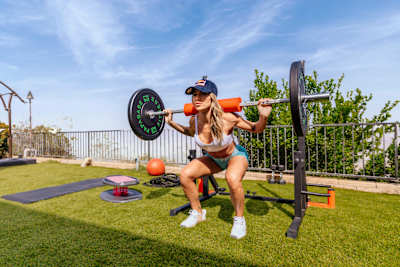
Back squats develop full-body strength and power production
© Maria Jose Govea / The Red Bulletin
Not every squat works the same for everyone. Bodyweight squats are useful for learning movement, goblet squats make loading intuitive and barbell variations let you add more weight as you get stronger.
Variation
Equipment
Primary focus
Best for
Air Squat
None
Movement control
Beginners, warm-ups
Goblet Squat
Dumbbell or kettlebell
Technique, quads, core
Learning to squat
Back Squat
Barbell
Overall lower-body strength
Strength development
Front Squat
Barbell
Quads, upright torso
Quad strength and positional control
Bulgarian Split Squat
Dumbbell/barbell optional
Unilateral leg strength
Balance and single-leg development
Sumo Squat
Dumbbell, kettlebell or barbell optional
Adductors and glutes
Wider-stance training
Which squat should you do?
- Brand new to squatting? Start with an air squat or goblet squat.
- Want to learn loaded squatting? The goblet squat is a good next step.
- Want maximum bilateral strength potential? Consider the back squat.
- Want more quad emphasis and an upright torso? Try the front squat.
- Want unilateral strength and balance? Choose the Bulgarian split squat.
- Want a wider stance with greater inner-thigh involvement? Try the sumo squat.
Air squat
The air squat is the simplest squat: no equipment, just your bodyweight.
Setup and cues
- Stand with feet around shoulder-width apart
- Brace your core
- Lower under control
- Keep your feet planted
- Let your knees track naturally over your toes
- Stand by driving through the floor
Goblet squat
The goblet squat uses one dumbbell or kettlebell held close to the chest. Because the weight is positioned in front of the body, it naturally encourages a relatively upright torso and gives beginners an easy external reference for maintaining control.
How to set up
- Hold a dumbbell vertically or a kettlebell by its horns
- Keep the weight close to your chest
- Set your feet comfortably
- Brace your core and squat down
- Stand while keeping the weight close to your body
The goblet squat is often an excellent learn-to-squat variation because the load is easy to control and the front-loaded position can make the movement feel intuitive.
Back squat
The back squat places a barbell across the upper back and shoulders, allowing more weight than most beginner-friendly squat variations.
Two common approaches:
- High-bar squat: The bar sits higher on the upper back, generally supporting a more upright torso.
- Low-bar squat: The bar sits lower across the rear shoulders, often allowing a greater hip contribution and somewhat more forward torso inclination.
Neither one is better than the other. The best position depends on you, your goals, your mobility and technical preference.
Front squat
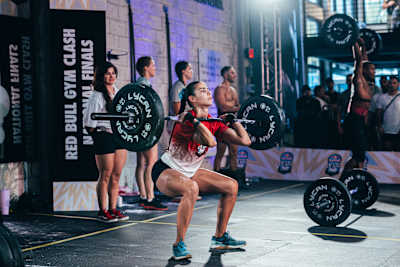
Front squats challenge posture, balance and quad strength
© Daniel Zuliani / Red Bull Content Pool
The front squat places the barbell across the front of the shoulders in a rack position. This position usually encourages a more upright torso and places more demand on the quadriceps and upper-body postural muscles.
A secure rack position is important. Keep the bar supported by the shoulders rather than relying entirely on your hands and maintain your brace throughout the movement.
Front squat vs back squat
Front squat vs back squat comes down to where the load sits and how that changes the movement.
Factor
Front squat
Back squat
Load capacity
Generally lower
Generally higher
Torso angle
More upright
Usually more forward inclination
Quad demand
Typically high
High, depending on technique
Hip contribution
Often comparatively lower
Can be greater
Best suited to
Quad development, upright positioning, technique
Overall strength and heavier loading
If your priority is maximizing load and overall strength, the back squat is often the more practical choice. If you want an upright squat with strong quad involvement and enjoy the rack position, the front squat can be a good option.
04
What are the different squat variations? Bulgarian split squat, sumo squat & more
Once you understand the basic squat, variations can address different training goals, from unilateral stability to more emphasis on the glutes and legs.
The Bulgarian split squat and sumo squat are useful because they change the demands placed on your lower body rather than simply adding more weight to the same pattern.
Bulgarian split squat
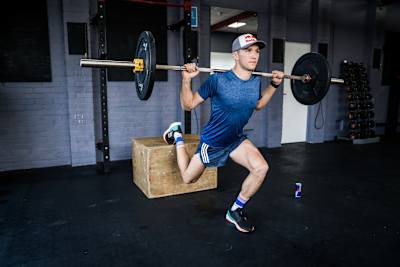
Bulgarian split squats build single-leg strength and control
© Ian Corless / Red Bull Content Pool
The Bulgarian split squat is a rear-foot-elevated single-leg squat.
Setup
- Stand a short step in front of a bench or stable elevated surface
- Place the top of your rear foot behind you
- Position your front foot so you can lower without your front heel lifting
- Lower your body under control
- Drive through the front foot to return to standing
It emphasizes the front-leg quads, glutes and adductors, while also challenging balance and coordination.
Balance fix: If you're wobbling, widen your front-foot stance slightly from side to side and use a light fingertip hold on a stable support until you develop control.
Sumo squat
The sumo squat uses a wider stance than a conventional squat, with the toes turned outward.
Setup and cues
- Take a wide, comfortable stance
- Turn your toes outward
- Brace your core
- Lower between your legs while keeping your feet grounded
- Let your knees track in the same direction as your toes
- Drive upward through the floor
The position can increase the contribution of the adductors and glutes, making the sumo squat a good addition to narrower squat options.
05
Squat form mistakes and back-friendly alternatives
Good proper squat form isn't about forcing everyone into the same stance, depth or torso position. Squat mechanics naturally vary with mobility, experience and the specific type. If you're new to weight training, learning the basics of movement and technique can help you build a stronger foundation.
Discomfort doesn't automatically mean that squatting is bad for your knees or back. The more useful question is whether your chosen variation, range of motion, load and technique are appropriate for you.
If a particular squat consistently causes pain, reducing the challenge or choosing another movement can be a better approach.
Common squat mistakes
Mistake
Why it happens
Quick fix
Knees caving inward
Poor control, stance mismatch or fatigue
Reduce the challenge and practice tracking the knees in line with the toes
"Butt wink" at the bottom
Individual hip anatomy, mobility limitations or chasing excessive depth
Use a controllable depth and experiment with stance and foot position
Lower back rounding
Losing trunk control, excessive depth or inappropriate loading
Reduce the load/range and brace while maintaining a stable torso
Heels lifting
Limited ankle mobility or stance/depth mismatch
Adjust stance and depth; work on ankle mobility separately
Dropping too quickly
Lack of control or excessive load
Slow the descent and maintain tension
The goal isn't to eliminate every tiny change in joint position. Good squat form means using a movement pattern you can control and progressively load without unnecessary breakdown.
Low-compression swap shop: Back-friendly alternatives
If conventional squats aren't comfortable, you don't have to skip lower-body training.
Box squat
A box squat uses a stable box or bench as a depth reference. It can help you learn to control your range of motion and make the movement easier to standardize.
Use the box as a target rather than collapsing onto it. Maintain control and keep your torso stable throughout the movement.
Bulgarian split squat
The Bulgarian split squat can provide plenty of lower-body work with less total weight than a heavy bilateral barbell squat. Because each leg works independently, it can also expose balance or strength differences between sides.
"Joint-friendly" doesn't mean universally pain-free. Choose the variation and range that feel right for your body.
06
Base to apex: Squat workouts from beginner to explosive power
Learning how to do a squat is the beginning, not the endgame. A useful progression moves from mastering the pattern to controlling external resistance and eventually producing force quickly, an important part of training like a professional athlete.
The tiers below are a progression framework rather than a fixed program. Choose a level based on your current skill, control and training experience rather than rushing toward the most advanced level. Building strength and stability through balance-focused exercises can also help develop the control needed for more challenging movements.
Level
Goal
Main movements
What you're developing
Base
Own the movement
Bodyweight squat, box squat
Coordination, mobility, control
Development
Add resistance
Goblet squat, light front squat
Strength, stability, load tolerance
Apex
Produce force quickly
Jump squat, power-focused back squat
Explosive strength and sport transfer
Base level – Foundational squat patterns
The base level is about building reliable movement mechanics. Before adding substantial resistance or speed, you should be able to control your stance, depth, knee tracking and trunk position.
Bodyweight squat
Practice the fundamental squat without external load. Focus on consistent depth, good balance and staying in control as you lower and stand back up.
Box squat (Assisted depth)
Use a box or bench to establish a repeatable depth. The goal is to build confidence and positional control, not to fall backward onto the box.
Development level – Building load and control
Once the basic movement is consistent, gradually introduce resistance. The goblet squat progression is an easy next step between bodyweight training and barbell work.
Goblet squat progression
Start with a load you can control while maintaining your technique. As the movement becomes comfortable, progressively challenge your strength without letting the load dictate your depth or squat form.
Front squat (Light load)
A light front squat can develop an upright torso, bracing and quad strength while introducing you to barbell loading.
Front squat (Light load)
Use this phase to reinforce consistency and positioning before pursuing heavier loads. Quality repetitions and controlled movement should remain the priority.
Apex level – Explosive, sport-transferable power
At the apex level, the focus shifts from simply getting stronger to producing that strength quickly. These movements require a stronger technical foundation and should be introduced only when the underlying squat pattern is well established.
Jump squat
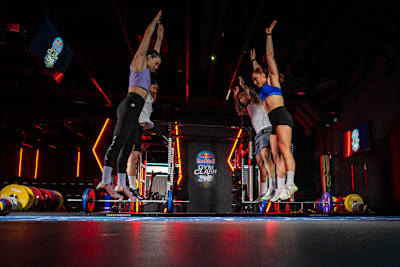
Jump squats transform strength into explosive athletic power
© Joerg Mitter / Red Bull Content Pool
The jump squat turns the squat into an explosive movement. Descend under control, then drive forcefully into the floor and leave the ground. Land softly and regain your position before the next repetition.
Weighted back squat (Power focus)
A power-focused back squat uses an appropriate external load while focusing on driving up with speed. The goal is to move the weight quickly without losing control, rather than lifting the heaviest weight possible.
Make every squat count
The best squat is the one that works for your current ability, goals and body. Start by mastering proper squat form with a bodyweight or goblet squat, then build strength and control through progressively loaded variations. As you get stronger, you can add movements like jump squats when you're ready to turn that strength into explosive power.
Whether you're learning how to do a squat for the first time or refining your front squat vs back squat technique, the fundamentals are still the same: stable feet, controlled movement, coordinated ankle-knee-hip action and progressive practice.
